
The Complete Guide to Keeping White Hotel Linens Bright Wash After Wash
Jump to section
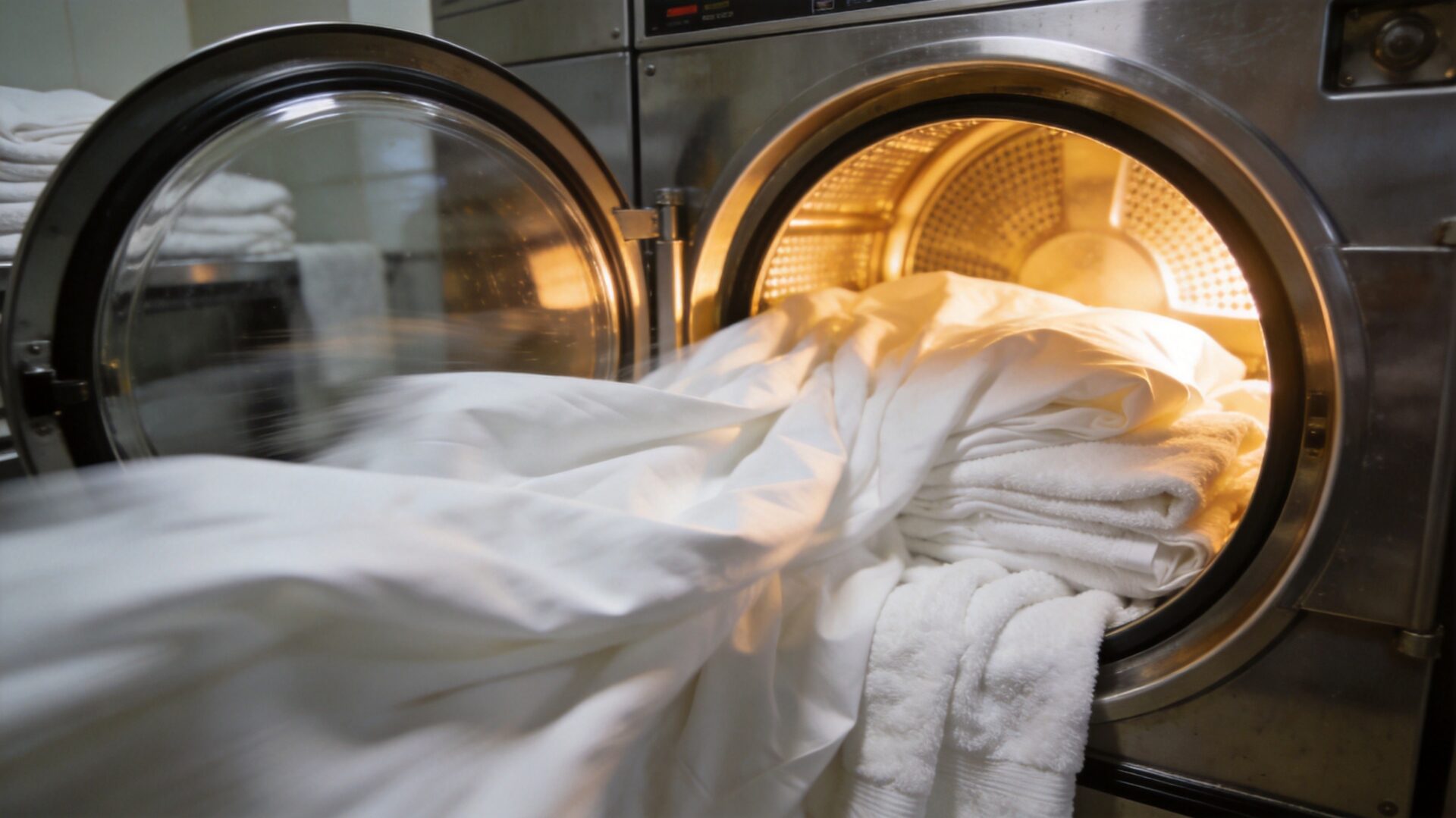
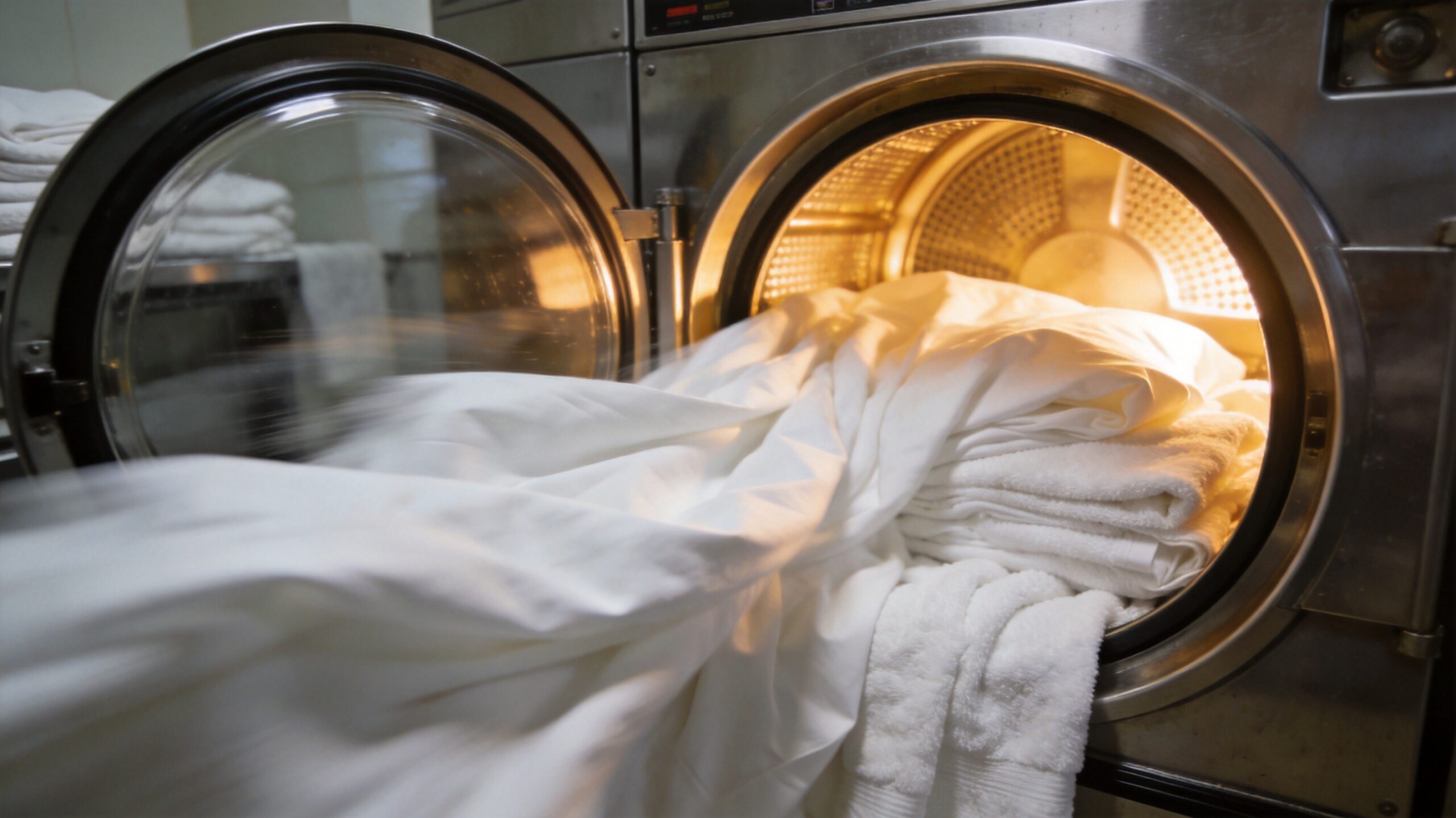
White linens are the hallmark of hotel cleanliness — but keeping them white through hundreds of industrial washes is one of the biggest challenges in hotel laundry operations. Here’s how top hotel chains maintain bright, stain-free white linens.
Why White Linens Lose Brightness
- Body oil buildup: Sebum, sweat, and skin cells accumulate in cotton fibers, causing yellow/grey cast
- Hard water minerals: Calcium and magnesium deposits create dull, grey-white appearance
- Chemical residue: Alkaline detergent not fully rinsed leaves yellow deposits
- Chlorine bleach damage: Over-bleaching actually yellows cotton by breaking down cellulose
- Iron oxidation: High iron content in water causes rust-colored staining
- Cross-dye contamination: Washing with colored items transfers dye
The Stripping Wash Protocol
Monthly stripping washes remove built-up residue and restore whiteness:
| Step | Chemical | Temp | Duration |
|---|---|---|---|
| 1. Pre-soak | Hot water + alkaline builder (pH 11) | 70°C | 15 min |
| 2. Main strip | Alkaline builder + hydrogen peroxide (150ppm) | 75°C | 20 min |
| 3. Rinse | Hot water | 60°C | 5 min × 2 |
| 4. Neutralize | Sour (pH 5.5-6.5) | 40°C | 5 min |
| 5. Final rinse | Clean water | 35°C | 3 min |
Daily Wash Best Practices for Whiteness
- Use oxygen bleach (H₂O₂) instead of chlorine for daily whitening
- Maintain wash temperature at 60-65°C — hot enough for hygiene, gentle enough for fibers
- Add extra rinse cycle to remove all chemical residue
- Use sour/neutralizer to bring final pH to 5.5-6.5
- Never overload washers — 80% max capacity ensures proper water circulation
- Sort by soil level — heavily soiled items (bathroom towels) washed separately from lightly soiled (bed sheets)
Water Quality Management
| Parameter | Target | Problem if Off |
|---|---|---|
| pH | 6.5-7.5 | Alkaline water causes yellowing |
| Hardness | < 50 ppm | Hard water = mineral buildup = grey fabric |
| Iron | < 0.1 ppm | Iron > 0.3 ppm causes rust stains |
| TDS | < 300 ppm | High TDS = dull, stiff fabric |
Quick Troubleshooting
- Yellow patches: Body oil buildup → increase main wash temperature or add degreaser
- Overall grey cast: Hard water or insufficient rinse → install water softener, add rinse cycle
- Rust spots: Iron in water or metal contact → check water treatment, inspect washers for rust
- Pink tinge: Serratia marcescens bacteria → increase wash temperature, sanitize washers
YouMian’s hotel linens use high-quality combed cotton with mercerized finishing for superior whiteness retention. Contact us for whiteness test reports and samples.
Sustainable White Linen: Eco-Certifications Matter
Achieving brilliant, lasting whiteness in hotel linens requires careful chemistry—and the same chemicals that keep sheets bright can leave harmful residues if not properly managed. This is where independent eco-certifications become essential for hotel procurement teams who refuse to compromise between whiteness and guest safety.
OEKO-TEX STANDARD 100 is the most widely recognized certification for textile safety. It tests for over 350 harmful substances—including formaldehyde, heavy metals, pesticide residues, and phthalates—and sets strict limits far below regulatory requirements. For white hotel linens, this certification is particularly valuable because bleaching and optical brightening processes carry the highest risk of residual contamination. YouMian’s hotel linen collections hold OEKO-TEX STANDARD 100 certification (Certificate No. SHWO 108278, issued by TESTEX AG Zurich, valid through 2026.8.31, Class II), ensuring every sheet and towel is verified safe for direct skin contact.
Organic cotton white linens take sustainability further by eliminating synthetic pesticides and fertilizers at the farming stage, reducing water consumption by up to 91% compared to conventional cotton. When combined with oxygen-based (rather than chlorine-based) whitening processes, organic cotton delivers the same luminous white guests expect—without the chemical footprint. Understanding the differences between certification standards is critical for informed sourcing decisions. Compare the requirements and benefits in our detailed guide to OEKO-TEX vs GOTS certification for hotel linens.
Related Articles
- Percale vs Sateen: Which Weave Is Best for Hotel Sheets?
- Hotel Bed Sheet Buying Guide: Thread Count, Fabric & Sizing
- How to Source Hotel Linens from China: A Complete Guide
Frequently Asked Questions
Why do hotel sheets turn yellow?
Yellowing is caused by: body oil and sweat residue not fully removed in washing, chlorine bleach overuse (actually yellows cotton), alkaline detergent residue, high iron in water supply, and storage in humid conditions. Monthly stripping washes and oxygen bleach solve most yellowing issues.
How do hotels keep towels white?
Hotels maintain white towels through: oxygen-based bleach (not chlorine), 60-65°C wash temperature, adequate rinse cycles with sour/neutralizer (final pH 5.5-6.5), monthly stripping washes to remove buildup, and water quality management (hardness < 50ppm, iron < 0.1ppm).
Is chlorine bleach bad for hotel linens?
Yes, for daily use. Chlorine bleach attacks cotton cellulose fibers, causing strength loss (up to 50% per over-bleach cycle) and paradoxically yellows white fabric. Use oxygen bleach (hydrogen peroxide) for daily washing. Reserve chlorine bleach for emergency stain removal only.
What is a stripping wash for hotel linens?
A stripping wash is a deep-cleaning protocol using high temperature (70-75°C), alkaline builder, and hydrogen peroxide to dissolve accumulated body oils, detergent residue, and mineral deposits. Perform monthly or when linens show grey/yellow cast despite normal washing.
Want to Know More About Our Products?
View All Products Now English
  Русский
  Español de México
  Português do Brasil
  العربية