
Hotel Linen Fabric Sourcing: How to Select the Right Material for Your Property
Jump to section
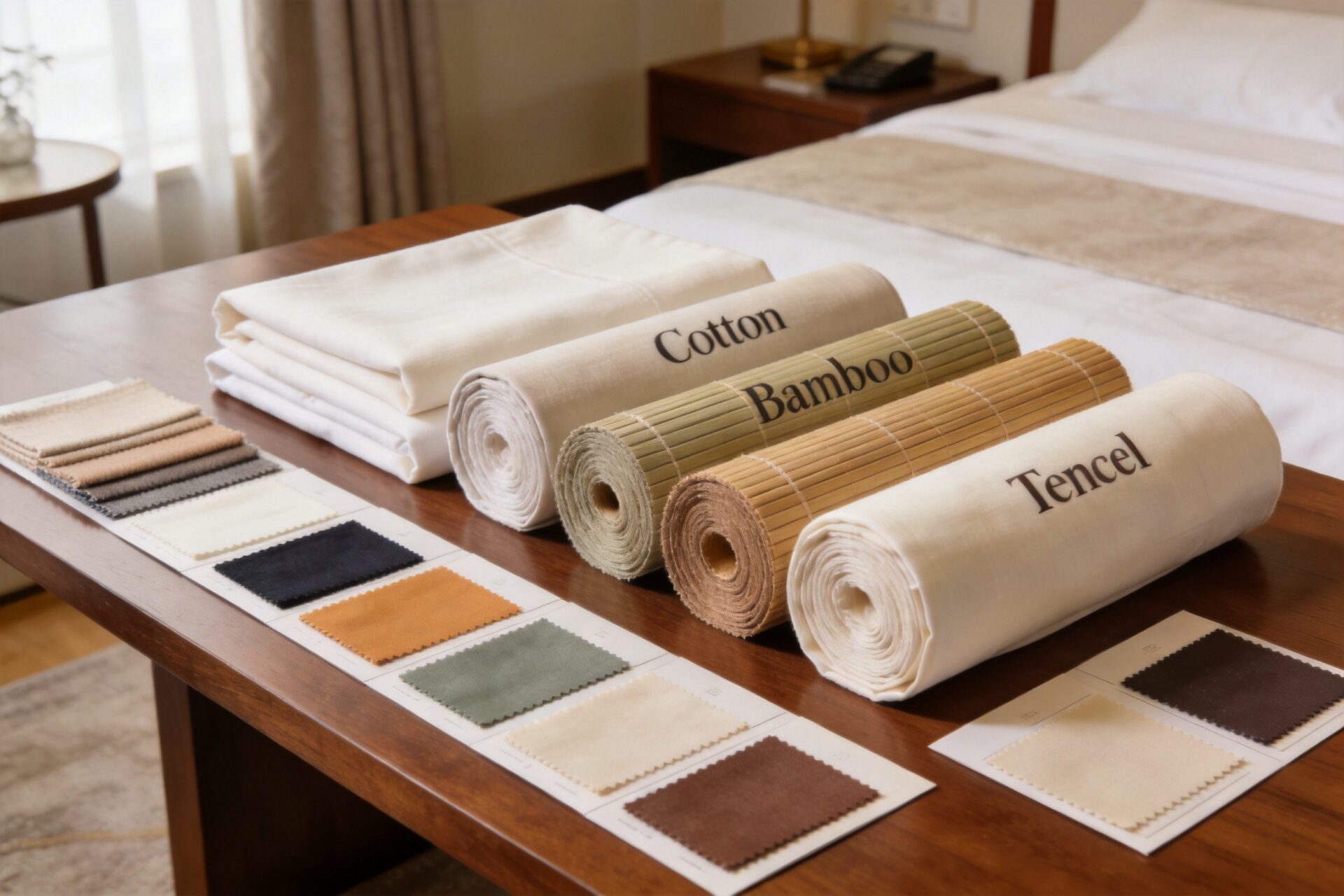
Selecting the right fabric is the single most important decision in hotel linen procurement. The material determines guest comfort, product lifespan, laundering costs, environmental impact, and ultimately, your property’s sleep quality ratings. With options ranging from conventional 100% cotton to performance-driven blends and sustainable alternatives like TENCEL™ and rPET, hotel fabric sourcing requires a structured evaluation framework. This guide walks procurement managers, resort operators, and linen rental companies through the essential material categories, performance metrics, certification requirements, and commercial considerations for sourcing hotel linen fabrics that balance luxury with operational durability.
Why Fabric Choice Matters in Hospitality
Hotel linens endure conditions far more demanding than household textiles. A hotel sheet is laundered 200 to 300 times over its service life, compared to 50 to 100 washes for a residential sheet. Each wash cycle involves hot water (60–80°C in industrial laundries), alkaline detergents, bleach, and high-heat drying or ironing. The fabric must withstand this abuse while maintaining a soft hand feel, acceptable appearance, and structural integrity.
The financial stakes are significant. A 200-room hotel with three par levels (one in use, one in laundry, one in storage) requires approximately 1,200 sheet sets. At a wholesale price of $25–$60 per set, the initial investment ranges from $30,000 to $72,000. Choosing a fabric that lasts 50 washes instead of 200 can increase annual replacement costs by $15,000–$30,000. Fabric selection directly affects total cost of ownership (TCO), not just upfront unit price.
Cotton: The Hospitality Standard
Cotton accounts for approximately 75% of all hotel linen fabric globally. Its combination of breathability, absorbency, softness, and laundering durability makes it the default choice for sheets, pillowcases, duvet covers, and towels. However, not all cotton is equal—the fiber’s origin, staple length, and processing significantly affect performance.
Upland Cotton (Short-Staple)
Upland cotton has a staple length of 0.9 to 1.1 inches and represents the majority of global cotton production. It is durable, affordable, and widely available, making it common in economy and mid-scale hotels. Upland cotton fabrics have a slightly coarser hand feel compared to long-staple varieties but offer excellent wash durability at a lower price point. Typical thread count range is 200–300 TC.
Long-Staple Cotton
Long-staple cotton (1.1–1.3 inches) produces smoother, stronger yarns that result in softer, more lustrous fabrics with fewer pills over repeated laundering. It is the standard choice for upscale hotels and is often labeled as Pima cotton (American-grown) or Supima (certified American Pima). Typical thread count range is 300–400 TC.
Extra-Long-Staple (ELS) Cotton
ELS cotton has a staple length of 1.4 inches or longer and includes varieties such as Egyptian cotton (Giza 45, Giza 86, Giza 87), Sea Island cotton, and Xinjiang long-staple cotton. ELS cotton can be spun into exceptionally fine, strong yarns, enabling high-thread-count fabrics (400–1000+ TC) with a silky hand feel and exceptional durability. It is the choice of luxury and five-star hotels. Note that genuine ELS cotton commands a significant price premium—30% to 100% above upland cotton—and buyers should demand fiber origin certification to avoid mislabeling.
Combed vs. Carded Cotton
Combed cotton undergoes an additional combing process that removes short fibers (under 0.5 inches) and impurities before spinning. This produces stronger, smoother, more uniform yarns with less lint and pilling. Carded cotton skips this step, resulting in a slightly fuzzier, less durable fabric at a lower cost. For hotel applications, combed cotton is strongly recommended—its longer service life typically offsets the 5%–15% price premium within the first year of use.
Organic and Sustainable Cotton
Organic cotton is grown without synthetic pesticides, herbicides, or genetically modified seeds, using farming practices that prioritize soil health and water conservation. It must be certified to a recognized standard such as GOTS (Global Organic Textile Standard) or OCS (Organic Content Standard) to be marketed as organic. The organic cotton hotel linen market has grown at approximately 15% annually, driven by consumer demand for sustainable hospitality options.
For hotel procurement, organic cotton offers several advantages: it meets corporate sustainability targets, appeals to eco-conscious travelers, and often carries a marketing story that justifies a modest rate premium. The primary disadvantage is cost—GOTS-certified organic cotton fabrics typically cost 20%–40% more than conventional cotton equivalents. Lead times may also be longer due to limited certified spinning and dyeing capacity.
Bamboo Viscose and Lyocell
Bamboo-derived fabrics have gained traction in hospitality due to their natural softness, breathability, and antimicrobial properties. Bamboo viscose (also called bamboo rayon) is produced by dissolving bamboo cellulose with chemical solvents and extruding it into fiber. Bamboo lyocell uses a closed-loop solvent process (similar to TENCEL™) that is more environmentally friendly.
Bamboo fabric is naturally softer than cotton at comparable weights, has a silk-like drape, and wicks moisture 30%–40% more effectively. It is also naturally hypoallergenic and resistant to bacterial growth. However, bamboo fibers are less durable than cotton under industrial washing conditions—bamboo sheets typically last 150–200 washes compared to 200–300 for cotton. Bamboo is also prone to pilling and may shrink 3%–5% with the first wash if not properly pre-shrunk during manufacturing.
For hotel use, bamboo-cotton blends (typically 70% bamboo / 30% cotton or 50/50) balance the softness of bamboo with the durability of cotton. These blends are increasingly popular in boutique and eco-resort properties.
TENCEL™ (Lyocell)
TENCEL™ is the brand name for lyocell fibers produced by Lenzing AG from sustainably harvested eucalyptus, beech, or spruce wood pulp. The production process uses a closed-loop solvent system that recovers 99% of the NMMO solvent, making it one of the most environmentally responsible cellulosic fibers available.
TENCEL™ offers exceptional moisture management—absorbing 50% more moisture than cotton by weight—and has a smooth, cool hand feel that guests often compare to silk. It is naturally resistant to bacterial growth and requires less frequent washing. In hospitality, TENCEL™ is typically used in blends with cotton (30%–50% TENCEL™) to improve durability while retaining its comfort benefits. 100% TENCEL™ sheets are available but carry a 40%–60% price premium over cotton and may require gentler laundering protocols.
rPET (Recycled Polyester)
rPET (recycled polyethylene terephthalate) is produced by melting down post-consumer plastic bottles and extruding the material into polyester fiber. Approximately 10–12 plastic bottles yield enough fiber for one sheet set. rPET is increasingly used in hotel linens as part of corporate sustainability and circular economy initiatives.
Advantages of rPET include high tensile strength, wrinkle resistance, quick drying, and a lower carbon footprint compared to virgin polyester—rPET production uses approximately 30%–50% less energy and generates 50%–70% fewer CO₂ emissions. When blended with cotton (typically 50% cotton / 50% rPET or 65/35), it adds durability and wrinkle resistance while maintaining a cotton-like feel.
However, 100% rPET fabrics do not breathe as well as natural fibers and can feel clammy in hot, humid climates. They also pill more readily. For hotel bedding, rPET is most commonly used in fill materials (pillows, duvets, mattress protectors) rather than in the fabric itself. For hotel towels, rPET-cotton blends offer improved durability and faster drying, reducing laundry energy costs.
Cotton-Polyester Blends
Cotton-polyester (CVC or T/C) blends are workhorse fabrics in the hospitality industry, particularly in economy and mid-scale properties. Common ratios include 50/50, 65/35 (cotton/polyester), and 85/15. The polyester component adds wrinkle resistance, dimensional stability, and durability while reducing drying time and ironing requirements.
A 50/50 blend typically lasts 250–350 washes—longer than 100% cotton—because polyester fibers do not weaken with repeated laundering. The primary drawback is comfort: polyester does not absorb moisture as effectively as cotton, and high-polyester blends can feel less breathable. For hotels prioritizing low maintenance and long lifespan over luxury feel, 50/50 or 65/35 blends are the most cost-effective choice.
Fabric Performance Comparison Table
| Fabric | Softness | Breathability | Durability (Washe | Wrinkle Resistance | Cost Level | Sustainability |
|---|---|---|---|---|---|---|
| Upland Cotton | Good | Very Good | 200–250 | Fair | $ | Moderate |
| Long-Staple Cotton | Very Good | Excellent | 250–350 | Fair–Good | $$ | Moderate |
| ELS Cotton | Excellent | Excellent | 300–500+ | Good | $$$ | Moderate |
| Organic Cotton | Very Good | Excellent | 200–300 | Fair | $$ | High (GOTS) |
| Bamboo Viscose | Excellent | Excellent | 150–200 | Good | $$ | Moderate |
| TENCEL™ | Excellent | Superior | 150–250 | Good | $$$ | Very High |
| rPET Blend | Good | Fair–Good | 250–400 | Very Good | $$ | High (recycled) |
| Cotton/Poly Blend | Good | Good | 250–350 | Very Good | $ | Low–Moderate |
Weave Types and Their Impact on Performance
The weave structure is as important as the fiber itself. Three weaves dominate hotel bedding:
Percale
Percale is a plain weave (one-over, one-under) with a minimum thread count of 200. It produces a crisp, matte, breathable fabric that softens with each wash. Percale is ideal for warm climates and guests who prefer a cool, crisp sheet. It is more wrinkle-prone than sateen and may require ironing for a polished presentation.
Sateen
Sateen uses a satin weave (typically four-over, one-under) that places more yarn on the fabric surface, creating a smooth, lustrous finish with a subtle sheen. Sateen feels softer and silkier than percale but is slightly less breathable and more prone to snagging. It is the most popular weave in upscale and luxury hotels.
Dobby and Jacquard
Dobby weaves create small geometric patterns (stripes, checks, diamonds) in the fabric, adding texture and visual interest without the cost of embroidery. Jacquard weaves produce more complex patterns—logos, damask designs, florals—directly in the fabric. Both are commonly used for pillowcases, duvet covers, and decorative elements in luxury hotel hotel bedding sets.
Thread Count: What It Really Means
Thread count (TC) measures the number of horizontal (weft) and vertical (warp) yarns in one square inch of fabric. While commonly used as a quality indicator, thread count alone is misleading—a 1000 TC sheet made from thin, low-quality yarn can feel worse than a 300 TC sheet made from long-staple combed cotton.
For hotel linens, the sweet spots are:
- 200–250 TC: Economy and mid-scale. Durable, affordable, and crisp when percale-woven.
- 300 TC: The hospitality industry benchmark. Offers the best balance of softness, durability, and cost. Used by many major hotel brands.
- 400–600 TC: Upscale and luxury. Requires long-staple or ELS cotton to achieve without sacrificing durability.
- 600+ TC: Premium luxury. Diminishing returns on comfort; higher TC fabrics may be less breathable and more prone to tearing if yarns are overly fine.
Always evaluate thread count in combination with yarn quality (staple length), weave type, and fabric weight (GSM for towels, ounces per square yard for sheets).
Certification Requirements by Market
| Market | Key Certifications | Notes |
|---|---|---|
| European Union | OEKO-TEX Standard 100, GOTS, REACH | REACH restricts 200+ chemical substances; OEKO-TEX is minimum market expectation |
| North America | OEKO-TEX Standard 100, CertiPUR-US (foam), CPC | CPSIA applies to children’s products; FTC enforces textile labeling (fiber content, country of origin) |
| Middle East | OEKO-TEX, SASO (Saudi Arabia), ESMA (UAE) | GCC countries may require halal certification for certain materials; SASO conformity certificates needed for Saudi imports |
| Russia/CIS | EAC (TR CU 017/2011 for light industry products) | EAC Declaration of Conformity required; GOST standards may apply to specific product categories |
Sourcing Workflow: From Specification to Delivery
A structured fabric sourcing process reduces errors and ensures alignment between your operational needs and the manufacturer’s capabilities. Follow these steps:
- 1. Define Requirements: Document fiber type, blend ratio, weave, thread count, weight, width, finish (sanforized, mercerized, pre-shrunk), and color standards (Pantone TPX/TCX or physical swatches).
- 2. Request Fabric Swatches: Obtain 10×10 cm or A4-sized swatches from 2–3 potential suppliers. Evaluate hand feel, weight, drape, and color accuracy in your property’s lighting.
- 3. Conduct Wash Trials: Launder swatches 20–50 times using your in-house or outsourced laundry protocol. Measure shrinkage, pilling, colorfastness, and tensile strength retention.
- 4. Audit the Factory: Visit or commission a third-party audit of the manufacturing facility. Verify vertical integration, quality control processes, and labor practices.
- 5. Approve Pre-Production Samples: Order PP samples in your exact specifications. Confirm dimensions, stitching, labels, and packaging before bulk production.
- 6. Define QC Standards: Specify acceptable quality levels (AQL 2.5 is standard for hospitality), inspection checkpoints, and defect resolution procedures in the purchase contract.
Frequently Asked Questions
What is the best fabric for hotel sheets?
The best all-around fabric for hotel sheets is 300-thread-count, 100% combed long-staple cotton in a percale or sateen weave. This specification balances softness, durability, and cost, typically lasting 250–350 industrial wash cycles. Luxury properties may upgrade to 400–600 TC ELS cotton sateen.
What GSM should hotel towels be?
Hotel bath towels should be 500–700 GSM (grams per square meter). Economy properties typically use 400–500 GSM; mid-scale hotels use 500–600 GSM; upscale and luxury properties use 600–800 GSM. Towels under 400 GSM feel thin and wear out quickly; towels over 800 GSM take longer to dry and increase laundry costs.
Are bamboo sheets really better than cotton for hotels?
Bamboo sheets are softer and more moisture-wicking than cotton but less durable under industrial washing—typically lasting 150–200 washes versus 200–300 for cotton. Bamboo-cotton blends offer a compromise. Bamboo is best suited for boutique properties and resorts that prioritize guest comfort over maximum wash lifespan.
What does “sanforized” mean and why is it important for hotel linens?
Sanforization is a mechanical process that pre-shrinks cotton fabric by compressing it against a stretched rubber blanket before manufacturing. Sanforized cotton shrinks less than 1% after washing, compared to 3%–8% for untreated fabric. This is critical for hotels because excessive shrinkage causes fitted sheets to pop off mattresses and duvet covers to no longer fit their inserts.
How do I verify that the fabric I receive matches what I ordered?
Conduct incoming goods inspection by: (1) weighing random samples to verify GSM/ounce weight, (2) performing thread count verification with a pick glass, (3) conducting burn tests to verify fiber content (cotton burns to ash, polyester melts and beads), and (4) sending samples to a third-party lab like SGS or Intertek for chemical analysis and certification verification. Reputable manufacturers provide test reports with each shipment.
Conclusion
Hotel linen fabric sourcing is a multidimensional decision that extends far beyond choosing between cotton and polyester. The right fabric depends on your property’s positioning, climate, laundry capabilities, target guest demographic, and total cost of ownership calculations. For most hotels, 100% combed long-staple cotton in a 300 TC sateen or percale weave offers the optimal balance of comfort, durability, and value. Properties with sustainability mandates should explore GOTS-certified organic cotton, TENCEL™ blends, or rPET-blended fabrics.
As a vertically integrated hotel linen manufacturer, Youmian Textile offers a full range of fabric options including 100% cotton, organic cotton, bamboo, TENCEL™, rPET, and cotton-poly blends—all certified to OEKO-TEX, GOTS, and ISO 9001 standards. Our 50,000㎡ factory covers weaving, dyeing, cutting, sewing, and embroidery under one roof, enabling us to deliver consistent quality at competitive prices with a 500-piece MOQ and 30–45 day lead times. Whether you need custom hotel bedding, towels, or bulk fabric supply, we support both OEM and ODM requirements. Contact us to request fabric swatches, spec sheets, or a customized quotation.
Want to Know More About Our Products?
View All Products Now English
  Русский
  Español de México
  Português do Brasil
  العربية