
Eco-Friendly Hotel Linens: The Complete Guide for Hoteliers
Jump to section
Key Takeaways
- Eco-friendly hotel linens are defined by sustainable raw materials, low-impact manufacturing processes, and verified third-party certifications such as GOTS and OEKO-TEX Standard 100.
- Organic cotton uses up to 91% less irrigation water than conventional cotton, while bamboo viscose offers natural antimicrobial properties with rapid biodegradability.
- Switching to sustainable textiles can reduce a hotel’s linen-related carbon footprint by 20–35%, though initial purchase costs may be 10–25% higher.
- Guest perception data shows that 67% of travelers now prefer hotels with demonstrated sustainability commitments, directly influencing booking decisions.
- Building a successful eco-linen program requires aligning fabric specifications, laundry chemistry, and supplier selection with your property’s sustainability targets.
The global hospitality industry purchases an estimated 3.2 million tonnes of textiles annually, and a growing share of that spend is shifting toward sustainable alternatives. For hotel procurement managers and operations directors, the question is no longer whether to adopt eco-friendly linens, but how to do so without compromising guest comfort, durability, or budget. This guide covers every dimension of the transition—from raw material selection and certification verification to total cost modeling and supplier evaluation.
What Makes Hotel Linens Eco-Friendly?
A textile earns the “eco-friendly” designation when it meets criteria across three dimensions: material sourcing, manufacturing processes, and end-of-life impact. Each stage of the supply chain contributes to the overall environmental footprint, and a genuinely sustainable product must demonstrate measurable improvements at multiple points.
Material sourcing refers to how the raw fiber is grown or produced. Organic cotton, for example, is cultivated without synthetic pesticides or fertilizers, relying instead on crop rotation, composting, and biological pest control. Bamboo used for textile fiber can be grown on marginal land with minimal irrigation and no chemical inputs.
Manufacturing processes encompass spinning, weaving, dyeing, and finishing. Low-impact dyeing methods use less water (often 40–60% reduction) and eliminate heavy metals from the effluent. Bleaching with hydrogen peroxide instead of chlorine compounds prevents the formation of dioxins. Some advanced facilities now employ closed-loop water systems that recycle up to 95% of process water.
End-of-life impact considers biodegradability and recyclability. Natural fibers such as cotton, bamboo, and linen decompose within months under proper composting conditions, whereas polyester-based blends can persist for decades. For hotels pursuing zero-waste goals, this distinction is material.
Suppliers like YouMian address all three dimensions by offering products made from certified sustainable fibers, processed in facilities with documented environmental management systems, and designed for extended usable life before eventual biodegradation.
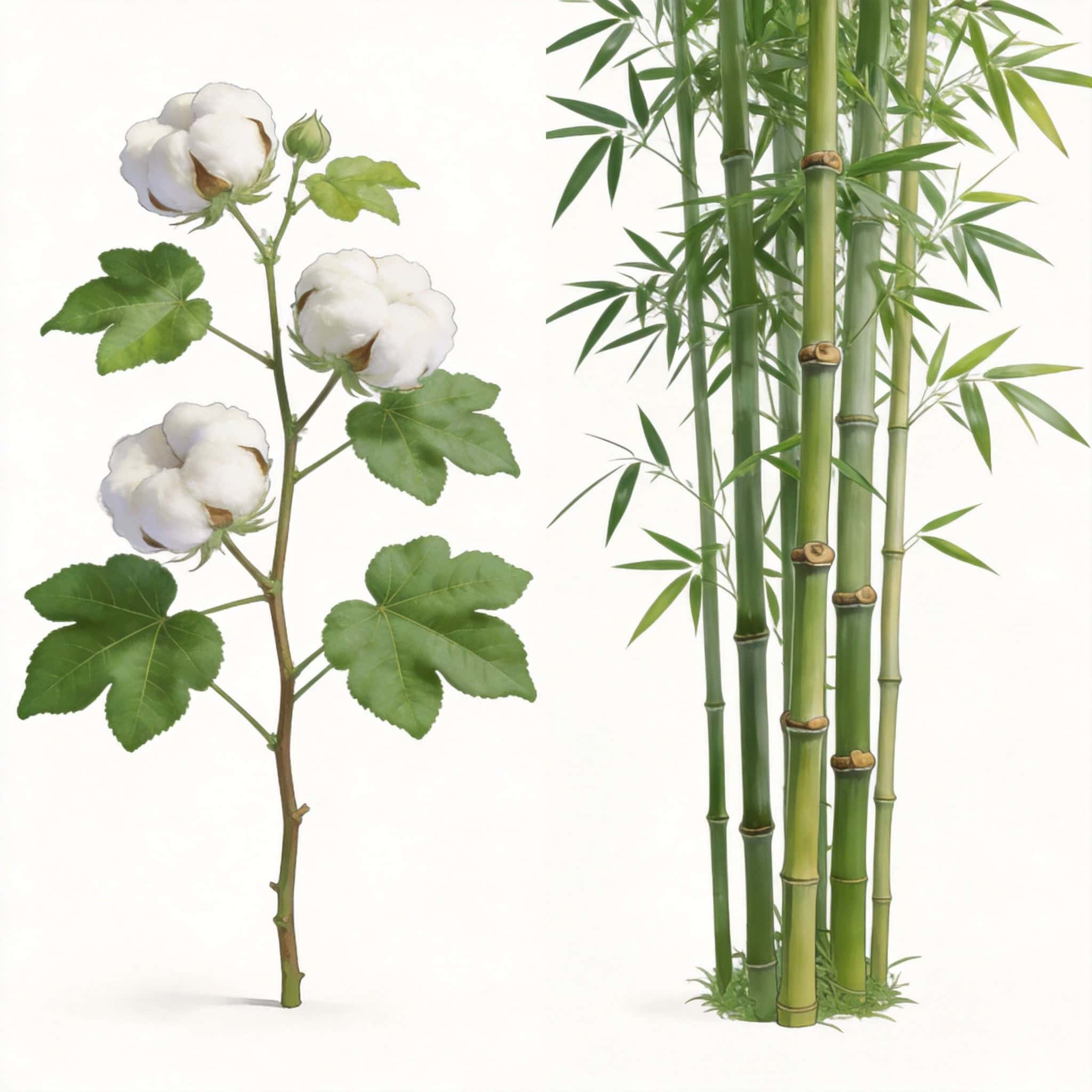
Organic Cotton vs. Regular Cotton vs. Bamboo: A Material Comparison
Selecting the right fiber is the single most consequential decision in building an eco-friendly linen program. The three most common options for hotel textiles each carry distinct trade-offs.
| Attribute | Organic Cotton | Conventional Cotton | Bamboo Viscose |
|---|---|---|---|
| Water Consumption | ~2,500 L/kg (rain-fed) | ~10,000 L/kg (irrigated) | ~1,500 L/kg |
| Pesticide Use | None (biological controls) | 16% of global insecticides | None required |
| Softness (Hand Feel) | Very good, improves with washing | Good, variable by staple length | Excellent, silk-like drape |
| Durability (Wash Cycles) | 200–300 industrial washes | 150–250 industrial washes | 100–180 industrial washes |
| Antimicrobial | No | No | Yes (natural bamboo kun) |
| Biodegradability | 100%, 2–5 months | 100%, 2–5 months | 100%, 3–6 months |
| Cost Premium vs. Conventional | +15–25% | Baseline | +10–20% |
For high-turnover full-service hotels, organic cotton offers the best balance of durability and sustainability. Boutique and lifestyle properties that prioritize guest sensory experience may lean toward bamboo viscose blends. Properties with bamboo fiber bedding sets in their inventory report consistently high guest satisfaction scores, particularly in warm climates where bamboo’s moisture-wicking and thermoregulating properties are most appreciated.
Key Certifications to Look For
Third-party certifications provide the only reliable verification of environmental claims. Without them, “eco-friendly” is merely a marketing term. Here are the certifications that matter most for hotel textiles:
Global Organic Textile Standard (GOTS)
GOTS is the gold standard for organic fiber products. It covers the entire supply chain—from ginning to labeling—and requires a minimum of 70% organic fiber content (labeled “made with organic”) or 95% (labeled “organic”). GOTS also prohibits toxic heavy metals, formaldehyde, and aromatic solvents in processing chemicals.
OEKO-TEX Standard 100
This certification tests for over 350 harmful substances including pesticides, phthalates, and allergenic dyes. While OEKO-TEX does not certify organic content, it guarantees that the finished textile is safe for human contact—a baseline requirement for any hotel linen.
OEKO-TEX STeP
Going beyond product testing, STeP certifies the manufacturing facility itself, evaluating environmental management, chemical inputs, wastewater treatment, and social responsibility. Hotels that want to verify their supplier’s operational practices should require STeP certification.
Better Cotton Initiative (BCI)
BCI is not an organic standard but promotes measurable reductions in water, pesticide, and fertilizer use across conventional cotton farming. For hotels transitioning gradually, BCI cotton represents a pragmatic middle ground.
Fair Trade Certified
While primarily a social standard, Fair Trade certification ensures ethical labor practices throughout the supply chain. Many hotel sustainability programs now incorporate social criteria alongside environmental ones.
Environmental Impact of Hotel Textiles
To make informed purchasing decisions, it helps to quantify the environmental footprint at stake. Consider a 200-room full-service hotel that replaces its linen inventory every two years:
- Annual linen weight: Approximately 8,000–12,000 kg (bed sheets, pillowcases, duvet covers, bath towels, hand towels)
- Water footprint (conventional cotton): 80,000,000–120,000,000 liters annually just for raw fiber production
- Carbon footprint: 25,000–40,000 kg CO₂ equivalent from fiber production, textile processing, and transportation
- Chemical load: 200–400 kg of synthetic pesticides and fertilizers associated with conventional cotton fiber
Switching to organic or bamboo-based alternatives can reduce water consumption by 75–85%, eliminate synthetic pesticide use entirely, and lower the carbon footprint by 20–35%. These are not marginal gains—they represent meaningful progress toward the sustainability targets that hotel groups are publicly committing to.
The choice of fabric also affects laundry operations, which account for a significant portion of a hotel’s daily water and energy consumption. Properly processed hotel-grade fabrics that maintain fiber integrity through repeated wash cycles ultimately consume less water and energy per useful life than lower-quality alternatives that degrade faster.
Cost Considerations: Green vs. Conventional Linens
The most common objection to eco-friendly linens is cost. A nuanced analysis reveals a more complex picture when you look beyond purchase price.
| Cost Component | Conventional Cotton | Organic Cotton | Bamboo Viscose Blend |
|---|---|---|---|
| Purchase Price (per king sheet set) | $18–25 | $22–32 | $20–28 |
| Expected Wash Life | 150–200 cycles | 200–300 cycles | 100–180 cycles |
| Cost Per Wash Cycle | $0.09–0.17 | $0.07–0.16 | $0.11–0.28 |
| Laundry Chemical Cost (per cycle) | $0.08 | $0.08 | $0.06 (milder chemistry needed) |
| Replacement Frequency | Every 1.5–2 years | Every 2–3 years | Every 1–1.5 years |
As the table illustrates, organic cotton often achieves a lower cost per wash cycle despite higher upfront pricing, because its longer lifespan spreads the purchase cost across more uses. Bamboo viscose, while offering superior softness, tends to have a shorter service life in heavy commercial use, making it better suited for luxury boutique applications where replacement cycles are shorter by design.
How to Build an Eco-Friendly Linen Program
Transitioning to sustainable linens is most successful when approached as a structured program rather than an ad hoc purchasing change.
- Audit your current inventory. Document every textile item, its fiber composition, purchase price, and replacement frequency. This baseline is essential for measuring improvement.
- Set measurable targets. “Reduce linen carbon footprint by 25% within 18 months” is actionable. “Go green” is not.
- Prioritize by volume and impact. Flat sheets typically represent the largest single textile expense. Starting there yields the greatest environmental and financial return.
- Request certified samples. Never accept environmental claims without documentation. Require GOTS, OEKO-TEX, or equivalent certification certificates before placing orders.
- Align laundry chemistry. Eco-friendly linens perform best with pH-neutral detergents and lower-temperature wash formulas. Work with your laundry chemical supplier to optimize.
- Train housekeeping staff. Proper sorting, stain treatment, and loading techniques extend linen life regardless of fiber type. Investing 2–3 hours of training per shift pays for itself within months.
- Monitor and report. Track replacement rates, guest feedback, and cost-per-available-room-night (CPAR) for textiles. Report quarterly to stakeholders.
Guest Perception and Brand Value
The business case for eco-friendly linens extends well beyond environmental metrics. Multiple industry surveys confirm that sustainability influences guest behavior:
- Booking.com’s 2024 Sustainable Travel Report found that 83% of global travelers consider sustainable travel important, with 67% saying it affects their accommodation choices.
- Hilton’s internal research shows that rooms marketed with sustainability features achieve 3–5% higher ADR (Average Daily Rate) with no occupancy penalty.
- Hotels that publicly report sustainability commitments see measurably higher scores on guest satisfaction surveys, particularly among Millennials and Gen Z travelers.
In-room collateral—such as a card explaining that the bed linens are made from certified organic cotton or bamboo fiber—transforms a procurement decision into a brand-building opportunity. It signals attention to detail and genuine commitment, not just marketing.
Care and Maintenance of Eco-Friendly Linens
Sustainable linens require the same professional laundering standards as conventional products, with a few adjustments to maximize their lifespan:
- Wash temperature: Organic cotton tolerates standard hotel wash temperatures (65–75°C) well. Bamboo blends perform better at slightly lower temperatures (55–65°C) to preserve fiber softness.
- Chlorine bleach: Avoid entirely. Hydrogen peroxide-based whiteners are effective and do not degrade organic fibers as aggressively.
- Fabric softeners: Minimize or eliminate. They coat fibers and reduce absorbency—particularly problematic for towels and bamboo products.
- Drying: Tumble dry on medium heat. Over-drying is the primary cause of fiber brittleness and premature tearing. Extract moisture to 10–15% residual before finishing.
- Ironing and calendering: Standard pressing temperatures are suitable. Ensure rollers are clean and properly tensioned to avoid mechanical fiber damage.
Hotels sourcing high-quality greige fabric for custom manufacturing should work with their suppliers to establish care guidelines specific to the fabric construction, as weave density and yarn count influence laundering behavior.
Choosing the Right Supplier
Frequently Asked Questions
What certifications indicate hotel linens are truly eco-friendly?
Look for GOTS (Global Organic Textile Standard), OEKO-TEX Standard 100, and bluesign® certifications. These independently verify organic fiber content, absence of harmful chemicals, and sustainable manufacturing processes. Avoid products with vague “green” claims but no third-party certification.
Are eco-friendly hotel linens more expensive than conventional options?
Eco-friendly linens typically cost 10–25% more upfront due to organic fiber sourcing and certified processing. However, they often deliver better long-term value through extended lifespan (30–50% more wash cycles) and lower chemical/water usage per wash. Many hoteliers recoup the premium within 18–24 months.
What materials are best for sustainable hotel linens?
Organic cotton (GOTS-certified), bamboo lyocell (closed-loop process), and Tencel™ are the top sustainable choices. Organic cotton uses 91% less water than conventional cotton. Bamboo lyocell offers natural antimicrobial properties and a silky hand feel, ideal for luxury properties.
Do eco-friendly linens require special washing procedures?
Most eco-friendly linens work well with standard hotel laundering at 60–75°C. Using low-phosphate or eco-certified detergents maintains fiber integrity. Avoid fabric softeners, which reduce absorbency. Line drying when possible extends lifespan by reducing thermal stress.
How do I verify a supplier’s sustainability claims?
Request valid certification documents and verify them directly with the certifying body. Ask for environmental management reports and water/energy usage data. On-site audits or third-party inspection reports provide additional confidence.
What is the typical lead time for eco-friendly hotel linen orders?
Standard eco-friendly linen orders take 30–45 days, slightly longer than conventional linens (20–30 days) due to sourcing organic materials and certified processing. Custom orders with specific weaves or dyes may require 45–60 days. Plan seasonal inventory at least 8 weeks ahead.
Not all “green” suppliers are equal. When evaluating textile vendors for your eco-friendly linen program, assess the following:
- Certification authenticity: Can they provide current, verifiable certificates from accredited bodies? GOTS certificates can be checked on the GOTS public database.
- Supply chain transparency: Do they know—and disclose—the origin of their raw fiber? Traceability from farm to finished product is increasingly expected.
- Technical capability: Can they produce to your exact specifications (thread count, weave, dimensions) using sustainable materials? A supplier who only offers basic constructions may not meet premium hotel requirements.
- Minimum order quantities: Sustainable fibers sometimes carry higher MOQs due to smaller batch processing. Ensure these align with your inventory turnover.
- Customization: Boutique and independent hotels often need non-standard sizes, embroidery, or packaging. Verify the supplier’s flexibility before committing.
Key Takeaways + Next Steps
Eco-friendly hotel linens are no longer a niche product for luxury properties—they are becoming the industry standard. The combination of guest demand, regulatory pressure, and genuine environmental benefit creates a compelling case for action.
The most successful transitions start with a clear audit, set measurable targets, and prioritize high-volume items first. Certification verification is non-negotiable; without it, you cannot distinguish genuine sustainability from greenwashing.
Whether you operate a 50-room boutique hotel or a 500-room full-service resort, the fundamentals are the same: choose certified sustainable materials, align your laundry program, train your staff, and measure your results consistently.
If you are exploring sustainable textile options for your property, YouMian offers a range of certified eco-friendly hotel linens including organic cotton bedding, bamboo viscose blends, and OEKO-TEX certified fabrics. Our team can provide material samples, certification documentation, and custom specifications tailored to your property’s requirements.
Want to Know More About Our Products?
View All Products Now English
  Русский
  Español de México
  Português do Brasil
  العربية