
Hotel Linen Care Guide

Jump to section
Key Takeaways
- Proper linen care can extend hotel textile lifespan by 30–50%, significantly reducing annual replacement costs.
- Wash temperature should be matched to soil level: 75°C for heavily soiled items, 60°C for standard loads, and 40°C for light refresh cycles.
- Over-drying is the #1 cause of premature linen degradation — remove textiles at 5–8% residual moisture.
- Chlorine bleach should be minimized; oxygen-based alternatives protect fiber integrity while achieving sanitation standards.
- Proper storage conditions (cool, dry, ventilated, off the floor) prevent mildew, discoloration, and fiber weakening.
- Different materials require fundamentally different care — cotton, polyester blends, bamboo, and microfiber each have specific protocols.
- A documented linen care SOP reduces staff errors, ensures consistency, and provides a defensible standard for quality audits.
Hotel linens represent one of the largest recurring expenses in hospitality operations. A 200-room property typically replaces $80,000–$150,000 worth of textiles annually, and much of that replacement is premature — caused not by normal wear but by improper care. A well-designed linen care program can extend the usable life of your textile inventory by 30–50%, delivering substantial cost savings while maintaining the quality standards your guests expect.
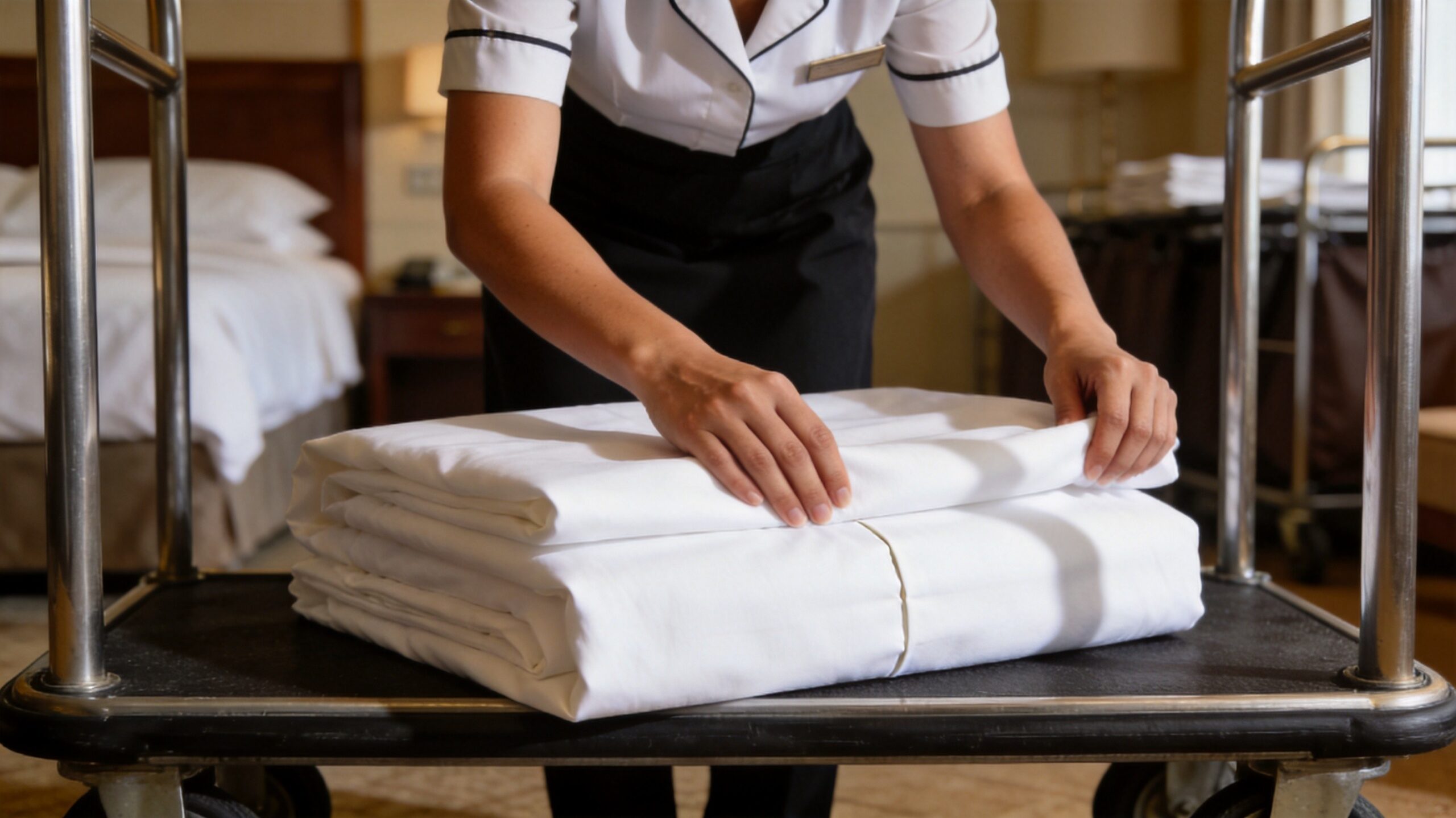
This comprehensive guide covers every aspect of hotel linen care — from daily handling procedures to washing protocols, drying techniques, storage best practices, stain management, and material-specific considerations.
Understanding Linen Lifespan: What to Expect
Different textile products have different expected lifespans under normal commercial use and proper care:
| Textile Type | Expected Wash Cycles | Expected Calendar Life |
|---|---|---|
| Bed sheets (cotton) | 150–200 washes | 12–18 months |
| Bath towels (cotton) | 100–150 washes | 8–14 months |
| Bath towels (cotton-poly) | 200–300 washes | 14–24 months |
| Pillowcases | 130–180 washes | 10–16 months |
| Table linens | 100–150 washes | 8–12 months |
| Microfiber cloths | 300–500 washes | 18–30 months |
If your textiles are consistently falling short of these benchmarks, your care process needs attention. The most common causes of premature degradation are discussed throughout this guide.
Daily Handling: The First Line of Defense
Linen care begins long before the washing machine. How staff handle, transport, and sort linens daily has a significant impact on longevity.
Collection and Transport
- Use clean, ventilated laundry carts with liners. Dirty cart liners transfer soil and bacteria back to clean textiles.
- Never drag linen bags across the floor — this causes abrasion damage to fibers at the edges and corners.
- Separate heavily soiled items (stained table linens, spa robes with oils) from standard room linens at the point of collection.
- Never overload laundry carts. Overfilled carts cause excessive wrinkling, fiber stress, and make sorting more difficult.
Sorting Protocols
- Sort by color (whites, colors, darks), material type (cotton, poly-blend, bamboo), and soil level (lightly soiled, normally soiled, heavily soiled).
- Check for damage during sorting — remove torn, stained, or frayed items for repair or retirement. Damaged items can cause abrasion to other textiles during washing.
- Remove foreign objects (hair clips, pins, debris) before washing to prevent snags and machine damage.
Washing: Temperature, Chemistry, and Mechanical Action
The wash process is the most impactful — and most destructive — stage in the linen lifecycle. Every wash cycle subjects textiles to heat, chemicals, and mechanical agitation. The goal is to achieve cleanliness and sanitation while minimizing cumulative damage.
Temperature Guidelines
| Soil Level | Recommended Temperature | Application |
|---|---|---|
| Light soil / Refresh | 40°C (104°F) | Towels with light use, sheets from checkout with no visible soil |
| Normal soil | 60°C (140°F) | Standard daily wash for sheets, pillowcases, bathroom towels |
| Heavy soil | 75°C (167°F) | F&B linens, spa towels with oils, items with visible stains |
| Sanitization required | 71°C+ for 25 min minimum | Healthcare-adjacent properties, outbreak protocols |
Higher temperatures clean more effectively but accelerate fiber degradation. Use the lowest temperature that achieves your cleanliness standard.
Detergent Selection
- Alkaline detergents (pH 10–12): Best for heavily soiled cotton items. Effective at breaking down body oils and organic stains.
- Neutral detergents (pH 7–8): Recommended for bamboo, microfiber, and delicate blends. Protects fiber integrity over repeated washes.
- Avoid powdered detergents that don’t fully dissolve: Undissolved particles can become trapped in fibers, causing localized abrasion and yellowing.
- Use correct dosing: More detergent does not mean cleaner textiles. Over-dosing leaves residue that attracts dirt, stiffens fibers, and reduces absorbency.
Bleach and Whitening Agents
Chlorine bleach is effective at whitening and sanitizing but is highly destructive to cotton fibers. Each chlorine bleach application can reduce towel tensile strength by 5–10%. Guidelines:
- Limit chlorine bleach to no more than once per week for standard white cotton linens.
- Never use chlorine bleach on polyester blends (it yellows polyester), bamboo fabrics, or elasticized items.
- Switch to oxygen-based bleach (sodium percarbonate) for regular whitening. It is gentler on fibers, safe for most materials, and effective at temperatures above 60°C.
- For persistent yellowing, investigate water quality (iron content), detergent residue, or over-drying before increasing bleach concentration.
Fabric Softeners: To Use or Not to Use
Traditional fabric softeners coat fibers with a thin layer of conditioning agents. While this creates a temporary soft feel, it reduces absorbency — a critical performance metric for towels and bath linens. For hotel applications:
- Avoid conventional fabric softeners on towels and terry products.
- If softening is desired, use a mild acid rinse (acetic acid or citric acid) in the final rinse cycle. This neutralizes alkaline detergent residue, restores softness, and does not reduce absorbency.
- For sheets and flatwork, a light softener application is acceptable if guest preference data supports it.
Drying: Where Most Damage Occurs
Drying is where the most preventable linen damage happens. Over-drying is the single biggest cause of premature textile degradation in hotel laundry operations.
The Over-Drying Problem
Many laundry operators run dryers on a fixed timer (e.g., 45 minutes) regardless of actual moisture content. This leads to textiles being tumble-dried bone-dry or even baked at high temperatures for 10–15 minutes beyond what is necessary. The consequences include:
- Fiber embrittlement: Excessive heat causes cotton fibers to become brittle and break, leading to thinning fabric and increased lint.
- Shrinkage: Over-drying accelerates shrinkage, causing linens to fall below minimum size specifications.
- Color degradation: Whites yellow and colors fade faster under prolonged high heat.
- Energy waste: Running dryers longer than necessary wastes $0.50–$2.00 per load in energy costs.
Best Practice Drying Protocol
- Extract thoroughly before drying. Washer spin speed should be 400+ G-force. Higher extraction removes more water, reducing dryer time.
- Use moisture sensors, not timers. Modern dryers with auto-dry sensors detect residual moisture and stop at the target level. Set sensors to stop at 5–8% residual moisture for flatwork and 3–5% for towels.
- Use medium heat (65–75°C exhaust temperature) for cotton. High heat (85°C+) should be reserved for heavily soiled items requiring sanitization.
- Cool-down tumble for 5–10 minutes at the end of the cycle to reduce wrinkling and static.
- Do not overload dryers. Tumble action is essential for even drying and fiber fluffing. Overloaded dryers dry unevenly and increase mechanical abrasion.
Storage: Protecting Clean Linens
How you store clean linens between use directly impacts their condition when they reach the guest room.
Storage Environment Requirements
- Temperature: 15–25°C (59–77°F). Avoid storage near heat sources (dryers, steam pipes, water heaters).
- Humidity: 40–60% relative humidity. High humidity causes mildew growth and musty odors. Low humidity causes fiber static and brittleness.
- Ventilation: Storage areas must be ventilated. Stagnant air promotes moisture buildup and microbial growth.
- Light exposure: Limit direct sunlight, which causes yellowing of whites and fading of colored textiles.
Storage Best Practices
- Store linens on shelves at least 15 cm (6 inches) off the floor to prevent moisture absorption and contamination.
- Do not store linens in plastic bags or wrapped tightly in plastic. This traps moisture and promotes mildew. Use breathable fabric covers or open shelving.
- Implement FIFO (First In, First Out) rotation to ensure even usage distribution across your linen inventory.
- Keep par levels reasonable — storing excessive inventory for months before use wastes shelf life. Aim for 3–3.5 par as a standard.
- Separate freshly dried linens from cooled linens. Hot linens placed in storage create condensation that promotes mildew.
Stain Removal: A Systematic Approach
Stains are inevitable in hotel operations. A systematic approach to stain removal prevents permanent damage and unnecessary textile retirement.
Common Hotel Stains and Treatment
| Stain Type | Common Source | Recommended Treatment |
|---|---|---|
| Blood | Guest minor injuries | Cold water soak, enzyme detergent, hydrogen peroxide for residual |
| Wine / Coffee | F&B service | Immediate cold rinse, oxygen bleach soak at 60°C |
| Grease / Oil | Kitchen, spa, body oils | Pre-treat with degreasing agent, wash at 75°C with alkaline detergent |
| Makeup | Guest use | Solvent-based pre-treater, wash at 60°C |
| Rust | Water quality, metal fixtures | Rust removal agent (oxalic acid based), never use chlorine bleach |
| Mildew | Improper storage | Oxygen bleach soak at 60°C, improve storage ventilation |
Key Stain Removal Rules
- Never apply heat to an unidentified stain. Heat sets many stains permanently. Always treat with cold water first.
- Treat stains as soon as possible. Fresh stains are dramatically easier to remove than set stains.
- Do not use chlorine bleach on protein-based stains (blood, sweat, food). It sets them permanently.
- Document stain trends. If specific stain types are increasing, investigate root causes (e.g., a new restaurant menu item, a spa treatment oil, hard water issues).
Material-Specific Care Guidelines
Cotton
Cotton is the workhorse of hotel textiles. It withstands high temperatures and aggressive chemistry well, but it is susceptible to shrinkage, yellowing from over-drying, and fiber degradation from excessive chlorine bleach. Follow the general guidelines in this guide with attention to temperature limits and avoid over-drying.
Cotton-Polyester Blends
Blends add durability and wrinkle resistance but require lower wash temperatures (max 65°C) because polyester is sensitive to high heat. Never use chlorine bleach (it yellows polyester). Use neutral or mildly alkaline detergents. Tumble dry on medium heat.
Bamboo Viscose
Bamboo fabrics are softer and more delicate than cotton. Use cool to warm water (max 50°C), neutral pH detergents, and avoid chlorine bleach entirely. Bamboo loses strength when wet, so minimize aggressive mechanical action. Tumble dry on low heat or line dry. Expect slightly more shrinkage than cotton — account for this in purchasing specifications.
For properties using bamboo linens, YouMian’s bamboo blend collection comes with detailed care cards that can be included in housekeeping SOPs.
Microfiber
Microfiber is extremely durable and resistant to staining, but it has specific requirements:
- Wash separately from cotton — microfiber attracts lint from cotton fabrics.
- Do not use fabric softener — it clogs the microfiber structure and destroys its cleaning ability.
- Use warm water (40–50°C) and mild detergent.
- Tumble dry on low heat or air dry. High heat melts microfiber filaments.
- Avoid washing with heavily soiled items — microfiber traps particles and oils.
Common Mistakes That Destroy Linens Prematurely
- Over-drying: As discussed, running dryers past the optimal moisture point is the most common and most damaging error.
- Using too much bleach: Chlorine bleach weakens fibers. Switch to oxygen bleach for routine whitening.
- Overloading washers: Overloaded machines cannot agitate properly, leading to poor cleaning and excessive mechanical stress on textiles.
- Skipping the neutralization step: Alkaline detergent residue left in fabrics causes yellowing, fiber degradation, and skin irritation. A proper acid rinse in the final cycle is essential.
- Storing damp linens: Even slightly damp textiles stored in enclosed spaces will develop mildew within 24–48 hours.
- Using the wrong cycle for the soil level: Running lightly soiled items through a heavy-duty cycle wastes energy and unnecessarily abuses the textiles.
- Ignoring water quality: Hard water (high mineral content) reduces detergent effectiveness, causes mineral deposits on fibers, and leads to gray/yellow discoloration. Install water softeners if hardness exceeds 150 ppm.
- Not maintaining equipment: Worn washer baffles, malfunctioning dryer sensors, and dirty lint traps all contribute to textile damage.
Signs It’s Time to Retire Linens
Knowing when to retire textiles is as important as knowing how to care for them. Continuing to use degraded linens negatively impacts guest satisfaction and reflects poorly on your property.
Retirement Triggers
- Visual thinning: Hold the fabric up to light — if you can see through it easily, the fiber structure is compromised.
- Persistent stains: Stains that survive 3 treatment attempts should be considered permanent.
- Fraying edges: Hems coming apart or edge fibers pulling out indicate end-of-life.
- Loss of softness: If textiles feel rough or scratchy despite proper chemistry, fiber integrity is degraded.
- Shrinkage beyond specification: Sheets or towels that have shrunk more than 10% from original size should be replaced.
- Pilling: Severe pilling (especially on sheets) indicates fiber breakdown. Light pilling can be managed, but heavy pilling signals end-of-life.
Repurposing Before Disposal
Before discarding retired linens, consider downgrading them for lower-visibility uses: stained guest room sheets can become housekeeping rags, slightly damaged towels can be repurposed for pool/spa areas, and table linens with minor damage can become utility cloths. This extends value extraction before final disposal or textile recycling.
Building a Linen Care SOP
The most effective linen care programs are documented as Standard Operating Procedures (SOPs) and reinforced through regular staff training. Your SOP should cover:
- Sorting protocols (by material, color, soil level)
- Wash formulas for each textile type and soil level (temperature, chemistry, cycle time)
- Drying protocols (extraction speed, dryer temperature, target moisture levels)
- Stain treatment procedures (identification, pre-treatment, re-wash process)
- Quality inspection checkpoints (at sorting, post-wash, pre-storage, pre-room placement)
- Storage standards (environment, shelving, rotation)
- Retirement criteria and process
- Equipment maintenance schedule
A documented SOP protects your investment, ensures consistency across shifts and staff changes, and provides defensible standards during quality audits. Suppliers like YouMian (优棉) can provide textile-specific care recommendations and sample SOP templates to help you build or refine your program.
The ROI of Proper Linen Care
Perguntas frequentes
What is the ideal washing temperature for hotel linens?
White cotton linens should be washed at 65–75°C (150–167°F) to kill bacteria and remove stains effectively. Colored or delicate fabrics should be washed at 40–60°C. Use a thermal disinfection wash cycle weekly. Ensure detergent and bleach dosage match water hardness levels to optimize cleaning at these temperatures.
What are the most effective stain removal methods for hotel linens?
Pre-treat stains before washing: protein stains (blood, food) with enzyme-based removers at 30°C; oil/grease with solvent-based spotters; tannin stains (coffee, wine) with oxygen bleach. Avoid chlorine bleach on protein stains as it sets them permanently. Implement a 3-stage sorting system: light stains (standard wash), heavy stains (pre-soak + extended wash), and damaged (repair or repurpose).
What are the best practices for drying hotel linens?
Use medium-heat tumble drying (65–70°C) for optimal efficiency without fiber damage. Remove linens at 5–8% residual moisture to minimize wrinkling and reduce ironing energy. Avoid over-drying, which causes fiber brittleness and increases energy costs by 15–20%. Clean dryer lint filters after every cycle to maintain airflow efficiency.
How should hotel linens be stored between uses?
Store in a cool, dry area (18–24°C, 45–55% humidity) away from direct sunlight. Use closed shelving to prevent dust accumulation. Stack linens by size and rotation date (FIFO). Avoid plastic storage containers, which trap moisture; use breathable cotton bags or open shelving. Inspect stored linens quarterly for yellowing or musty odors.
What is the expected lifespan of hotel linens?
Quality hotel sheets last 250–400 wash cycles (18–30 months at 80% occupancy). Towels last 150–250 cycles (12–20 months). Bathrobes last 100–150 cycles (8–14 months). Track linen lifespan by recording purchase dates and monitoring condition. A systematic replacement schedule (replacing 30–40% of inventory annually) ensures consistent quality.
Consider this scenario for a 200-room hotel:
- Without proper care: Towels replaced every 8 months, sheets every 12 months. Annual textile spend: $130,000.
- With proper care: Towels last 14 months, sheets last 18 months. Annual textile spend: $75,000–$85,000.
- Annual savings: $45,000–$55,000 — plus reduced energy costs from optimized wash/dry cycles.
The investment in training, equipment maintenance, and quality chemicals is a fraction of these savings. Proper linen care is not a cost center — it is one of the highest-ROI operational improvements a hotel can make.
Ready to optimize your linen care program? Contact YouMian’s hospitality textile team for care consultation, durable textile recommendations, and custom SOP development support.
Want to Know More About Our Products?
View All Products Now English
  Русский
  Español de México
  Português do Brasil
  العربية