
دليل العناية بمفارش الفنادق

الانتقال إلى القسم
النقاط الرئيسية
- يمكن للعناية السليمة بالبياضات أن تطيل عمر المنسوجات الفندقية بنسبة تتراوح بين 30 و50%، مما يقلل بشكل كبير من تكاليف الاستبدال السنوية.
- يجب أن تتناسب درجة حرارة الغسيل مع درجة اتساخ الملابس: 75 درجة مئوية للملابس شديدة الاتساخ، و60 درجة مئوية للأحمال العادية، و40 درجة مئوية لدورات التنظيف الخفيفة.
- يُعد التجفيف المفرط السبب الرئيسي لتدهور المنسوجات قبل الأوان — قم بإخراج المنسوجات عندما تبلغ نسبة الرطوبة المتبقية فيها 5–8%.
- ينبغي تقليل استخدام مبيض الكلور إلى أدنى حد ممكن؛ فالبدائل القائمة على الأكسجين تحافظ على سلامة الألياف مع الوفاء بمعايير النظافة الصحية.
- تساعد ظروف التخزين المناسبة (مكان بارد وجاف وجيد التهوية، بعيدًا عن الأرض) على منع ظهور العفن وتغير اللون وضعف الألياف.
- تتطلب المواد المختلفة طرق عناية مختلفة جذريًّا — فالقطن، ومخاليط البوليستر، والخيزران، والألياف الدقيقة، لكل منها طرق عناية محددة.
- تساهم إجراءات التشغيل القياسية الموثقة الخاصة بالعناية بالبياضات في الحد من أخطاء الموظفين، وضمان الاتساق، وتوفير معيار يمكن الدفاع عنه في عمليات تدقيق الجودة.
تمثل بياضات الفنادق واحدة من أكبر النفقات المتكررة في عمليات الضيافة. فعادةً ما يستبدل فندق يضم 200 غرفة ما قيمته $80,000–$150,000 من المنسوجات سنويًّا، ويكون جزء كبير من هذا الاستبدال سابقًا لأوانه — ولا يرجع ذلك إلى البلى الطبيعي، بل إلى العناية غير السليمة. يمكن لبرنامج العناية بالبياضات المصمم جيدًا أن يطيل العمر الافتراضي لمخزون المنسوجات لديك بنسبة تتراوح بين 30 و50%، مما يحقق وفورات كبيرة في التكاليف مع الحفاظ على معايير الجودة التي يتوقعها ضيوفك.
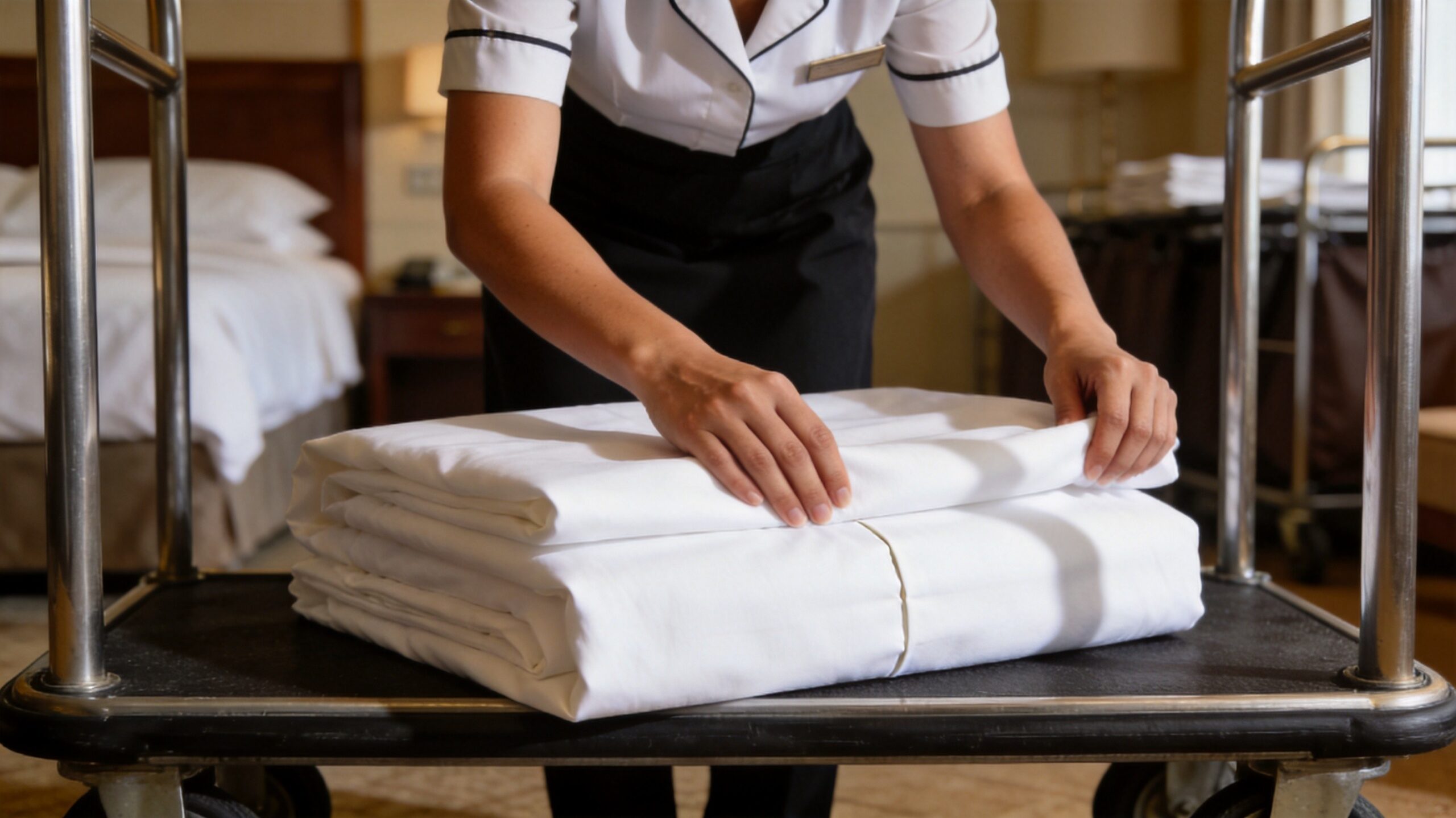
يغطي هذا الدليل الشامل جميع جوانب العناية بمفروشات الفنادق — بدءًا من إجراءات التعامل اليومية وصولاً إلى بروتوكولات الغسيل، وتقنيات التجفيف، وأفضل الممارسات في التخزين، ومعالجة البقع، والاعتبارات الخاصة بكل نوع من أنواع الأقمشة.
فهم العمر الافتراضي للكتان: ما الذي يمكن توقعه
تختلف الأعمار الافتراضية لمنتجات المنسوجات المختلفة في ظل الاستخدام التجاري العادي والعناية المناسبة:
| نوع النسيج | دورات الغسيل المتوقعة | العمر الافتراضي المتوقع |
|---|---|---|
| ملاءات السرير (قطنية) | 150–200 غسلة | 12–18 شهراً |
| مناشف الحمام (قطنية) | 100–150 غسلة | 8–14 شهراً |
| مناشف الحمام (قطن وبوليستر) | 200–300 غسلة | 14–24 شهراً |
| أغطية الوسائد | 130–180 غسلة | 10–16 شهراً |
| أغطية المائدة | 100–150 غسلة | 8–12 شهراً |
| أقمشة من الألياف الدقيقة | 300–500 غسلة | 18–30 شهراً |
إذا كانت منتجاتك النسيجية لا ترقى باستمرار إلى هذه المعايير، فإن عملية العناية بها تحتاج إلى مراجعة. وتتم مناقشة الأسباب الأكثر شيوعًا للتلف المبكر في هذا الدليل.
التعامل اليومي: خط الدفاع الأول
تبدأ العناية بالبياضات قبل استخدام الغسالة بفترة طويلة. وتؤثر الطريقة التي يتعامل بها الموظفون مع البياضات وينقلونها ويفرزونها يوميًا تأثيرًا كبيرًا على مدة صلاحيتها.
الجمع والنقل
- استخدم عربات غسيل نظيفة وجيدة التهوية ومزودة بأكياس داخلية. فأكياس العربات المتسخة تنقل الأوساخ والبكتيريا إلى المنسوجات النظيفة.
- لا تقم أبدًا بسحب أكياس الكتان على الأرض — فهذا يتسبب في تلف الألياف بسبب الاحتكاك عند الحواف والزوايا.
- يجب فصل الملابس شديدة الاتساخ (مثل مفارش المائدة الملطخة، وأردية المنتجع الصحي الملطخة بالزيوت) عن بياضات الغرف العادية عند نقطة التجميع.
- لا تفرط في تحميل عربات الغسيل. فالعربات المملوءة بشكل مفرط تتسبب في تجعد الملابس بشكل مفرط، وتؤدي إلى إجهاد الألياف، وتجعل عملية الفرز أكثر صعوبة.
بروتوكولات الفرز
- الترتيب حسب اللون (الألوان الفاتحة، الألوان المتنوعة، الألوان الداكنة)،, نوع المادة (القطن، مزيج البوليستر، الخيزران)، و مستوى التربة (متسخ قليلاً، متسخ بشكل عادي، متسخ بشدة).
- تحقق من وجود أي تلف أثناء الفرز — قم بإزالة القطع الممزقة أو الملطخة أو المتهالكة لإصلاحها أو التخلص منها. فقد تتسبب القطع التالفة في حدوث تآكل للمنسوجات الأخرى أثناء الغسيل.
- قم بإزالة الأجسام الغريبة (مشابك الشعر، الدبابيس، الأوساخ) قبل الغسيل لتجنب حدوث تشابك وتلف الغسالة.
الغسيل: درجة الحرارة، والمواد الكيميائية، والتأثير الميكانيكي
تعد عملية الغسيل المرحلة الأكثر تأثيرًا — والأكثر تدميرًا — في دورة حياة المنسوجات. ففي كل دورة غسيل، تتعرض المنسوجات للحرارة والمواد الكيميائية والاهتزاز الميكانيكي. والهدف من ذلك هو تحقيق النظافة والتعقيم مع تقليل الأضرار المتراكمة إلى أدنى حد ممكن.
إرشادات بشأن درجة الحرارة
| مستوى التربة | درجة الحرارة الموصى بها | التطبيق |
|---|---|---|
| تربة خفيفة / تجديد | 40 درجة مئوية (104 درجة فهرنهايت) | مناشف لم تُستخدم كثيرًا، وملاءات من غرفة النوم لا تظهر عليها أي بقع |
| تربة عادية | 60 درجة مئوية (140 درجة فهرنهايت) | الغسيل اليومي العادي للملاءات وأغطية الوسائد ومناشف الحمام |
| تربة ثقيلة | 75 درجة مئوية (167 درجة فهرنهايت) | أغطية المائدة والمشروبات، ومناشف السبا الملطخة بالزيوت، والملابس التي عليها بقع واضحة |
| يلزم التعقيم | 71 درجة مئوية أو أكثر لمدة 25 دقيقة على الأقل | العقارات المرتبطة بالرعاية الصحية، وبروتوكولات التعامل مع حالات تفشي الأمراض |
تساعد درجات الحرارة المرتفعة على التنظيف بشكل أكثر فعالية، لكنها تسرع من تدهور الألياف. استخدم أدنى درجة حرارة تحقق معايير النظافة التي تريدها.
اختيار المنظفات
- المنظفات القلوية (درجة الحموضة 10–12): الأفضل للملابس القطنية شديدة الاتساخ. فعال في إزالة الدهون الجسدية والبقع العضوية.
- المنظفات المحايدة (الرقم الهيدروجيني 7–8): موصى به للملابس المصنوعة من الخيزران والألياف الدقيقة والمزيج الرقيق. يحافظ على سلامة الألياف حتى بعد الغسل المتكرر.
- تجنب استخدام المنظفات المسحوقة التي لا تذوب تمامًا: قد تعلق الجسيمات غير المذابة في الألياف، مما يتسبب في حدوث تآكل موضعي واصفرار.
- استخدم الجرعة الصحيحة: زيادة كمية المنظف لا تعني أن المنسوجات ستصبح أنظف. فالإفراط في الجرعة يترك بقايا تجذب الأوساخ، وتجعل الألياف قاسية، وتقلل من قدرتها على الامتصاص.
المبيضات وعوامل التبييض
يُعد مبيض الكلور فعالاً في تبييض الأقمشة وتعقيمها، لكنه شديد التلف لألياف القطن. فكل مرة يتم فيها استخدام مبيض الكلور يمكن أن تقلل من مقاومة الشد في المناشف بنسبة 5–10%. الإرشادات:
- يُفضل عدم استخدام مبيض الكلور أكثر من مرة واحدة أسبوعيًا لغسيل البياضات القطنية البيضاء العادية.
- لا تستخدم أبدًا مبيض الكلور على الأقمشة المخلوطة بالبوليستر (لأنه يتسبب في اصفرار البوليستر)، أو الأقمشة المصنوعة من الخيزران، أو الملابس التي تحتوي على أجزاء مطاطية.
- التحول إلى المبيضات التي تعتمد على الأكسجين (بيركربونات الصوديوم) للتبييض المنتظم. فهو أكثر لطفًا على الألياف، وآمن على معظم المواد، وفعال عند درجات حرارة تزيد عن 60 درجة مئوية.
- في حالة اصفرار الملابس المستمر، تحقق من جودة المياه (محتوى الحديد)، أو بقايا المنظفات، أو الإفراط في التجفيف قبل زيادة تركيز المبيض.
منعمات الملابس: هل نستخدمها أم لا؟
تقوم منعمات الأقمشة التقليدية بتغطية الألياف بطبقة رقيقة من عوامل الترطيب. ورغم أن ذلك يمنح ملمسًا ناعمًا مؤقتًا، إلا أنه يقلل من القدرة على الامتصاص — وهو مؤشر أداء بالغ الأهمية للمناشف وأغطية الحمام. بالنسبة للاستخدامات الفندقية:
- تجنب استخدام منعمات الأقمشة التقليدية على المناشف والمنتجات المصنوعة من القماش المزغب.
- إذا كنت ترغب في تنعيم القماش، فاستخدم شطفًا بحمض خفيف (حمض أسيتيك أو حمض الستريك) في دورة الشطف النهائية. فهذا يعمل على تحييد بقايا المنظفات القلوية، ويعيد النعومة، ولا يقلل من قدرة القماش على الامتصاص.
- بالنسبة للشراشف والمفروشات المسطحة، يُعد استخدام كمية قليلة من المنعم مقبولاً إذا كانت بيانات تفضيلات النزلاء تدعم ذلك.
التجفيف: المكان الذي تحدث فيه معظم الأضرار
تحدث معظم الأضرار التي يمكن تجنبها في البياضات أثناء عملية التجفيف. ويُعد التجفيف المفرط السبب الأكبر الوحيد لتدهور المنسوجات قبل الأوان في عمليات غسيل الملابس بالفنادق.
مشكلة الإفراط في التجفيف
يقوم العديد من مشغلي مغاسل الملابس بتشغيل المجففات وفقًا لمؤقت ثابت (على سبيل المثال، 45 دقيقة) بغض النظر عن محتوى الرطوبة الفعلي. ويؤدي ذلك إلى تجفيف المنسوجات في المجفف حتى تصبح جافة تمامًا، أو حتى تعريضها لدرجات حرارة عالية لمدة تتراوح بين 10 و15 دقيقة أكثر مما هو ضروري. وتشمل العواقب ما يلي:
- تقصف الألياف: تؤدي الحرارة المفرطة إلى هشاشة ألياف القطن وانكسارها، مما يؤدي إلى ترقق النسيج وزيادة النسالة.
- الانكماش: يؤدي التجفيف المفرط إلى تسريع عملية الانكماش، مما يجعل أغطية الأسرة أصغر من الحد الأدنى للمقاسات المحددة.
- تدهور اللون: تتحول الألوان البيضاء إلى اللون الأصفر، كما تتلاشى الألوان بسرعة أكبر عند التعرض للحرارة العالية لفترات طويلة.
- هدر الطاقة: إن تشغيل المجففات لفترة أطول من اللازم يؤدي إلى إهدار ما بين $0.50 و$2.00 من تكاليف الطاقة لكل حمولة.
بروتوكول التجفيف وفقًا لأفضل الممارسات
- قم بتصفيته جيدًا قبل التجفيف. يجب أن تبلغ سرعة الدوران في الغسالة 400+ G. فكلما زادت سرعة العصر، زادت كمية المياه التي يتم التخلص منها، مما يقلل من مدة التجفيف.
- استخدم مستشعرات الرطوبة، لا أجهزة ضبط الوقت. تكتشف المجففات الحديثة المزودة بأجهزة استشعار للتجفيف التلقائي الرطوبة المتبقية وتتوقف عند المستوى المستهدف. اضبط أجهزة الاستشعار بحيث تتوقف عند مستوى رطوبة متبقية يتراوح بين 5 و8% للملابس المسطحة، وبين 3 و5% للمناشف.
- استخدم حرارة متوسطة (درجة حرارة الهواء المنبعث 65–75 درجة مئوية) للقطن. ينبغي استخدام درجة الحرارة العالية (85 درجة مئوية فأكثر) فقط للملابس شديدة الاتساخ التي تتطلب التعقيم.
- تمارين التهدئة لمدة 5–10 دقائق في نهاية الدورة لتقليل التجاعيد والكهرباء الساكنة.
- لا تفرط في تحميل المجففات. تعد حركة الدوران أمرًا ضروريًا لتجفيف الملابس بشكل متساوٍ وتفتيت الألياف. أما المجففات المثقلة بالأحمال، فتجفف الملابس بشكل غير متساوٍ وتزيد من التآكل الميكانيكي.
التخزين: الحفاظ على نظافة البياضات
تؤثر طريقة تخزين البياضات النظيفة بين الاستخدامات بشكل مباشر على حالتها عند وصولها إلى غرفة الضيوف.
متطلبات بيئة التخزين
- درجة الحرارة: 15–25 درجة مئوية (59–77 درجة فهرنهايت). تجنب تخزين المنتج بالقرب من مصادر الحرارة (المجففات، وأنابيب البخار، وسخانات المياه).
- الرطوبة: 40–60% الرطوبة النسبية. تؤدي الرطوبة العالية إلى نمو العفن وظهور الروائح الكريهة. أما الرطوبة المنخفضة فتؤدي إلى تكوّن الشحنة الكهروستاتيكية في الألياف وهشاشتها.
- التهوية: يجب أن تكون مناطق التخزين جيدة التهوية. فالهواء الراكد يساهم في تراكم الرطوبة ونمو الميكروبات.
- التعرض للضوء: تجنب التعرض المباشر لأشعة الشمس، التي تتسبب في اصفرار الأقمشة البيضاء وتلاشي ألوان الأقمشة الملونة.
أفضل الممارسات في مجال التخزين
- يجب تخزين أغطية الأسرة على أرفف على ارتفاع لا يقل عن 15 سم (6 بوصات) عن الأرض لمنع امتصاص الرطوبة والتلوث.
- لا تقم بتخزين البياضات في أكياس بلاستيكية أو ملفوفة بإحكام في غلاف بلاستيكي، لأن ذلك يحبس الرطوبة ويؤدي إلى ظهور العفن. استخدم أغطية قماشية تسمح بمرور الهواء أو أرفف مفتوحة.
- قم بتطبيق نظام الدوران «FIFO» (الوارد أولاً، يخرج أولاً) لضمان التوزيع المتساوي للاستخدام عبر مخزون البياضات لديك.
- حافظ على مستويات المخزون المعياري في حدود معقولة — فالتخزين المفرط للمخزون لعدة أشهر قبل استخدامه يؤدي إلى إهدار مدة الصلاحية. احرص على أن يكون مستوى المخزون المعياري بين 3 و3.5 كمعيار قياسي.
- افصل البياضات التي جُففت للتو عن البياضات التي بردت. فوضع البياضات الساخنة في المخزن يؤدي إلى تكوّن التكثيف الذي يشجع على ظهور العفن.
إزالة البقع: نهج منهجي
البقع أمر لا مفر منه في عمليات إدارة الفنادق. واتباع نهج منهجي لإزالة البقع يمنع حدوث أضرار دائمة والتخلص غير الضروري من المنسوجات.
البقع الشائعة في الفنادق وطرق معالجتها
| نوع البقعة | المصدر المشترك | العلاج الموصى به |
|---|---|---|
| الدم | إصابات طفيفة لحقت بالضيوف | النقع في الماء البارد، المنظف الإنزيمي، بيروكسيد الهيدروجين لإزالة البقايا |
| النبيذ / القهوة | خدمات المأكولات والمشروبات | شطف فوري بالماء البارد، ونقع باستخدام مبيض الأكسجين عند درجة حرارة 60 درجة مئوية |
| الشحم / الزيت | المطبخ، المنتجع الصحي، زيوت الجسم | قم بالمعالجة المسبقة باستخدام مادة إزالة الشحوم، ثم اغسلها عند درجة حرارة 75 درجة مئوية باستخدام منظف قلوي |
| المكياج | استخدام الضيوف | مُعالج مسبق قائم على المذيبات، يُغسل عند 60 درجة مئوية |
| الصدأ | جودة المياه، التركيبات المعدنية | عامل إزالة الصدأ (يعتمد على حمض الأكساليك)، لا تستخدم أبدًا مبيض الكلور |
| العفن الفطري | التخزين غير السليم | نقع الملابس في محلول مبيض أكسجيني عند درجة حرارة 60 درجة مئوية، وتحسين التهوية في مكان التخزين |
القواعد الأساسية لإزالة البقع
- لا تقم أبدًا بتسخين بقعة غير معروفة. تؤدي الحرارة إلى تثبيت العديد من البقع بشكل دائم. لذا، يجب معالجتها بالماء البارد أولاً دائمًا.
- عالج البقع في أسرع وقت ممكن. البقع الحديثة أسهل بكثير في الإزالة من البقع القديمة.
- لا تستخدم مبيض الكلور على البقع الناتجة عن البروتينات (الدم، والعرق، والطعام). وهذا يرسخها بشكل دائم.
- توثيق اتجاهات البقع. في حال تزايد أنواع معينة من البقع، يجب التحقيق في الأسباب الجذرية (مثل إضافة عنصر جديد إلى قائمة طعام المطعم، أو زيت مستخدم في علاجات السبا، أو مشاكل المياه العسرة).
إرشادات العناية الخاصة بكل نوع من أنواع الأقمشة
القطن
يُعد القطن العنصر الأساسي في منسوجات الفنادق. فهو يتحمل درجات الحرارة المرتفعة والمواد الكيميائية القوية بشكل جيد، لكنه معرض للانكماش، والاصفرار الناتج عن التجفيف المفرط، وتدهور الألياف بسبب الاستخدام المفرط لمبيضات الكلور. يرجى اتباع الإرشادات العامة الواردة في هذا الدليل مع الانتباه إلى حدود درجات الحرارة وتجنب التجفيف المفرط.
خليط القطن والبوليستر
تضفي الخلطات المتعددة مزيدًا من المتانة ومقاومة التجعد، لكنها تتطلب درجات حرارة غسيل أقل (بحد أقصى 65 درجة مئوية) لأن البوليستر حساس للحرارة العالية. لا تستخدم أبدًا مبيضات الكلور (فهي تتسبب في اصفرار البوليستر). استخدم منظفات محايدة أو قليلة القلوية. جفف الملابس في المجفف على درجة حرارة متوسطة.
فيسكوز الخيزران
أقمشة الخيزران أكثر نعومة وحساسية من القطن. استخدم ماءً باردًا إلى دافئ (بحد أقصى 50 درجة مئوية)، ومنظفات ذات درجة حموضة متعادلة، وتجنب استخدام مبيضات الكلور تمامًا. يفقد الخيزران قوته عند البلل، لذا قلل من الحركة الميكانيكية العنيفة. جفف الملابس في المجفف على درجة حرارة منخفضة أو علقها على الحبل. توقع انكماشًا أكبر قليلاً مقارنةً بالقطن — ضع ذلك في اعتبارك عند شراء المنتجات.
بالنسبة للمنازل التي تستخدم بياضات السرير المصنوعة من الخيزران،, مجموعة «يو ميان» المصنوعة من مزيج الخيزران يأتي مزودًا ببطاقات رعاية مفصلة يمكن إدراجها في إجراءات العمل القياسية الخاصة بخدمات التنظيف.
الألياف الدقيقة
تتميز الألياف الدقيقة بمتانتها الفائقة ومقاومتها للبقع، لكنها تتطلب شروطًا محددة:
- يُغسل بشكل منفصل عن القطن — حيث تجذب الألياف الدقيقة الوبر من الأقمشة القطنية.
- لا تستخدم منعم الأقمشة — فهو يسد بنية الألياف الدقيقة ويقضي على قدرتها على التنظيف.
- استخدم الماء الدافئ (40–50 درجة مئوية) ومنظفًا معتدلًا.
- جففها في المجفف على درجة حرارة منخفضة أو جففها في الهواء. فالحرارة العالية تؤدي إلى ذوبان خيوط الألياف الدقيقة.
- تجنب غسلها مع الملابس شديدة الاتساخ — فالألياف الدقيقة تحتجز الجسيمات والزيوت.
الأخطاء الشائعة التي تؤدي إلى تلف أغطية الأسرة قبل الأوان
- الإفراط في التجفيف: كما سبق ذكره، فإن تشغيل المجففات بعد تجاوز نقطة الرطوبة المثلى هو الخطأ الأكثر شيوعًا والأكثر إضرارًا.
- استخدام كمية زائدة من المبيض: مبيض الكلور يضعف الألياف. استخدم مبيض الأكسجين في عمليات التبييض الروتينية.
- الحمولة الزائدة في الغسالات: لا تستطيع الغسالات المحملة فوق طاقتها القيام بعملية الغسيل بشكل سليم، مما يؤدي إلى ضعف التنظيف وإجهاد ميكانيكي مفرط على المنسوجات.
- تخطي خطوة التحييد: تتسبب بقايا المنظفات القلوية المتبقية في الأقمشة في اصفرارها وتدهور الألياف وتهيج الجلد. لذا، فإن الشطف الحمضي المناسب في الدورة النهائية أمر ضروري.
- تخزين البياضات الرطبة: حتى المنسوجات الرطبة قليلاً التي تُخزَّن في أماكن مغلقة ستصاب بالعفن في غضون 24 إلى 48 ساعة.
- استخدام الدورة غير المناسبة لمستوى الأوساخ: إن غسل الملابس ذات الأوساخ الخفيفة في دورة غسيل مكثفة يؤدي إلى إهدار الطاقة وإلحاق ضرر لا داعي له بالمنسوجات.
- تجاهل جودة المياه: تقلل المياه العسرة (ذات المحتوى المعدني العالي) من فعالية المنظفات، وتسبب ترسبات معدنية على الألياف، وتؤدي إلى تغير لون الملابس إلى اللون الرمادي أو الأصفر. قم بتركيب أجهزة تنقية المياه إذا تجاوزت درجة العسر 150 جزء في المليون.
- عدم صيانة المعدات: تساهم الحواجز المطاطية البالية، وأجهزة استشعار المجفف المعطلة، ومصافي الوبر المتسخة، جميعها في تلف المنسوجات.
علامات تدل على أن الوقت قد حان للتخلص من أغطية السرير
إن معرفة متى يجب التخلص من المنسوجات لا تقل أهمية عن معرفة كيفية العناية بها. فاستمرار استخدام المنسوجات البالية يؤثر سلبًا على رضا النزلاء ويُعطي انطباعًا سيئًا عن منشأتك.
عوامل تؤدي إلى التقاعد
- التخفيف البصري: ارفع القماش أمام الضوء — إذا تمكنت من الرؤية من خلاله بسهولة، فهذا يعني أن بنية الألياف قد تضررت.
- البقع الصعبة: يجب اعتبار البقع التي لا تزول بعد ثلاث محاولات للتنظيف بقعًا دائمة.
- الحواف المتهالكة: يشير تفكك الحواف أو انسحاب ألياف الحواف إلى انتهاء العمر الافتراضي للمنتج.
- فقدان النعومة: إذا كانت المنسوجات تبدو خشنة أو تسبب حكة على الرغم من استخدام التركيبة الكيميائية المناسبة، فهذا يعني أن سلامة الألياف قد تضررت.
- انكماش يتجاوز المواصفات: يجب استبدال الملاءات أو المناشف التي انكمشت بنسبة تزيد عن 10% مقارنة بحجمها الأصلي.
- تكوّن الكريات: تشير ظهور الكريات بشكل مكثف (خاصة على الملاءات) إلى تلف الألياف. يمكن التعامل مع الكريات الخفيفة، لكن ظهورها بكثرة يشير إلى انتهاء عمر المنتج.
إعادة الاستخدام قبل التخلص منها
قبل التخلص من أغطية الأسرة القديمة، يُنصح بإعادة توظيفها في أغراض أقل أهمية: فملاءات غرف الضيوف الملطخة يمكن تحويلها إلى خرق للتنظيف المنزلي، والمناشف التي تعرضت لأضرار طفيفة يمكن إعادة استخدامها في مناطق المسبح أو المنتجع الصحي، وأغطية الطاولات التي بها أضرار بسيطة يمكن تحويلها إلى خرق منزلية. وهذا يطيل من فترة الاستفادة منها قبل التخلص النهائي منها أو إعادة تدويرها.
وضع إجراءات تشغيلية موحدة للعناية بالبياضات
يتم توثيق أكثر برامج العناية بالبياضات فعاليةً في شكل «إجراءات تشغيل قياسية» (SOPs)، ويتم تعزيزها من خلال التدريب المنتظم للموظفين. وينبغي أن تشمل إجراءات التشغيل القياسية الخاصة بكم ما يلي:
- بروتوكولات الفرز (حسب المادة، واللون، ومستوى التلوث)
- برامج الغسيل المخصصة لكل نوع من أنواع الأقمشة ودرجة التلوث (درجة الحرارة، التركيب الكيميائي، مدة الدورة)
- بروتوكولات التجفيف (سرعة الاستخلاص، ودرجة حرارة المجفف، ومستويات الرطوبة المستهدفة)
- إجراءات معالجة البقع (التحديد، المعالجة المسبقة، عملية إعادة الغسل)
- نقاط فحص الجودة (أثناء الفرز، وبعد الغسيل، وقبل التخزين، وقبل وضع الملابس في الغرف)
- معايير التخزين (البيئة، الرفوف، التناوب)
- معايير وإجراءات التقاعد
- جدول صيانة المعدات
إن إجراءات التشغيل القياسية (SOP) الموثقة تحمي استثماراتك، وتضمن الاتساق عبر الورديات وتغييرات الموظفين، وتوفر معايير يمكن الدفاع عنها خلال عمليات تدقيق الجودة. ويحب الموردون YouMian (优棉) يمكنها تقديم توصيات خاصة بالعناية بالمنسوجات ونماذج لإجراءات التشغيل القياسية (SOP) لمساعدتك في وضع برنامجك أو تحسينه.
العائد على الاستثمار من العناية السليمة بالبياضات
الأسئلة المتداولة
ما هي درجة الحرارة المثالية لغسل بياضات الفنادق؟
يجب غسل أغطية السرير القطنية البيضاء عند درجة حرارة تتراوح بين 65 و75 درجة مئوية (150–167 درجة فهرنهايت) لقتل البكتيريا وإزالة البقع بفعالية. أما الأقمشة الملونة أو الرقيقة فيجب غسلها عند درجة حرارة تتراوح بين 40 و60 درجة مئوية. استخدم دورة غسيل بالتطهير الحراري أسبوعيًا. تأكد من أن جرعة المنظف والمبيض تتناسب مع مستويات عسر الماء لتحقيق أفضل نتائج تنظيف عند هذه الدرجات الحرارة.
ما هي أكثر الطرق فعالية لإزالة البقع من بياضات الفنادق؟
قم بمعالجة البقع مسبقًا قبل الغسيل: البقع البروتينية (الدم، الطعام) باستخدام مزيلات تعتمد على الإنزيمات عند درجة حرارة 30 درجة مئوية؛ والبقع الزيتية/الشحمية باستخدام مزيلات تعتمد على المذيبات؛ وبقع التانين (القهوة، النبيذ) باستخدام مبيض الأكسجين. تجنب استخدام المبيضات الكلورية على البقع البروتينية لأنها تثبتها بشكل دائم. طبق نظام فرز من 3 مراحل: البقع الخفيفة (غسيل عادي)، البقع الشديدة (نقع مسبق + غسيل مطول)، والملابس التالفة (إصلاحها أو إعادة استخدامها).
ما هي أفضل الممارسات لتجفيف بياضات الفنادق؟
استخدم التجفيف في المجفف على درجة حرارة متوسطة (65–70 درجة مئوية) لتحقيق الكفاءة المثلى دون الإضرار بالألياف. أخرج البياضات عندما تبلغ نسبة الرطوبة المتبقية 5–8% لتقليل التجعد إلى أدنى حد وتقليل الطاقة المستهلكة في الكي. تجنب التجفيف المفرط، الذي يتسبب في هشاشة الألياف ويزيد من تكاليف الطاقة بنسبة 15–20%. قم بتنظيف مرشحات الوبر في المجفف بعد كل دورة للحفاظ على كفاءة تدفق الهواء.
كيف ينبغي تخزين بياضات الفنادق بين الاستخدامات؟
يُخزن في مكان بارد وجاف (18–24 درجة مئوية، رطوبة 45–55%) بعيدًا عن أشعة الشمس المباشرة. استخدم أرفف مغلقة لمنع تراكم الغبار. رص البياضات حسب الحجم وتاريخ التناوب (FIFO). تجنب استخدام حاويات التخزين البلاستيكية التي تحتبس الرطوبة؛ واستخدم أكياس قطنية تسمح بمرور الهواء أو أرفف مفتوحة. افحص البياضات المخزنة كل ثلاثة أشهر للتأكد من عدم وجود اصفرار أو روائح عفنة.
ما هو العمر الافتراضي المتوقع لمفروشات الفنادق؟
تدوم ملاءات الفنادق عالية الجودة ما بين 250 و400 دورة غسيل (18–30 شهراً عند معدل إشغال 80%). أما المناشف فتدوم ما بين 150 و250 دورة (12–20 شهراً). أما أرواب الحمام فتدوم من 100 إلى 150 دورة غسيل (8–14 شهرًا). يمكن تتبع عمر البياضات عن طريق تسجيل تواريخ الشراء ومراقبة حالتها. ويضمن جدول الاستبدال المنهجي (استبدال 30–40% من المخزون سنويًا) الحفاظ على جودة ثابتة.
تخيل هذا السيناريو لفندق يضم 200 غرفة:
- في حالة عدم توفير الرعاية المناسبة: يتم استبدال المناشف كل 8 أشهر، والملاءات كل 12 شهرًا. الإنفاق السنوي على المنسوجات: $130,000.
- مع العناية المناسبة: تدوم المناشف 14 شهراً، وتدوم الملاءات 18 شهراً. الإنفاق السنوي على المنسوجات: $75,000–$85,000.
- الوفورات السنوية: $45,000–$55,000 — بالإضافة إلى انخفاض تكاليف الطاقة بفضل دورات الغسيل والتجفيف المُحسَّنة.
إن الاستثمار في التدريب وصيانة المعدات والمواد الكيميائية عالية الجودة لا يمثل سوى جزء ضئيل من هذه الوفورات. فالعناية السليمة بالبياضات ليست مصدرًا للتكاليف — بل هي أحد التحسينات التشغيلية التي تحقق أعلى عائد على الاستثمار والتي يمكن للفندق القيام بها.
هل أنت مستعد لتحسين برنامج العناية بالمفروشات؟ اتصل بفريق المنسوجات الفندقية في YouMian للحصول على استشارات بشأن العناية بالمنتجات، وتوصيات بشأن المنسوجات المتينة، ودعم في وضع إجراءات التشغيل القياسية المخصصة.
هل تريد معرفة المزيد عن منتجاتنا؟
عرض جميع المنتجات الآن English
  Русский
  Español de México
  Português do Brasil
  العربية