
الدليل الشامل لمفروشات الفنادق المستدامة: الشهادات والمواد ومصادر التوريد
الانتقال إلى القسم
رد الإدارة التنفيذية
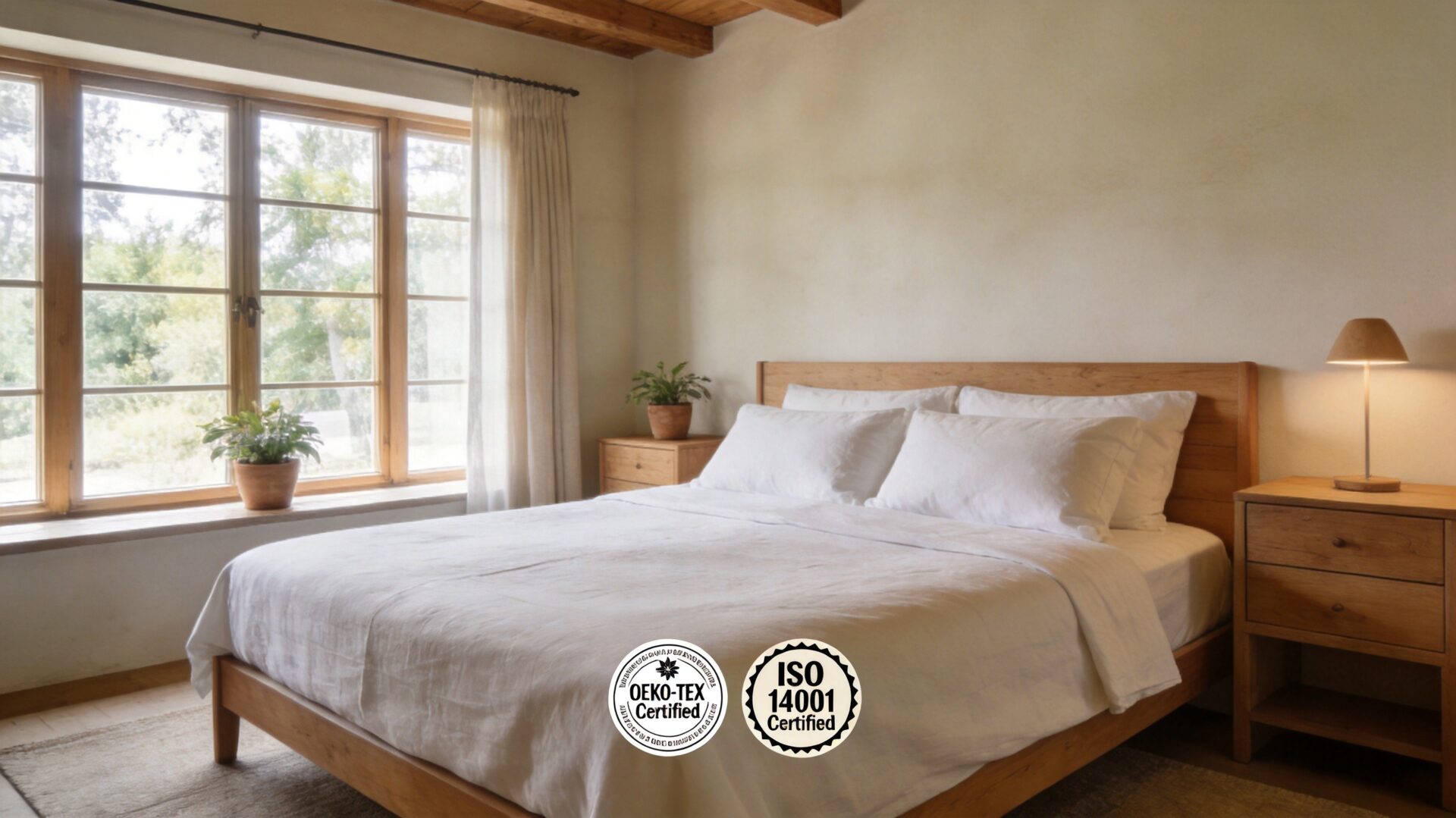
لم تعد بياضات الفنادق المستدامة مجرد علامة تجارية متخصصة، بل أصبحت معيارًا تشغيليًّا، وتستند أقوى البرامج في هذا المجال إلى ثلاث ركائز قابلة للتحقق منها: السلامة الكيميائية (معيار OEKO-TEX STANDARD 100)، والإدارة البيئية (ISO 14001)، والسلامة العضوية (GOTS). والأهم من ذلك، أن الاستدامة لا تتطلب بالضرورة تكلفة إضافية على مدار عمر البياضات: تُظهر نماذجالتكلفة الإجمالية للملكية تُظهر أن البرامج المستدامة تحقق عادةً وفورات صافية تتراوح بين 2 و10% لكل غرفة سنويًّا بفضل العمر الافتراضي الأطول، وانخفاض استهلاك الطاقة في الغسيل، وتقليل وتيرة الاستبدال — يمكن لفندق يضم 200 غرفة أن يوفر ما يقارب $15,000–45,000 على مدى خمس سنوات. تحمل شركة نانتونغ يوميان هاوتشن للمنسوجات شهادتي OEKO-TEX STANDARD 100، وISO 14001 وISO 45001 في منشأة التشطيب الخاصة بها التي تبلغ مساحتها 20,000㎡ في نانتونغ ومنشأة النسيج التي تبلغ مساحتها 46,000㎡، مما يجعل هذه الادعاءات قابلة للتدقيق وليست مجرد دعاية تسويقية.
الدليل الشامل لمفروشات الفنادق المستدامة: الشهادات والمواد ومصادر التوريد
يُعد هذا المرجع المرجعي الشامل للمتخصصين في مجال المشتريات في قطاع الضيافة، ومديري الاستدامة، وأصحاب الفنادق الذين يحتاجون إلى اتخاذ قرارات مستنيرة بشأن البياضات المستدامة — بدءًا من اختيار المواد الخام وصولاً إلى التحقق من الشهادات، وإدارة البصمة الكربونية، وتخطيط التنفيذ.
مقدمة: ما الذي تعنيه «مفروشات الفنادق المستدامة» في عام 2026
المصطلح “بياضات الفنادق المستدامة” لقد تطورت هذه المبادرة لتتجاوز بكثير مجرد مصطلحات تسويقية رنانة. ففي عام 2026، تمثل هذه المبادرة التزامًا شاملاً وقابلاً للتحقق منه تجاه الإشراف البيئي، والسلامة الكيميائية، والتصنيع الأخلاقي — وهو التزام يؤثر بشكل مباشر على أرباحكم الصافية، وسمعة علامتكم التجارية، وموقفكم فيما يتعلق بالامتثال للوائح التنظيمية.
تشمل مفاهيم «البياضات الفندقية المستدامة» في جوهرها المنسوجات المستخدمة في قطاع الضيافة — مثل ملاءات الأسرة، وأغطية الوسائد، وأغطية الألحفة، ومناشف الحمام، وأردية الحمام، وأغطية الطاولات — التي يتم إنتاجها ونقلها وصيانتها والتخلص منها في نهاية المطاف بطرق تقلل من الأضرار البيئية إلى أدنى حد ممكن، مع تحقيق أقصى درجات الراحة للضيوف والكفاءة التشغيلية.
ازدادت الحاجة الملحة إلى استخدام بياضات الفنادق المستدامة بشكل كبير في السنوات الأخيرة. الضغوط التنظيمية إن اللوائح الصادرة عن الاتحاد الأوروبي بشأن التصميم البيئي للمنتجات المستدامة (ESPR)، والخطة الوطنية الأسترالية للبلاستيك، بالإضافة إلى مختلف المتطلبات الإلزامية على مستوى الولايات فيما يتعلق بالإفصاح عن معايير ESG، تعني أن الفنادق لم يعد بإمكانها التعامل مع عملية شراء المنسوجات على أنها مجرد مسألة تتعلق بالتكلفة. توقعات الضيوف وقد طرأت عليها تغييرات جذرية بنفس القدر — فقد كشف تقرير «السفر المستدام لعام 2025» الصادر عن موقع Booking.com أن 83% من المسافرين حول العالم يعتبرون السفر المستدام أمرًا مهمًا، كما أن الفنادق الحاصلة على شهادات بيئية معترف بها تسجل مستويات أعلى بشكل ملحوظ في درجات رضا النزلاء ومعدلات الحجز المتكرر.
وفي هذه الأثناء،, أطر العمل الخاصة بالمعايير البيئية والاجتماعية والحوكمة (ESG) وقد انتقلت هذه الشركات من مرحلة الإبلاغ الطوعي إلى مرحلة تلبية توقعات المستثمرين. فقد نشرت كبرى مجموعات الفنادق، بما في ذلك «ماريوت إنترناشونال» و«هيلتون وورلدوايد» و«آي إتش جي هوتيلز آند ريزورتس»، أهدافًا قائمة على أسس علمية تشمل صراحةً انبعاثات النطاق 3 الخاصة بسلسلة التوريد — وتقع المشتريات من البياضات بشكل مباشر ضمن حدود تلك الانبعاثات.
لمن يُعد هذا الدليل:
- مديرو المشتريات في الفنادق تقييم الخيارات المستدامة للمفروشات القماشية في إطار العقود الجديدة أو عمليات الاستبدال
- مديرو الاستدامة فيما يتعلق بمجموعات الضيافة التي تحتاج إلى إثبات ادعاءاتها البيئية ببيانات قابلة للتحقق
- أصحاب الفنادق والمستثمرون تقييم الجدوى المالية للانتقال إلى برامج الكتان المستدامة
- المستوردون والموزعون في الأسواق الرئيسية مثل أستراليا والاتحاد الأوروبي وأمريكا الشمالية، التي تحتاج إلى التعامل مع متطلبات الاعتماد والامتثال للوائح الجمركية
- مديرو الخدمات المنزلية والعمليات الذين يحتاجون إلى فهم كيفية تأثير الخيارات المستدامة في مجال الكتان على العمليات اليومية، وعمليات غسيل الملابس، وتجربة النزلاء
يقدم هذا الدليل إطار عمل شامل وقابل للتطبيق — بدءًا من فهم الركائز الثلاث لمفروشات الفنادق المستدامة (سلامة المنتج، والإدارة البيئية، والسلامة العضوية) وصولاً إلى التعامل مع التحليل المالي، وخرائط طريق التنفيذ، والاعتبارات الإقليمية المتعلقة بالاستيراد التي تحول نوايا الاستدامة إلى واقع تشغيلي.
الركائز الثلاث لمفروشات الفنادق المستدامة
لا يُحدد مفهوم «بياضات الفنادق المستدامة» بشهادة واحدة أو باختيار مادة معينة. بل يعتمد على ثلاثة ركائز متكاملة التي تشكل معًا إطارًا شاملاً للاستدامة. ويُعد فهم كيفية تفاعل هذه الركائز أمرًا ضروريًا لاتخاذ قرارات شراء يمكن الدفاع عنها، وقابلة للتحقق منها، وذات تأثير حقيقي.
الركيزة الأولى: سلامة المنتجات — معيار OEKO-TEX STANDARD 100
إن أساس أي برنامج مستدام لمفروشات الفنادق هو السلامة الكيميائية. يُعد معيار OEKO-TEX STANDARD 100 أكثر أنظمة اختبار المنسوجات وإصدار الشهادات انتشارًا على مستوى العالم، حيث يحدد الحدود القصوى لأكثر من 350 مادة ضارة، بما في ذلك الفورمالديهايد والمعادن الثقيلة والفثالات ومخلفات المبيدات والأصباغ المسببة للحساسية. أما بالنسبة لمفروشات الفنادق، فيتم اختبار المنتجات وفقًا لـ المنتج من الفئة الثانية (المنتجات ذات المساحات السطحية الكبيرة التي تتلامس مباشرة مع الجلد)، والتي تضع معايير أكثر صرامة مقارنة بالمنسوجات التزيينية.
أهمية ذلك بالنسبة للفنادق: قد يؤدي ملامسة جلد النزلاء للمنسوجات المعالجة كيميائيًا إلى الإصابة بالتهاب الجلد التماسي، وتهيج الجهاز التنفسي، ومخاطر صحية على المدى الطويل. وتوفر شهادة OEKO-TEX ضمانًا موثقًا بأن كل مكون من مكونات المنتج النهائي — بدءًا من النسيج نفسه وصولاً إلى خيوط الخياطة، والسحابات، وأي تشطيبات مطبقة — قد خضع للاختبار وتبين أنه آمن.
الركيزة الثانية: الإدارة البيئية — ISO 14001
في حين أن OEKO-TEX تمنح شهادة الاعتماد لـ المنتج, ISO 14001:2015 يشهد بأن نظام التصنيع. يتطلب هذا المعيار الدولي لنظم إدارة البيئة (EMS) من الشركات المصنعة وضع وتنفيذ وصيانة وتحسين العمليات باستمرار بهدف الحد من الأثر البيئي في مجالات استهلاك الطاقة، واستخدام المياه، وتوليد النفايات، وإدارة المواد الكيميائية، والانبعاثات.
فيما يتعلق بالمشتريات الفندقية، فإن حصول مورد البياضات على شهادة ISO 14001 يعني أنه يطبق ضوابط بيئية قابلة للقياس والتدقيق — ليس كإنجاز لمرة واحدة، بل كالتزام مستمر بالتحسين المتواصل. كما توفر هذه الشهادة سجل التدقيق الذي تتطلبه أطر إعداد تقارير الاستدامة بشكل متزايد.
الركيزة الثالثة: النزاهة العضوية — GOTS (المعيار العالمي للمنسوجات العضوية)
GOTS هي أكثر شهادات الاعتماد صرامةً للمنسوجات المصنوعة من الألياف العضوية. وهي تشمل سلسلة التوريد بأكملها — بدءًا من حصاد المواد الخام مرورًا بالتصنيع المسؤول بيئيًّا واجتماعيًّا وصولاً إلى وضع العلامات — مما يضمن أن المنتجات التي تحمل علامة GOTS تستوفي بالفعل معايير المنتجات العضوية. تتطلب شهادة GOTS نسبة لا تقل عن 70% من الألياف العضوية للحصول على علامة “مصنوع من مكونات عضوية”، و95% للحصول على علامة “عضوي”.
كيف تتكامل الركائز الثلاث مع بعضها البعض
هذه الركائز ليست زائدة عن الحاجة — بل هي متعاضدة. لنفترض السيناريو التالي: يقوم فندق بشراء ملاءات من “القطن العضوي” تحمل علامة GOTS. ومع ذلك، فبدون شهادة OEKO-TEX، لا يوجد ضمان بأن المعالجات الكيميائية المستخدمة أثناء التصنيع (مقاومة التجعد، عوامل النعومة، مثبطات اللهب) خالية من المواد الضارة. وبدون شهادة ISO 14001، لا يوجد ضمان بأن الممارسات البيئية لمرفق التصنيع — مثل معالجة مياه الصرف الصحي، وتوفير مصادر الطاقة، والتعامل مع المواد الكيميائية — تفي بالمعايير الدولية.
تتطلب أقوى برامج الكتان الفندقي المستدامة موردين قادرين على إثبات الحصول على الشهادات الثلاث في آن واحد. للاطلاع على مقارنة تفصيلية بين معيارَي OEKO-TEX وGOTS من حيث النطاق ومنهجية الاختبار وقابلية تطبيقهما على بياضات الفنادق، يرجى الاطلاع على تحليلنا المخصص لهذا الموضوع: OEKO-TEX مقابل GOTS: أي شهادة من شهادات بياضات الفنادق أكثر أهمية؟.
تعمق في موضوع المواد المستدامة
يحدد تكوين المواد المستخدمة في صناعة بياضات الفنادق بشكل جوهري أثرها البيئي، ومستوى الراحة الذي توفره، ومتانتها في ظل عمليات الغسيل الصناعي، والتكلفة الإجمالية لامتلاكها. وفي هذا المقال، نستعرض الخيارات الخمسة الرئيسية للمواد المستدامة المتاحة لفرق المشتريات في الفنادق في عام 2026.
القطن العضوي
يظل القطن العضوي المعيار المرجعي لمفروشات الفنادق المستدامة. حيث يُزرع دون استخدام مبيدات حشرية أو أسمدة صناعية، مما يقلل من استهلاك المياه بنسبة تصل إلى 91% مقارنةً بالقطن التقليدي (تقرير «Textile Exchange» حول الألياف والمواد المفضلة). وبالنسبة للفنادق، يوفر القطن العضوي النعومة والتهوية المعتادتين اللتين يتوقعهما النزلاء، مع ثقة إضافية بأن المادة الخام قد تم إنتاجها دون استخدام مواد كيميائية سامة. وتنتج أصناف القطن العضوي طويل التيلة خيوطًا تتمتع بقوة شد فائقة، مما يطيل من عمر بياضات الفنادق في ظل أنظمة الغسيل التجارية التي تستخدم درجات حرارة عالية.
فيسكوز الخيزران
تتميز فيسكوز الخيزران (المعروف أيضًا باسم رايون الخيزران) بنعومة استثنائية، وخصائص مضادة للجراثيم طبيعية، وقدرة ممتازة على امتصاص الرطوبة. ويحتاج نبات الخيزران إلى كمية ضئيلة من الماء، ولا يحتاج إلى مبيدات حشرية، كما أنه يعمل على عزل الكربون بسرعة. ومع ذلك، فإن عملية تصنيع الفيسكوز — التي تتمثل في إذابة سليلوز الخيزران وبثه في شكل ألياف — تنطوي على معالجة كيميائية. يستخدم المصنعون المسؤولون أنظمة ذات حلقة مغلقة تعمل على استعادة المواد الكيميائية المستخدمة في المعالجة وإعادة استخدامها، مما يقلل بشكل كبير من الأثر البيئي.
TENCEL™ ليوسيل
يُعدّ TENCEL™ Lyocell، الذي تنتجه شركة Lenzing AG من لب الخشب المستخرج من مصادر مستدامة (بشكل أساسي من شجر الأوكالبتوس)، خيارًا مستدامًا فاخرًا. وتعمل عملية الغزل بالمذيبات الخاصة به في دورة مغلقة، حيث يتم استرداد أكثر من 99% من المذيب المستخدم. وتتميز الألياف الناتجة بقوة شد استثنائية، وقدرة فائقة على إدارة الرطوبة (50% أكثر امتصاصًا من القطن)، وخصائص طبيعية مثبطة للبكتيريا، وملمس ناعم فاخر يلاحظه الضيوف على الفور.
rPET: البوليستر المعاد تدويره
يساهم البوليستر المعاد تدويره المصنوع من زجاجات PET المستهلكة (rPET) في إبعاد النفايات البلاستيكية عن مكبات النفايات والمحيطات، مع تقليل البصمة الكربونية لإنتاج البوليستر بنسبة تصل إلى 79% مقارنةً بالبوليستر البكر. في تطبيقات بياضات الفنادق، يُستخدم rPET بشكل شائع في التركيبات المخلوطة — حيث يُدمج مع القطن أو TENCEL™ لإضافة المتانة، وتقليل التجعد، وتسريع أوقات التجفيف. الـ دليل شامل حول استخدام مادة rPET في بياضات الفنادق يتناول بالتفصيل خصائص الأداء ونسب المزج والاعتبارات المتعلقة بمصادر المواد.
خيارات مختلطة
في الواقع، تستخدم معظم برامج الفنادق المستدامة الخاصة بمفروشات الغرف التركيبات المختلطة التي تجمع بين مزايا الألياف المختلفة. وقد يجمع المزيج المتميز النموذجي بين القطن العضوي 60% (للنعومة والتهوية) مع ألياف TENCEL™ Lyocell 40% (للمتانة والتحكم في الرطوبة). توفر خلطات القطن وrPET (بنسب 70/30 أو 60/40) استدامة فعالة من حيث التكلفة مع ثبات محسّن عند الغسيل وتقليل الحاجة إلى الكي.
مقارنة المواد
| المواد | النعومة | المتانة (عدد دورات الغسيل) | مدة التجفيف | البصمة المائية | الأثر الكربوني | نطاق التكلفة | الأفضل لـ |
|---|---|---|---|---|---|---|---|
| القطن العضوي | ★★★★☆ | 200–300 | معتدل | منخفض (مقارنةً بالطريقة التقليدية) | منخفض | $$ | متعددة الأغراض، من الفئة المتوسطة إلى الفاخرة |
| فيسكوز الخيزران | ★★★★★ | 150–250 | سريع | منخفض جدًّا | منخفض إلى متوسط | $$$ | الفخامة، المنتجع الصحي، الفندق البوتيكي |
| TENCEL™ ليوسيل | ★★★★★ | 300–400+ | سريع | منخفض | منخفض جدًّا | $$$$ | العلامات التجارية الفائقة الفخامة والراقية |
| rPET: البوليستر المعاد تدويره | ★★★☆☆ | 400–500+ | سريع جدًا | منخفض جدًّا | منخفض جدًّا | $ | المجمعات السكنية، العقارات ذات الإقبال الكبير |
| مزيج من القطن العضوي وTENCEL™ | ★★★★★ | 300–350 | سريع | منخفض | منخفض جدًّا | $$$ | المنتجعات الفاخرة والصديقة للبيئة |
| مزيج من القطن و rPET | ★★★★☆ | 350–450 | سريع | منخفض | منخفض | $$ | الفنادق التي تقدم خدمات كاملة، وسلاسل الفنادق |
للاطلاع على تحليل شامل لخصائص أداء كل مادة، ومعايير الاستدامة الخاصة بها، ومدى ملاءمتها لمختلف قطاعات الفنادق، يرجى الاطلاع على دليلنا المخصص لهذا الغرض: مواد مستدامة لصناعة بياضات الفنادق: مقارنة بين القطن العضوي والخيزران وTENCEL™.
شرح الشهادات: مجموعة أدوات التحقق الخاصة بك
قد يكون التعرف على عالم شهادات الاستدامة في مجال المنسوجات أمرًا مربكًا. يقدم هذا القسم إرشادات واضحة وقابلة للتطبيق بشأن كل شهادة رئيسية ذات صلة بشراء بياضات الفنادق — ما تشمله، وما لا تشمله، وكيفية التحقق من صحتها.
معيار OEKO-TEX 100
النطاق: تُجري الاختبارات فحصًا للمنسوجات النهائية للكشف عن أكثر من 350 مادة ضارة في جميع مكوناتها (النسيج، والخيوط، والملحقات، والتشطيبات).
فئات المنتجات: الفئة الأولى (منتجات الأطفال)، الفئة الثانية (تلامس الجلد)، الفئة الثالثة (لا تلامس الجلد)، الفئة الرابعة (تجميلية).
أهمية بياضات الفنادق: تنطبق الفئة الثانية على أغطية الأسرة والمناشف.
مدة الصلاحية: سنة واحدة، ويجب تجديدها سنويًّا.
التحقق: استخدم التحقق من علامة OEKO-TEX قاعدة بيانات إلكترونية تحتوي على رقم الشهادة.
GOTS (المعيار العالمي للمنسوجات العضوية)
النطاق: تغطي سلسلة التوريد الكاملة للمنسوجات بدءًا من حصاد الألياف العضوية وصولاً إلى التصنيع المسؤول بيئيًّا واجتماعيًّا.
المتطلبات الأساسية: 70% كحد أدنى من الألياف العضوية (“مصنوعة من مكونات عضوية”) أو 95% (“عضوية”); يحظر استخدام المواد الكيميائية السامة والمعادن الثقيلة والفورمالديهايد والمذيبات العطرية؛ ويتضمن معايير الامتثال الاجتماعي استنادًا إلى اتفاقيات منظمة العمل الدولية.
مدة الصلاحية: سنة واحدة، مع تجديد سنوي مصحوب بتفتيش ميداني.
التحقق: استخدم قاعدة البيانات العامة لـ GOTS للتحقق من الكيانات والمنتجات المعتمدة.
ISO 14001:2015 — إدارة البيئة
النطاق: إطار عمل يتيح للمنظمات إدارة مسؤولياتها البيئية، بما في ذلك الانبعاثات الجوية، ومياه الصرف الصحي، وإدارة النفايات، وكفاءة استخدام الموارد، والالتزامات المتعلقة بالامتثال.
أهم نقاط القوة: يضمن التحسين المستمر من خلال دورات «التخطيط - التنفيذ - المراجعة - التصحيح» بدلاً من الامتثال لمرة واحدة فقط.
مدة الصلاحية: دورة اعتماد مدتها 3 سنوات مع إجراء عمليات تدقيق رقابية سنوية.
التحقق: يرجى الرجوع إلى هيئة إصدار الشهادات (مثل EACC، SGS، BSI، TÜV) والتحقق من صحة المعلومات من خلال قواعد بيانات هيئات الاعتماد الوطنية.
ISO 45001:2018 — الصحة والسلامة المهنية
النطاق: يوفر إطارًا لإدارة صحة وسلامة العمال، بما في ذلك بروتوكولات التعامل مع المواد الكيميائية، وسلامة الآلات، ومعايير بيئة العمل، والتأهب لحالات الطوارئ.
أهمية ذلك بالنسبة لشراء المنسوجات: عادةً ما يُظهر المصنع الذي يولي أولوية لسلامة العمال معايير جودة عامة أعلى. كما تشير معيار ISO 45001 إلى الامتثال للمعايير الدولية لممارسات العمل — وهو عامل يكتسب أهمية متزايدة بالنسبة للفنادق التي أعلنت التزاماتها العامة في مجال ESG.
GRS (المعيار العالمي لإعادة التدوير)
النطاق: يتحقق من محتوى المواد المعاد تدويرها في المنتجات (بحد أدنى 20% لمعيار GRS، و50% لمعيار GRS الذي يتضمن ادعاءً بوجود محتوى من المواد المعاد تدويرها)، ويتتبع المواد عبر سلسلة التوريد، ويشمل معايير بيئية واجتماعية.
أهمية بياضات الفنادق: أمر ضروري للتحقق من صحة الادعاءات المتعلقة بمحتوى rPET في خلطات البوليستر المعاد تدويره.
التحقق: تحقق من قاعدة بيانات شهادات «تكستيل إكستشينج».
العلامة البيئية للاتحاد الأوروبي و«بلو ساين»
العلامة البيئية للاتحاد الأوروبي: علامة متعددة المعايير تغطي الأداء البيئي على مدار دورة حياة المنتج. وبالنسبة للمنسوجات، فإنها تتناول مصادر الألياف، والانبعاثات الناتجة عن التصنيع، والمتانة، والقيود المفروضة على المواد الكيميائية. وهي معترف بها في جميع الدول الأعضاء في الاتحاد الأوروبي.
بلوساين: تركز على إدارة المواد الكيميائية في مرحلة التصنيع، مما يضمن أن كل مادة كيميائية وصبغة ومادة مساعدة تُستخدم في الإنتاج تستوفي معايير صارمة في مجالي البيئة والسلامة. وتتميز بأداء قوي بشكل خاص في تطبيقات المنسوجات عالية الأداء.
جدول مقارنة الشهادات
| الشهادة | ما الذي يغطيه هذا البرنامج | هل يشمل المنتج؟ | مصنع الأغلفة؟ | عضوي؟ | المحتوى المعاد تدويره؟ | الصلاحية | طريقة التحقق |
|---|---|---|---|---|---|---|---|
| معيار OEKO-TEX 100 | السلامة الكيميائية (أكثر من 350 مادة) | نعم | جزئي | لا يوجد | لا يوجد | 1 سنة | التحقق من الملصقات عبر الإنترنت |
| GOTS | الألياف العضوية + سلسلة التوريد الكاملة | نعم | نعم | نعم | لا يوجد | 1 سنة | قاعدة البيانات العامة لـ GOTS |
| ISO 14001 | Environmental management system | لا يوجد | نعم | لا يوجد | لا يوجد | 3 years | Certification body verification |
| ISO 45001 | Worker health & safety | لا يوجد | نعم | لا يوجد | لا يوجد | 3 years | Certification body verification |
| GRS | Recycled content + supply chain | نعم | نعم | لا يوجد | نعم | 1 سنة | Textile Exchange Database |
| العلامة البيئية للاتحاد الأوروبي | Full lifecycle environmental impact | نعم | نعم | جزئي | جزئي | 3 years | EU Ecolabel Register |
| Bluesign | Chemical input management | جزئي | نعم | لا يوجد | لا يوجد | 1 سنة | Bluesign Finder |
How to Verify Certificates
Certificate fraud is an unfortunately real concern in international textile trade. Follow these steps to verify any supplier’s certification claims:
- Request the original certificate — not a photocopy or screenshot, but the official document with certificate number, issuing body, and validity dates.
- Cross-reference in the official database — every legitimate certification system maintains a publicly searchable database. Enter the certificate number and verify that the company name, product category, and validity dates match exactly.
- Check the scope — many suppliers hold certifications for specific product lines only. Verify that the certified products match what they are offering you.
- Confirm the issuing body — ensure the certification body is accredited by the relevant national accreditation organization (e.g., CNAS in China, UKAS in the UK, ANAB in the US).
- Set calendar reminders — certifications expire. Build expiry tracking into your supplier management system to ensure continuous coverage.
For an in-depth comparison of the two most important hotel linen certifications, see: OEKO-TEX مقابل GOTS: أي شهادة من شهادات بياضات الفنادق أكثر أهمية؟.
Carbon Footprint of Hotel Linen
Understanding and managing the carbon footprint of your hotel linen program is increasingly essential for Scope 3 emissions reporting and for meeting the growing expectations of environmentally conscious guests and corporate clients.
Scope 1, 2, and 3 Emissions in Hotel Linen
Scope 1 (Direct Emissions): If you operate on-premise laundry facilities, your natural gas boilers, diesel dryers, and company vehicles contribute direct emissions. A typical full-service hotel’s on-premise laundry generates 15–30 tonnes of CO₂e annually from equipment operation alone.
Scope 2 (Indirect — Energy): Electricity consumed by laundry operations, linen storage areas, and guest room climate control for linen preservation. This is increasingly manageable through renewable energy procurement.
Scope 3 (Supply Chain): This is where the majority of hotel linen emissions reside — typically 60–80% of the total carbon footprint. Scope 3 encompasses raw material cultivation (cotton farming, polyester production), textile manufacturing (spinning, weaving, dyeing, finishing), packaging, international transport, and eventual disposal.
Reduction Strategies
- Material selection: Choosing organic cotton, TENCEL™, or rPET blends can reduce raw material carbon intensity by 40–79% compared to conventional alternatives
- Supplier proximity: Sourcing from manufacturers with shorter supply chain distances to your target market reduces transport emissions
- Lighter constructions: Modern high-thread-count percale and sateen weaves achieve the same perceived quality with less fiber mass, reducing per-unit carbon footprint
- Extended lifespan: Selecting materials with higher wash-cycle durability (300+ cycles) reduces replacement frequency and associated manufacturing emissions
- Low-temperature wash compatibility: Materials that perform effectively at 40–60°C rather than requiring 75°C+ washes significantly reduce laundry energy consumption
- Circular programs: Partnering with textile recyclers to repurpose retired linens as cleaning cloths, insulation material, or recycled fiber prevents end-of-life emissions
For a comprehensive framework on achieving carbon neutrality across your entire hotel linen program, including calculation methodologies and offset strategies, see: Carbon-Neutral Hotel Linen: A Complete Guide.
Sourcing Sustainable Hotel Linen from China
China remains the world’s dominant textile manufacturing hub, accounting for approximately 40% of global textile exports. For hotel linen procurement, China offers an unmatched combination of raw material access, manufacturing scale, vertical integration, and — increasingly — genuine sustainability credentials.
Why China
- Vertical integration: Leading Chinese hotel textile manufacturers control the entire production chain from ginning through weaving, finishing, and packaging — enabling consistent quality control and certification integrity
- Scale economies: Large-scale production capabilities (30,000+ sqm factories) allow competitive pricing even for premium sustainable materials
- Certification infrastructure: China has the world’s highest concentration of OEKO-TEX, GOTS, ISO, and GRS-certified textile facilities
- Innovation investment: Chinese manufacturers are among the largest investors in closed-loop water recycling, solar-powered manufacturing, and sustainable fiber R&D
- Trade agreement access: ChAFTA (for Australia), RCEP (for Asia-Pacific), and various bilateral agreements provide tariff advantages for Chinese-origin textiles
How to Find Certified Suppliers
Finding genuinely certified sustainable linen suppliers in China requires a systematic approach:
- Search official certification databases (OEKO-TEX Label Check, GOTS Public Database) for suppliers in relevant product categories
- Verify factory audit reports from SGS, Bureau Veritas, or Intertek
- Request and independently verify all claimed certifications before placing orders
- Conduct or commission on-site factory audits to verify production capabilities match documentation
- Request sample batches and conduct independent lab testing to verify material composition and chemical safety
- Check for membership in industry organizations such as the China National Textile and Apparel Council (CNTAC)
For a detailed guide covering supplier identification, verification, quality control, and contract negotiation, see: How to Source Sustainable Hotel Linen from China: Complete Guide.
The Financial Case for Sustainable Hotel Linen
The most common objection to sustainable hotel linen is cost. This section dismantles that objection with a total cost of ownership (TCO) analysis that accounts for the full lifecycle of linen investment — from initial purchase through laundry operations, replacement cycles, guest impact, and brand value.
Total Cost of Ownership Analysis
| فئة التكلفة | Conventional Linen (per room/year) | Sustainable Linen (per room/year) | Difference | ملاحظات |
|---|---|---|---|---|
| Initial Purchase | $45–65 | $55–85 | +15–30% | Sustainable materials cost more per unit |
| وتيرة الاستبدال | Every 12–18 months | Every 18–30 months | -30–40% | Premium fibers last longer under industrial washing |
| Laundry Energy | $28–40 | $18–28 | -30–35% | Faster drying, lower temperature tolerance |
| Laundry Water | $12–18 | $8–12 | -25–35% | Efficient rinsing, less chemical absorption |
| Chemical Detergents | $8–12 | $5–8 | -25–35% | Less harsh chemical binding in organic/natural fibers |
| Ironing/Linen Care | $6–10 | $3–6 | -30–40% | Wrinkle-resistant properties of blends reduce pressing |
| Annual TCO per Room | $99–155 | $97–139 | -2% to -10% | Net savings with sustainable program |
| Guest Willingness to Pay Premium | — | +$1.50–$4.00/night | +Revenue | Based on 2025 industry surveys |
Upfront vs. Long-Term Savings
The transition to sustainable hotel linen follows a J-curve investment pattern. Initial procurement costs are 15–30% higher than conventional alternatives. However, this premium is typically recovered within 12–18 months through reduced replacement frequency, lower laundry costs, and — critically — increased guest revenue from sustainability-attributable bookings.
For a 200-room hotel, the net financial impact over a 5-year linen program typically ranges from $15,000 to $45,000 in savings, before accounting for brand value enhancement and ESG reporting benefits.
Guest Willingness to Pay
Multiple industry studies confirm that guests are willing to pay premiums for demonstrated sustainability. Cornell University’s 2024 hospitality research found that hotels with verified eco-certifications achieved 6.8% higher ADR (Average Daily Rate) و 3.2% higher occupancy than comparable uncertified properties. The premium is most pronounced in the upper-midscale and luxury segments, and among travelers under 45 — the demographic most correlated with corporate travel decision-making.
For a detailed ROI model including sensitivity analysis, payback period calculations, and segment-specific projections, see: ROI of Sustainable Hotel Linens: Complete Financial Analysis.
Sustainable Laundering: Where Linen Choice Meets Operational Impact
The sustainability story of hotel linen does not end at procurement. The laundering phase accounts for 30–50% of the total lifecycle environmental impact of hotel textiles — making linen selection a critical determinant of ongoing operational sustainability.
How Linen Choice Affects Laundry Impact
Different sustainable materials interact with industrial laundering processes in distinctly different ways:
- TENCEL™ Lyocell and bamboo viscose release soil and stains more readily than cotton, allowing effective cleaning at lower temperatures (40–50°C vs. 60–75°C) and shorter cycle times
- rPET blends dry 30–40% faster than 100% cotton due to lower moisture retention, dramatically reducing dryer energy consumption — typically the largest single energy cost in commercial laundry
- Organic cotton with low-twist yarns may require gentler wash cycles but offers reduced chemical absorption, meaning less detergent and fewer rinse cycles are needed to achieve clean, residue-free results
- Wrinkle-resistant constructions (particularly TENCEL™ blends and certain rPET combinations) reduce or eliminate the need for flatwork ironing, eliminating one of the most energy-intensive laundry steps
Water, Energy, and Chemical Reduction
Hotels that align their linen selection with optimized laundering protocols report significant reductions: 25–40% less water per wash cycle, 30–45% less energy through lower temperatures and faster drying, and 20–35% less chemical detergent through reduced absorption and easier soil release.
For a comprehensive guide to optimizing your laundry operations alongside sustainable linen choices, see: Sustainable Hotel Laundry: Water & Energy Reduction Guide.
Implementation Roadmap: From Commitment to Completion
Transitioning to a sustainable hotel linen program is a multi-phase project that requires cross-functional coordination between procurement, operations, finance, marketing, and sustainability teams. Here is a proven five-phase roadmap.
Phase 1: Assessment & Baseline (Months 1–2)
- Audit current linen inventory: material composition, supplier certifications, average lifecycle, and per-room costs
- Establish baseline metrics: water/energy/chemical consumption per wash cycle, replacement frequency, guest satisfaction scores
- Define sustainability targets aligned with hotel group ESG commitments and regulatory requirements
- Identify quick wins: products where sustainable alternatives exist with minimal disruption or cost premium
Phase 2: Supplier Evaluation & Selection (Months 2–4)
- Identify and evaluate potential suppliers using certification databases and industry referrals
- Conduct or commission factory audits for shortlisted suppliers
- Request and test samples across laundry, comfort, and durability parameters
- Negotiate contracts with certification maintenance requirements and penalty clauses for lapses
Phase 3: Pilot Program (Months 4–6)
- Select 1–3 properties (or specific floors/wings) for pilot testing
- Deploy sustainable linen alongside conventional linen for A/B comparison
- Track all operational metrics: laundry costs, linen lifespan, guest feedback, housekeeping efficiency
- Adjust washing protocols to optimize for the new materials
Phase 4: Scaled Rollout (Months 6–12)
- Based on pilot results, develop a phased rollout schedule across all properties
- Update laundering SOPs and train housekeeping and laundry staff on new protocols
- Implement guest communication strategy: in-room materials, website content, loyalty program messaging
- Establish ongoing supplier performance monitoring and certification renewal tracking
Phase 5: Optimization & Reporting (Ongoing)
- Quarterly review of sustainability metrics against baseline targets
- Annual supplier audits and certification verification
- Integration of linen sustainability data into ESG reports and guest communications
- Continuous improvement: evaluate emerging materials and technologies for next-cycle upgrades
For a complete implementation guide including downloadable checklists, staff training templates, and guest communication frameworks, see: Green Hotel Linen Program: Complete Implementation Guide.
Greenwashing Prevention: Protecting Your Brand
As sustainability becomes a competitive differentiator in hospitality, the temptation for suppliers — and hotels — to overstate environmental claims has intensified. Greenwashing not only misleads consumers; it exposes hotels to regulatory penalties, reputational damage, and loss of guest trust.
Red Flags to Watch For
- Vague terminology: Claims like “eco-friendly,” “natural,” or “green” without supporting certification or data
- Single-attribute claims: Highlighting one sustainable characteristic (e.g., “made with recycled packaging”) while ignoring larger environmental impacts
- Irrelevant certifications: Displaying certifications that do not apply to the product category or market
- Expired certifications: Certificates that have lapsed but remain displayed in marketing materials
- Unverifiable claims: Statements like “100% sustainable” without providing verification methods or specific data points
- Hidden trade-offs: Promoting organic fiber content while the manufacturing facility lacks environmental management systems
Verification Checklist
- Every sustainability claim must reference a specific, verifiable certification with certificate number
- Certification databases must be checked at least quarterly to confirm active status
- Marketing materials must distinguish between product-level and factory-level certifications
- Annual supplier audits must include sustainability compliance verification
- Guest-facing claims must be reviewed by legal/compliance teams for accuracy and regulatory compliance
- Maintain a documentation file with current certificates, test reports, and audit findings for every sustainable product claim
Australian Market Considerations
Australia represents a significant and growing market for sustainable hotel linen, driven by the country’s robust sustainability regulations, strong tourism sector, and environmentally conscious consumer base.
ChAFTA Tariff Advantages
Under the China-Australia Free Trade Agreement (ChAFTA), most textile products originating from China enjoy reduced or zero tariff rates when imported into Australia. For hotel linen specifically, cotton bed linen (HTS 6302.10) and cotton towels (HTS 6302.60) from certified Chinese manufacturers typically enter at 0% tariff under ChAFTA preferential rates, provided the supplier can furnish a valid Certificate of Origin and the goods meet the relevant rules of origin.
Biosecurity Requirements
Australia’s Department of Agriculture, Fisheries and Forestry (DAFF) enforces strict biosecurity controls on imported textile products. Hotel linen imports must comply with quarantine requirements, particularly regarding natural fiber products. Key requirements include proper fumigation documentation, clean packaging free of soil or plant material contamination, and compliance with the Biosecurity Act 2015.
For detailed guidance on Australian sustainability regulations affecting hotel procurement, see: Australia Hotel Sustainability Regulations: Linen Requirements Explained.
For a complete guide to importing eco-certified hotel linen into Australia, see: Importing Eco-Certified Hotel Linen to Australia: Complete Guide.
For Australia-specific sustainable linen sourcing guidance, see: Sustainable Hotel Linen in Australia: A Market Guide.
rPET and the Circular Economy
Recycled polyester from post-consumer PET bottles (rPET) represents one of the most tangible ways the hotel industry can contribute to circular economy principles. Each kilogram of rPET fiber diverts approximately 60 PET bottles from landfill or ocean pollution while reducing the carbon footprint of polyester production by 79% compared to virgin polyester.
In hotel linen applications, rPET is most effective in blended constructions where it adds durability, accelerates drying time, and reduces wrinkling — all of which contribute to lower operational costs.
For a deep dive into rPET performance characteristics, blending strategies, and sourcing considerations, see: rPET Recycled Polyester in Hotel Linen: Complete Guide.
YouMian’s Sustainability Credentials
مفروشات فندق «يو ميان» exemplifies the integration of the three pillars of sustainable hotel linen. With 21 years of dedicated hotel textile manufacturing experience, a 20,000-square-meter finished-goods base plus a 46,000-square-meter weaving base in Nantong, Jiangsu, and third-party-verified production capabilities, YouMian has built its reputation on verifiable, comprehensive sustainability credentials.
Active Certifications
| الشهادة | Certificate Number | Issuing Body | Scope | Valid Until |
|---|---|---|---|---|
| معيار OEKO-TEX 100 | SHWO 108278 | TESTEX AG Zurich (OEKO-TEX member) | Class II — 100% cotton woven bleached | 2026.8.31 |
| ISO 9001:2015 (Quality Management) | 11424Q49072R2M | EACC | Hotel textile manufacturing | 2027.8.24 |
| ISO 14001:2015 (Environmental Management) | 11425E48911R1M | EACC | Environmental management system | 2028.11.20 |
| ISO 45001:2018 (Occupational H&S) | 11425S28912R1M | EACC | Worker health & safety management | 2028.11.20 |
Beyond these international certifications, YouMian holds High-Tech Enterprise certification (GR202432003322) و 11 invention patents — reflecting sustained investment in manufacturing innovation, process optimization, and product development. This combination of product safety verification (OEKO-TEX), environmental management (ISO 14001), quality assurance (ISO 9001), and worker safety (ISO 45001) represents the gold standard in hotel textile supplier sustainability credentials.
All certification documents are available for independent verification. Procurement teams are encouraged to cross-reference certificate numbers in the respective issuing bodies’ databases.
Conclusion: Taking the Next Step
Sustainable hotel linen is no longer a niche aspiration — it is an operational imperative driven by regulatory requirements, guest expectations, ESG commitments, and genuine economic benefits. The three-pillar framework of product safety (OEKO-TEX), environmental management (ISO 14001), and organic integrity (GOTS) provides a clear, verifiable foundation for procurement decisions.
The financial case is compelling: when total cost of ownership is properly calculated, sustainable linen programs typically deliver net savings of 2–10% compared to conventional alternatives — before accounting for revenue enhancement from sustainability-attributable bookings and brand value.
The path forward is clear: assess your current linen program, evaluate certified suppliers, pilot sustainable alternatives, and scale based on measurable results.
Ready to begin your sustainable linen journey? Contact YouMian today to request comprehensive sustainability documentation, certification copies, sample sets, or a personalized total cost of ownership analysis for your property.
هل تريد معرفة المزيد عن منتجاتنا؟
عرض جميع المنتجات الآن English
 Русский
 Español de México
 Português do Brasil
 العربية
