
Hotel Mattress Protector Guide: Waterproof, Hypoallergenic, and Bed Bug Proof
الانتقال إلى القسم
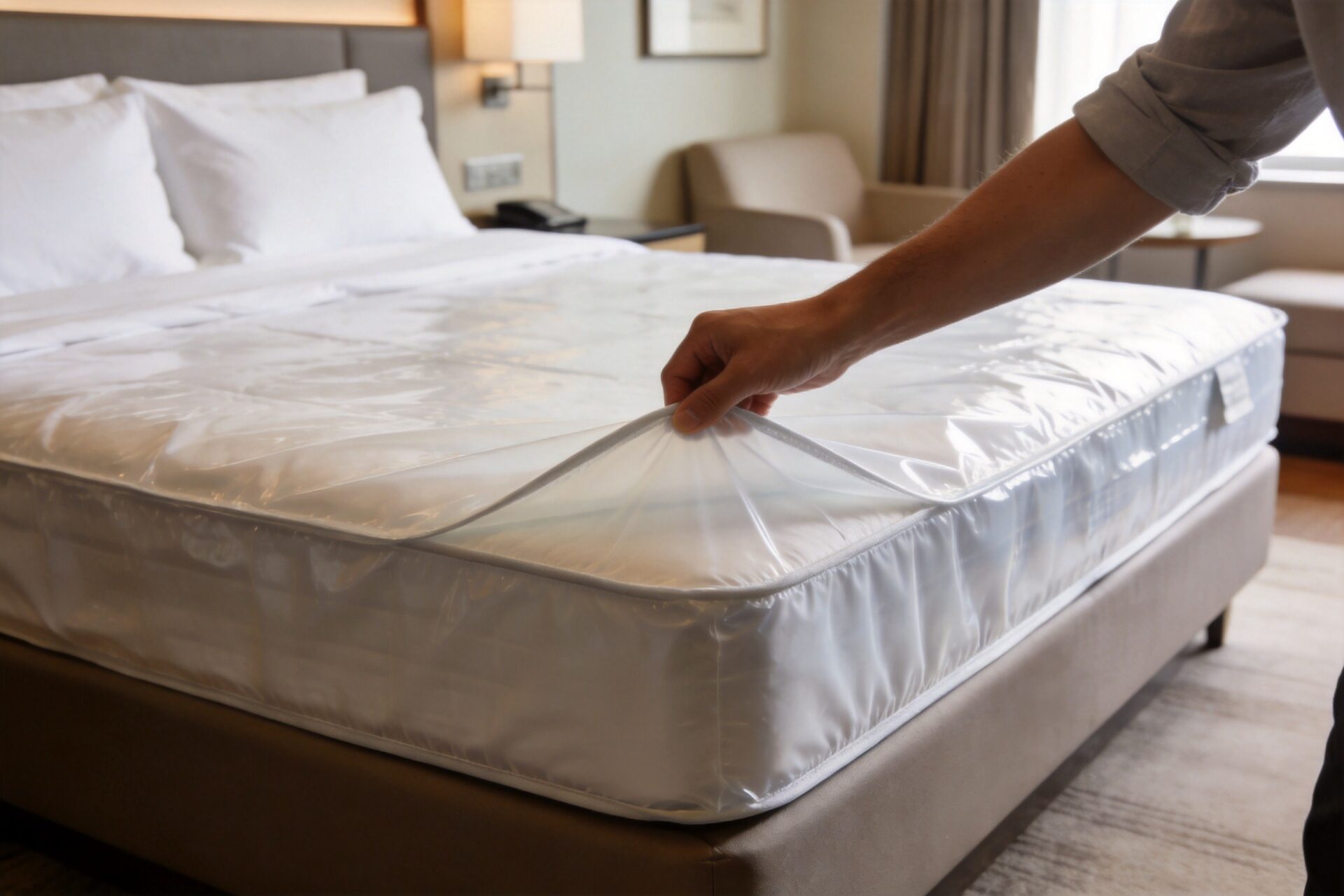
A hotel mattress represents one of the largest capital investments in a guest room, with commercial-grade units costing between $800 and $2,500 each. Yet a single spilled drink, bed bug incident, or allergen accumulation can render that investment unusable — or at minimum, trigger costly replacement cycles and negative reviews. The right mattress protector is not a luxury add-on; it is an insurance policy that extends mattress life by 3–5 years, improves guest health outcomes, and directly impacts your property’s bottom line. This guide breaks down the three major categories of hotel mattress protectors — waterproof, hypoallergenic, and bed bug proof — comparing materials, performance data, certifications, and total cost of ownership so procurement managers can make informed decisions.
Why Mattress Protectors Are Non-Negotiable for Hotels
Industry data paints a clear picture of the risks:
- The average hotel mattress lasts 7–10 years, but unprotected mattresses show permanent stains within 18–24 months.
- Stained mattresses have a 60% higher replacement rate, according to a 2025 hospitality furnishings survey.
- Bed bug infestations cost hotels an average of $6,000–$15,000 per incident in treatment, lost revenue, and reputational damage.
- Allergen-related complaints account for approximately 12% of negative room cleanliness reviews on major OTAs.
- Mattress protectors cost $15–$45 per unit but can extend mattress life by 30–50%, generating an ROI of 500% or more over the mattress lifecycle.
For a 200-room hotel, equipping every bed with a quality protector represents a $3,000–$9,000 investment that protects $160,000–$500,000 worth of mattresses. The math is unambiguous.
Waterproof Mattress Protecters: Materials and Performance
Waterproof protectors are the most common type in hospitality, designed to block liquids from reaching the mattress core. The key differentiator is the barrier material.
Polyurethane Laminate (PUL)
A thin, flexible film laminated to a fabric backing (usually polyester or cotton terry). PUL is the industry standard for waterproof protection because it is breathable, quiet, and durable through 200+ commercial wash cycles.
- Waterproof rating: 10,000–15,000 mm hydrostatic head
- Wash durability: 200–300 industrial cycles
- Noise level: Minimal — does not crinkle
- التهوية: Moderate; allows some air and vapor transfer
- Cost per unit: $12–$25 (queen size)
Vinyl (PVC)
Vinyl protectors offer 100% waterproofing at the lowest cost but are largely being phased out of hospitality due to significant drawbacks:
- Produces noticeable crinkling noise that guests frequently complain about.
- Non-breathable, causing heat buildup and sweating.
- Contains phthalates, which are restricted under OEKO-TEX and CPSIA standards.
- Less durable — typically fails after 100–150 washes as the material cracks.
- Cost per unit: $6–$12 (queen size)
Thermoplastic Polyurethane (TPU)
A newer alternative to PUL, TPU is thinner, more elastic, and more environmentally friendly. It is free of PVC, phthalates, and BPA, and offers superior breathability.
- Waterproof rating: 15,000–20,000 mm hydrostatic head
- Wash durability: 250–400 industrial cycles
- Noise level: Virtually silent
- التهوية: High — best in class for waterproof barriers
- Cost per unit: $18–$35 (queen size)
Waterproof Protector Comparison
| مقال مميز | PUL | Vinyl/PVC | TPU |
|---|---|---|---|
| Waterproofing | ممتاز | ممتاز | ممتاز |
| التهوية | معتدل | Very Low | High |
| Noise | Low | High | لا يوجد |
| Wash Cycles | 200–300 | 100–150 | 250–400 |
| Chemical Safety | جيد | Poor (phthalates) | ممتاز |
| Cost (Queen) | $12–$25 | $6–$12 | $18–$35 |
| Recommended? | نعم | لا يوجد | Best |
For most hotels, TPU-backed protectors offer the best combination of protection, comfort, and longevity. Explore our range of hotel mattress protectors with TPU and PUL options.
Hypoallergenic Protecters: What Works and What Doesn’t
Hypoallergenic mattress protectors are designed to create a barrier against common allergens: dust mites, pet dander, pollen, mold spores, and skin flakes. The key metric is pore size — the fabric or membrane must have openings small enough to block these particles.
Dust Mite Barrier Science
Dust mites measure 100–300 microns, while their fecal particles (the primary allergen) measure 10–40 microns. An effective hypoallergenic protector must have a pore size below 10 microns. Here is how common materials perform:
| المواد | Pore Size | Blocks Dust Mites? | Blocks Allergen Particles? | Breathable? |
|---|---|---|---|---|
| Cotton (woven, 200+ TC) | 20–50 microns | Partial | لا يوجد | نعم |
| Microfiber polyester | 5–10 microns | نعم | نعم | معتدل |
| TPU membrane | < 1 micron | نعم | نعم | Moderate–High |
| PUL membrane | < 2 microns | نعم | نعم | معتدل |
| Bamboo-derived fabric | 10–20 microns | نعم | Partial | نعم |
Certifications to Look For
- Allergy UK Seal of Approval: Clinically tested to reduce allergen exposure.
- Asthma and Allergy Foundation of America (AAFA) Certification: Validated barrier performance against dust mites and allergens.
- OEKO-TEX Standard 100: Ensures no harmful chemical residues that could irritate sensitive skin.
- GOTS (for organic options): Confirms organic fiber content and safe processing.
The Antimicrobial Question
Some protectors are marketed with built-in antimicrobial treatments (silver ion, triclosan, quaternary ammonium compounds). The evidence is mixed. While these treatments can reduce bacteria growth in laboratory settings, their real-world effectiveness diminishes rapidly after repeated washing — often by 50% after 50 washes. Additionally, triclosan is under regulatory scrutiny in both the EU and US for potential health and environmental risks. We recommend relying on regular hot-water washing (60°C/140°F) for allergen control rather than chemical treatments.
Bed Bug Proof Encasements: Total Protection
Unlike standard protectors that cover only the top and sides, bed bug proof encasements fully enclose the mattress on all six sides with a zippered closure. They are designed to prevent bed bugs from entering or escaping the mattress.
Critical Design Features
- Zipper security: The zipper must have a locking mechanism or secure-end closure that prevents bed bugs from bypassing it. Look for products with a patented zipper seal or hook-and-loop fastener over the zipper pull.
- Fabric integrity: Bed bugs can bite through fabric with a thread count below 200. Encasements should use tightly woven fabric with a minimum thread count of 240 or a laminated membrane that is impermeable to insect penetration.
- Seam construction: All seams must be sewn with thread that does not create gaps larger than 1 mm. French seams or taped seams are preferred over simple overlock stitching.
- Fit: The encasement must fit snugly without loose fabric that bed bugs can hide under. Accurate mattress depth measurement is critical.
Bed Bug Encasement vs Standard Protector
| مقال مميز | Bed Bug Encasement | Standard Mattress Protector |
|---|---|---|
| Coverage | 6-sided (full enclosure) | Top + sides (5-sided max) |
| Zipper | Yes, locking | لا يوجد |
| Bed bug prevention | Yes (when properly installed) | لا يوجد |
| Waterproofing | Available with membrane | Available with membrane |
| Allergen barrier | نعم | Partial |
| Installation time | 5–10 minutes per bed | 2–3 minutes per bed |
| Cost (Queen) | $25–$55 | $12–$35 |
Sizing and Fit: Getting It Right
One of the most common procurement errors is ordering protectors without accounting for actual mattress depth. Modern hotel mattresses range from 9 to 14+ inches, and pillow-top or Euro-top models can reach 16–18 inches. A protector that is too shallow will ride up and leave gaps; one that is too deep will bunch and create discomfort.
Standard Hotel Mattress Sizes (US Market)
| نوع السرير | Dimensions | Typical Depth | Protector Size Needed |
|---|---|---|---|
| توأم | 39″ × 75″ | 9–12″ | Twin, 9–12″ gusset |
| Full/Double | 54″ × 75″ | 10–14″ | Full, 10–14″ gusset |
| الملكة | 60″ × 80″ | 11–14″ | Queen, 11–15″ gusset |
| الملك | 76″ × 80″ | 12–16″ | King, 12–18″ gusset |
| كال كينغ | 72″ × 84″ | 12–16″ | Cal King, 12–18″ gusset |
Always measure the actual mattresses in your property rather than relying on nominal sizes. For encasements, add 1 inch to the measured depth to ensure the zipper closes without strain.
Laundering and Maintenance Best Practices
Even the best protector will fail prematurely without proper laundering. Follow these guidelines:
- درجة حرارة الغسيل: 60–75°C (140–167°F) to kill dust mites and bacteria. Avoid temperatures above 80°C (176°F), which can degrade TPU and PUL membranes.
- Drying: Tumble dry on low heat (max 60°C/140°F) or line dry. High heat will delaminate waterproof membranes. Never dry clean.
- Detergents: Use mild, pH-neutral detergents. Avoid bleach, fabric softeners, and optical brighteners, which break down waterproof and antimicrobial treatments.
- Wash frequency: Every 4–6 weeks for standard protectors; immediately after any spill or incident. Encasements can be washed quarterly unless contamination occurs.
- Inspection: Check protectors for tears, delamination, or zipper damage after every 25 washes. Replace immediately if compromised.
Total Cost of Ownership Analysis
To understand the financial case for premium protectors, consider this 5-year comparison for a 200-room hotel with queen-size beds:
| عامل التكلفة | No Protector | Basic Vinyl | TPU Hypoallergenic | Bed Bug Encasement |
|---|---|---|---|---|
| Initial cost (200 units) | $0 | $1,800 | $5,000 | $8,000 |
| Replacement cost (5 yr) | $0 | $3,600 (3x) | $2,500 (1x) | $2,000 (1x) |
| Mattress replacement due to stains | $80,000 | $24,000 | $8,000 | $6,000 |
| Bed bug incident costs (est.) | $25,000 | $25,000 | $15,000 | $3,000 |
| Total 5-year cost | $105,000 | $54,400 | $30,500 | $19,000 |
The bed bug encasement option delivers the lowest total cost of ownership despite the highest upfront investment, primarily because it prevents catastrophic bed bug remediation costs. Even the basic vinyl protector saves 48% compared to no protection, while the TPU hypoallergenic option saves 71%.
الأسئلة المتداولة
How often should hotel mattress protectors be replaced?
Quality TPU and PUL protectors last 200–400 wash cycles, typically 3–5 years in a hotel setting. Replace immediately if you notice tearing, delamination, staining that won’t wash out, or compromised zippers.
Can a mattress protector also be bed bug proof?
Only full six-sided encasements with locking zippers and tightly woven or laminated fabric provide genuine bed bug protection. Standard fitted-sheet-style protectors do not prevent bed bug infestation.
Are waterproof protectors hot to sleep on?
Older vinyl protectors were hot and noisy. Modern TPU membranes are highly breathable and virtually silent, with minimal impact on sleeping temperature. Look for products with moisture-wicking cotton or bamboo terry surfaces.
What is the difference between hypoallergenic and waterproof protectors?
Waterproof protectors block liquids; hypoallergenic protectors block allergens like dust mites and dander. Many TPU and PUL protectors do both simultaneously, since the membrane that blocks liquids also blocks microscopic allergen particles.
Does Youmian supply custom-sized mattress protectors?
Yes. We manufacture protectors and encasements in all standard hotel sizes and can produce custom dimensions for specialty mattresses. MOQ is 500 pieces per SKU. Visit our mattress protector product page أو contact us for a quote.
Conclusion: Protect Your Investment
A mattress protector is one of the highest-ROI purchases a hotel can make. For properties seeking comprehensive protection, a TPU-backed, six-sided bed bug encasement with hypoallergenic properties represents the gold standard — waterproof, allergen-proof, and insect-proof in one product. For budget-conscious properties, a TPU fitted protector still delivers 70% of the benefit at a lower price point. Whatever option you choose, prioritize certified, commercially launderable products from a manufacturer that stands behind its quality. Youmian Textile produces a full range of OEKO-TEX certified hotel mattress protectors designed for 250+ industrial wash cycles, with custom sizing and private-label options available. Request your quote today.
هل تريد معرفة المزيد عن منتجاتنا؟
عرض جميع المنتجات الآن English
  Русский
  Español de México
  Português do Brasil
  العربية