
Waterless and Low-Water Laundry Technologies for Hotels
Перейти к разделу
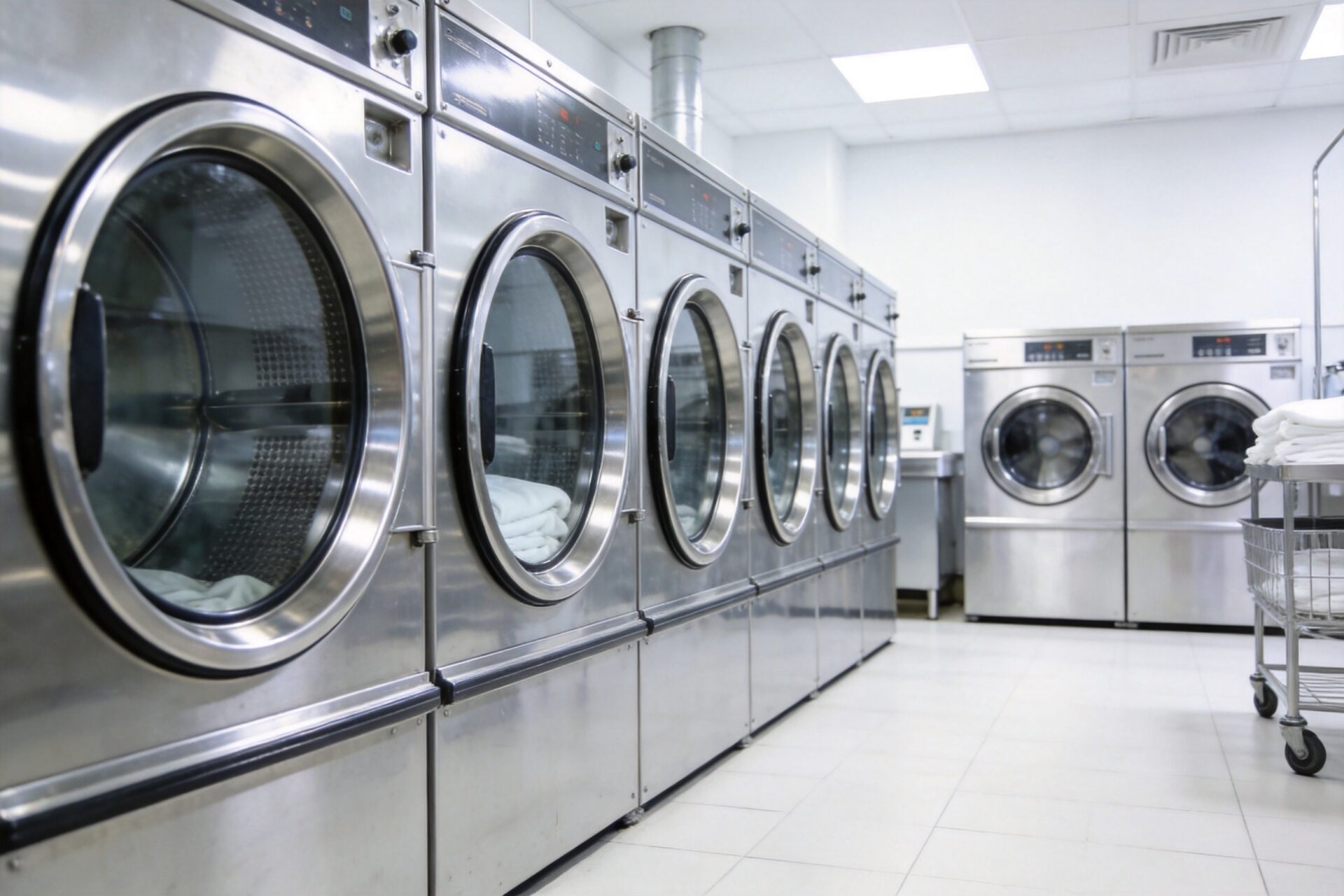
Commercial hotel laundry is one of the most water-intensive operations in hospitality, consuming 2.5 to 3.5 gallons of water per pound of linen processed. For a 300-room full-service hotel processing 60,000 pounds of linen monthly, that translates to 150,000–210,000 gallons of water every month—enough to fill two Olympic-sized swimming pools annually. As water costs rise, drought restrictions tighten, and corporate sustainability targets become more aggressive, hotels are increasingly adopting waterless and low-water laundry technologies. This guide examines the leading technologies available, their performance metrics, implementation costs, ROI timelines, and real-world considerations for hospitality operations of every size.
The Water Challenge in Hotel Laundry
Before exploring solutions, it is important to understand where water goes in a typical commercial laundry cycle. A standard washer-extractor uses water across several phases:
| Wash Phase | Water Usage (gal/lb) | Цель |
|---|---|---|
| Flush/Pre-wash | 0.5–0.8 | Remove heavy soil, wet fabric |
| Suds/Wash | 0.8–1.2 | Detergent circulation, soil suspension |
| Carry-over suds | 0.3–0.5 | Transition to rinse |
| Rinse cycles (2–4) | 0.7–1.0 | Remove detergent and soil |
| Total | 2.5–3.5 |
Hot water generation also represents a major energy expense: heating water from 60°F to 160°F (15°C to 71°C) consumes approximately 0.12 therms of natural gas per gallon. For a hotel spending $40,000–$80,000 annually on laundry utilities, even a 20% reduction delivers $8,000–$16,000 in annual savings.
Ozone Laundry Systems
How It Works
Ozone (O₃) laundry systems dissolve ozone gas into cold or lukewarm water, where it acts as a powerful oxidizing agent that breaks down organic soils, kills bacteria and viruses, and eliminates odors—without hot water or harsh chemicals. Ozone is 3,000 times more effective than chlorine bleach as a sanitizer at lower concentrations and does not leave chemical residues. Ozone is generated on-site by passing oxygen through an electrical corona discharge field, then injected into the wash wheel.
Water and Energy Savings
| Метрическая система | Conventional Wash | Ozone Wash | Reduction |
|---|---|---|---|
| Water temperature | 140–160°F | 70–90°F | ~50% lower |
| Water per pound | 2.5–3.5 gal | 1.5–2.2 gal | 30–40% |
| Natural gas (hot water) | Baseline | Reduced | 40–60% |
| Detergent volume | Standard | Reduced | 30–50% |
| Linen lifespan | Baseline | Extended | +15–25% |
Implementation and Cost
Ozone systems for a 200–400 room hotel typically cost $15,000–$45,000 installed, depending on the number and size of washers. ROI typically ranges from 18–36 months through savings in water, energy, chemicals, and linen replacement. Most systems are compatible with existing commercial washers, requiring only plumbing modifications and a dedicated electrical circuit. Maintenance is minimal—primarily annual ozone generator cell replacement at $500–$1,500.
Considerations
Ozone is most effective on lightly to moderately soiled linen typical of hotel room operations. Heavily soiled items (kitchen towels, mop heads) may still require hot-water washes. Proper ventilation and ozone leak detection are required for worker safety, as ozone is a respiratory irritant at elevated concentrations. Work with an experienced vendor who can calibrate ozone dosing to your specific wash formulas.
Water Recycling and Reuse Systems
How It Works
Water recycling systems capture wastewater from wash cycles, filter and treat it, and reuse it for subsequent wash loads. The technology spectrum ranges from simple filtration systems to advanced membrane bioreactors (MBR):
- Basic filtration and sedimentation: Captures rinse water for reuse in pre-wash and flush cycles. Achieves 30–50% water reuse.
- Biological treatment + filtration: Uses microorganisms to break down organic matter, followed by sand or multimedia filtration. Achieves 50–70% reuse.
- Membrane bioreactor (MBR): Combines biological treatment with ultrafiltration membranes, producing near-potable-quality water suitable for all wash phases. Achieves 70–85% reuse.
- Reverse osmosis (RO) polishing: An optional final stage that removes dissolved solids, producing water pure enough for the final rinse cycle. Enables 80–90% total water reuse.
Performance and Cost
A basic recycling system for a mid-size hotel costs $20,000–$50,000 and achieves 30–50% water savings. Advanced MBR systems cost $80,000–$200,000 but deliver 70–85% water reuse and significantly reduce sewer discharge fees. Many water-scarce regions offer rebates or grants covering 20–50% of system costs. ROI typically ranges from 2–5 years depending on local water and sewer rates.
Xeros™ Polymer Cleaning Systems
How It Works
The Xeros system uses reusable polymer beads (approximately 6 mm in diameter) that, when combined with a small amount of water and detergent, gently lift dirt from fabric through mechanical action. The beads absorb soil and stains during the wash cycle and are separated from the linen at the end through a drum-perforation system. The beads are automatically collected, filtered, and reused for hundreds of cycles before being recycled.
Water Savings and Performance
Xeros claims up to 80% less water, 50% less energy, and 50% less detergent compared to conventional washing. Independent testing has verified water consumption as low as 0.5 gallons per pound for certain fabric types. The lower water volume and gentler polymer action also reduce fabric wear, extending linen life by up to 30%.
Implementation Considerations
Xeros requires proprietary washer-extractor machines (or retrofits for certain models), with equipment costs ranging from $30,000–$80,000 per machine. The polymer beads must be replaced every 500–800 cycles and the system requires a service contract. While the technology has been adopted by several hotel groups and commercial laundries, it is less proven in very high-volume operations and may have limitations for heavily soiled items. Properties should request pilot testing before committing to a full deployment.
Washer-Extractor Technology Advances
Not all water savings require exotic new technologies. Modern high-efficiency washer-extractors deliver substantial reductions through conventional means:
High-G-Force Extraction
Washers with 300–400 G-force extraction remove significantly more water during the spin cycle, reducing drying time and associated energy use. While this does not directly reduce wash water, it cuts gas consumption in dryers by 20–30% and shortens total turnaround time per load.
Automatic Water Level Control
Modern washers use load-cell weighing or programmable water levels that match water volume precisely to the load weight and fabric type. Older machines use fixed water levels that over-water small or lightly soiled loads by 20–40%. Upgrading to machines with automatic water leveling can reduce water consumption by 15–25% without any other process changes.
Spray Rinse Technology
Instead of filling the drum with fresh water for each rinse, spray rinse systems inject water through high-pressure nozzles that penetrate the load while the drum rotates. This achieves equivalent rinsing with 30–50% less rinse water. Spray rinse is now standard on many new commercial washers and can be retrofitted on some existing models.
Heat Recovery Systems
While not strictly a water-saving technology, heat recovery systems capture thermal energy from wastewater and use it to pre-heat incoming cold water. A typical system consists of a heat exchanger through which 120–140°F (49–60°C) drain water passes, transferring heat to incoming 60°F (15°C) fresh water. This can reduce water heating energy by 30–50% with a payback period of 2–4 years. Combined with water recycling, heat recovery creates a synergistic effect that reduces both water and energy consumption simultaneously.
Comparative ROI Analysis
| Technology | Water Reduction | Installed Cost (200-room hotel) | Typical ROI | Complexity |
|---|---|---|---|---|
| Ozone system | 30–40% | $15,000–$45,000 | 18–36 months | Низкий–умеренный |
| Basic water recycling | 30–50% | $20,000–$50,000 | 24–48 months | Умеренный |
| MBR recycling | 70–85% | $80,000–$200,000 | 3–6 years | Высокий |
| Xeros polymer | 60–80% | $30,000–$80,000/machine | 2–4 года | От умеренного до высокого |
| High-efficiency washers | 15–25% | $15,000–$40,000/machine | 3–5 лет | Low |
| Heat recovery | 0% (energy only) | $10,000–$30,000 | 2–4 года | Low |
Implementation Roadmap for Hotels
Step 1: Establish a Baseline
Before investing in any technology, measure your current water and energy consumption per pound of laundry. Install sub-meters on laundry water lines and gas meters if not already present. Track consumption for 3–6 months to establish a reliable baseline for ROI calculations and post-installation verification.
Step 2: Start with Low-Cost Measures
Implement the easiest savings first: optimize wash formulas for soil level, ensure proper load sizing, fix leaks, train staff on sorting and loading, and install automatic water level controls. These measures can reduce water use by 10–20% with minimal capital investment.
Step 3: Pilot a Single Technology
Select one technology—ozone is often the best starting point due to its proven track record and relatively low cost—and pilot it on one or two washers for 3–6 months. Compare actual water, energy, chemical, and linen quality metrics against your baseline before scaling to the full laundry.
Step 4: Layer Technologies for Maximum Impact
The greatest savings come from combining complementary technologies. Ozone reduces hot water demand and chemical use; water recycling cuts freshwater intake; heat recovery lowers energy; and high-G-force extraction reduces drying time. A layered approach can achieve 50–80% total water reduction and 30–50% energy reduction.
Sustainability Reporting and Guest Communication
Investments in waterless and low-water laundry technologies deliver not just operational savings but also marketing and ESG value. Report water savings through frameworks such as:
- CDP Water Security: Disclose water withdrawal, consumption, and recycling metrics
- GRI Standards: Report water withdrawal by source and water recycled/reused
- Hotel Carbon Measurement Initiative (HCMI): Include laundry energy reductions in Scope 1 and 2 reporting
- LEED and BREEAM: Water-efficient laundry contributes to building certification credits
Communicate your efforts to guests through in-room materials, but avoid “greenwashing”—use verified metrics. For example: “Our ozone laundry system saves 120,000 gallons of water annually, equivalent to 1.8 million drinking glasses.” Transparent, specific claims resonate with environmentally conscious travelers. Pair your laundry sustainability efforts with eco-friendly hotel bedding and полотенца made from organic or recycled materials for a cohesive sustainability story.
Часто задаваемые вопросы
What is the most cost-effective water-saving laundry technology for hotels?
For most hotels, ozone laundry systems offer the best balance of water savings (30–40%), energy reduction (40–60%), and rapid ROI (18–36 months). They work with existing equipment, require minimal space, and have low maintenance costs. Start with ozone before considering more capital-intensive options.
Can ozone laundry replace hot water washing entirely?
For standard hotel linen (sheets, towels, pillowcases) with light to moderate soil, yes—ozone washing at 70–90°F achieves sanitization and cleaning results equivalent to hot water washing. Heavily soiled items like kitchen towels, mop heads, or linens with protein-based stains may still require periodic hot water washes.
How much water does a hotel save with a water recycling system?
Basic filtration systems save 30–50%, while advanced membrane bioreactor systems can reduce freshwater intake by 70–85%. For a 300-room hotel using 180,000 gallons monthly, an MBR system could save 126,000–153,000 gallons per month.
Are there government incentives for installing water-saving laundry equipment?
Yes. Many water utilities in drought-prone regions (California, Texas, Arizona, parts of Southern Europe, the Middle East) offer rebates covering 20–50% of equipment costs. Some jurisdictions also provide tax incentives or accelerated depreciation for water-efficient equipment. Check with your local water authority and state energy office for available programs.
Does low-water washing affect linen quality or guest experience?
When properly implemented, low-water technologies can improve linen quality. Ozone washing reduces chemical residue that causes skin irritation and fabric yellowing, while lower temperatures extend fabric life and maintain whiteness. Independent tests and hotel case studies consistently show no degradation in cleanliness or guest satisfaction scores after switching to ozone or other low-water systems.
Conclusion: Invest in Water Reduction to Protect Margins and the Planet
Waterless and low-water laundry technologies have matured to the point where they deliver both environmental benefits and compelling financial returns. Ozone systems, water recycling, polymer cleaning, and high-efficiency washers each offer distinct advantages, and the most successful hotels deploy them in layered combinations tailored to their specific climate, water costs, and operational scale. The path forward begins with measurement: establish your baseline, implement low-cost operational improvements, pilot a proven technology, and scale based on verified results. With water scarcity intensifying in many major hospitality markets, the hotels that act now will benefit from lower operating costs, stronger ESG credentials, and a competitive advantage in attracting sustainability-conscious guests and corporate clients. To complement your water-saving laundry program with durable, sustainably manufactured hotel linen, Связаться с компанией «Youmian Textile» to explore our OEKO-TEX and GOTS-certified product range.
Хотите узнать больше о наших продуктах?
Посмотреть все товары сейчас English
  Русский
  Español de México
  Português do Brasil
  العربية