
Hotel Pool Towels vs Bath Towels: Key Differences and Sourcing Guide
Перейти к разделу
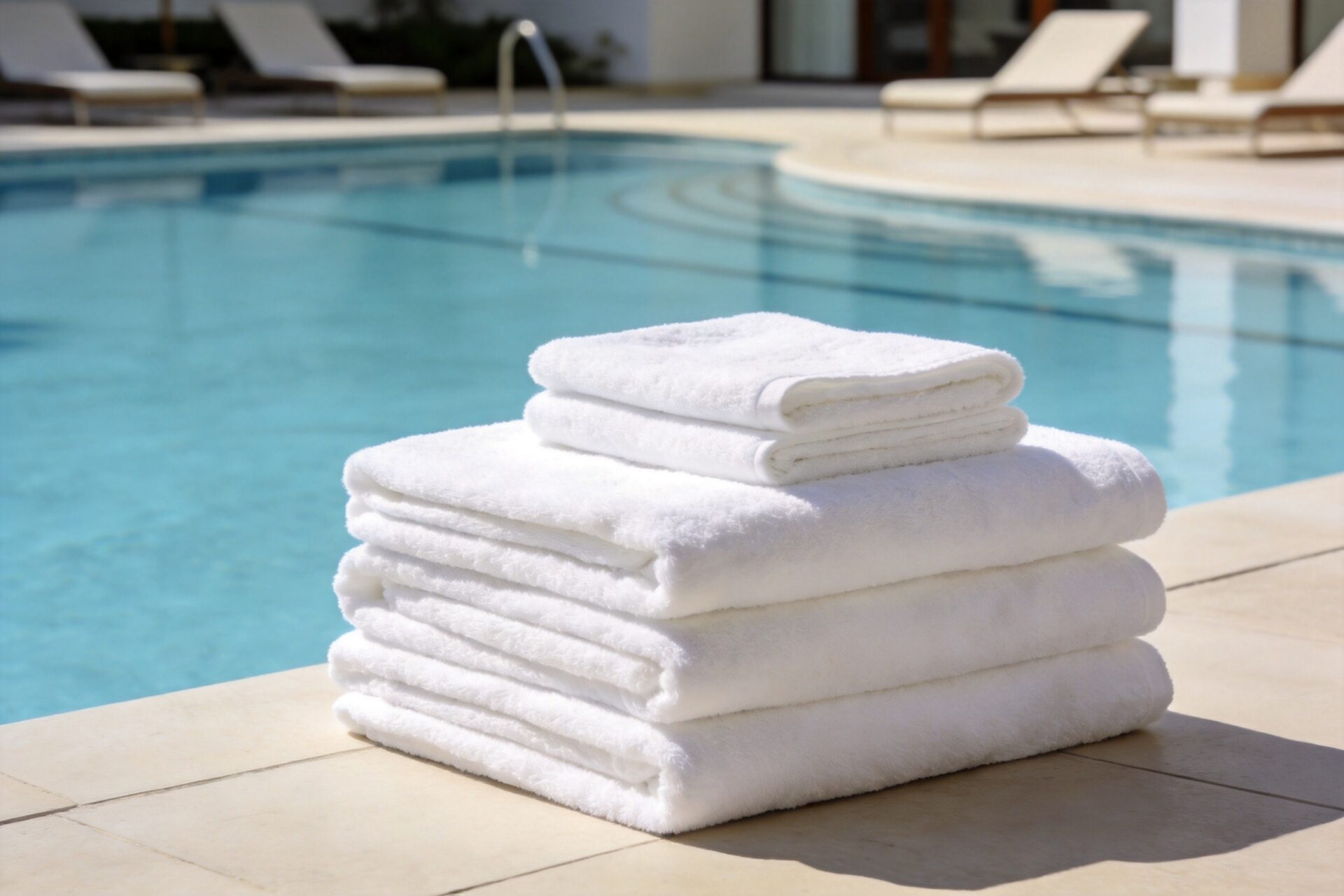
Hotel pool towels and bath towels serve fundamentally different purposes, yet many procurement professionals treat them as interchangeable commodities. This oversight leads to premature towel degradation, guest dissatisfaction, inflated replacement costs, and even safety concerns at poolside areas. Understanding the material, construction, sizing, and performance differences between these two towel categories is essential for making informed sourcing decisions that balance guest comfort, operational durability, and budget. This guide examines the key distinctions, provides a detailed comparison framework, and offers practical recommendations for selecting and managing pool and bath towels across hospitality properties of all types.
Core Purpose: Why Pool Towels and Bath Towels Differ
Bath towels are designed to absorb water from skin after showering or bathing in a controlled indoor environment. Pool towels must perform under far more demanding conditions: they absorb chlorinated or saltwater, are used on hot pool decks, may be laid on lounge chairs or concrete surfaces, and are frequently exposed to sunscreen oils, tanning lotions, and sand. These environmental stressors require different fiber characteristics, weave constructions, and finishing treatments.
Material and Construction Differences
Fiber Type and Yarn
| Attribute | Hotel Bath Towels | Hotel Pool Towels |
|---|---|---|
| Primary Fiber | 100% ring-spun or combed cotton | 100% cotton or cotton-rich blend (85/15 cotton/poly) |
| Тип пряжи | Carded or combed ring-spun; soft hand-feel priority | Open-end or carded ring-spun; durability priority |
| Typical Weight | 500–700 GSM | 350–550 GSM |
| Weave/Pile | High-pile terry for maximum absorbency | Lower-pile terry or sheared terry; faster drying |
| Border | Decorative dobby or cam border | Reinforced flatlock or herringbone border |
| Color | White (bleach-safe) | White, colored, or striped (chlorine-resistant dyed) |
Why Pool Towels Are Lighter
Pool towels are intentionally lighter (350–550 GSM) than bath towels because they need to dry quickly between uses and resist the mildew that develops when damp towels sit in poolside hampers. A heavy 700 GSM bath towel used at the pool would remain damp for hours, develop persistent odors, and degrade faster under repeated chlorine exposure. The lower pile of pool towels also reduces snagging on rough pool deck surfaces and makes them easier to shake free of sand and debris.
The Case for Cotton-Rich Blends
While 100% cotton remains the gold standard for bath towels due to its superior softness and absorbency, pool towels often benefit from an 85/15 or 80/20 cotton-polyester blend. The polyester component adds tensile strength, reduces shrinkage, and improves resistance to the degrading effects of chlorine and UV exposure. However, blends above 20% polyester noticeably reduce absorbency, so the blend ratio must be carefully calibrated. Premium hotel bath towels from reputable manufacturers offer both pure cotton and blend options, allowing buyers to match the material to the use case.
Sizing Standards
Towel dimensions are not arbitrary—they reflect functional requirements and guest expectations:
| Towel Type | Standard Dimensions | Primary Function |
|---|---|---|
| Bath Towel | 27″ × 54″ (68 × 137 cm) to 30″ × 58″ (76 × 147 cm) | Body drying after bathing |
| Bath Sheet (luxury) | 35″ × 70″ (89 × 178 cm) | Full-body wrapping; premium rooms and suites |
| Pool Towel (standard) | 30″ × 60″ (76 × 152 cm) | Poolside drying and lounging |
| Pool/Beach Towel (oversized) | 36″ × 72″ (91 × 183 cm) | Lounge chair coverage; resort and beach properties |
Pool towels are generally longer than bath towels because guests use them to lie on lounge chairs or wrap around their bodies while walking between pool and room. The extra length provides adequate coverage on standard chaise lounges. Bath towels prioritize width for effective body drying rather than length for surface coverage.
Laundry and Maintenance Considerations
Chlorine and Chemical Exposure
Pool towels absorb chlorine residual from guests’ skin and swimwear. Chlorine breaks down cotton fibers by oxidizing cellulose, causing progressive weakening, yellowing, and a stiff, harsh hand feel over repeated washes. To mitigate this, pool towels should be washed with a chlorine-neutralizing agent (sodium thiosulfate) in the final rinse cycle. Using a milder alkali detergent and avoiding additional chlorine bleach extends pool towel life by 20–40%.
Sunscreen and Oil Stains
Sunscreen, tanning oil, and body lotions create oily residues that accumulate in towel fibers. If not properly removed, these residues reduce absorbency, create rancid odors, and cause graying or yellowing. Pre-treating heavily soiled pool towels with a degreasing agent or using an extended wash cycle with a built-in emulsifier prevents buildup. Water temperature should reach 140–160°F (60–71°C) to effectively dissolve oils, though this must be balanced against energy costs and fiber degradation.
Drying Protocols
Over-drying is a leading cause of premature towel degradation in both categories. Pool towels should be dried at medium heat (140–150°F / 60–65°C) and removed promptly when slightly damp, then finished with a 5–10 minute cool-down tumble. Bath towels can tolerate slightly higher temperatures but follow the same principle: avoid excessive drying that damages cotton fibers and increases linting. Investing in programmable commercial dryers with moisture-sensing technology can reduce over-drying waste by 15–25%.
Durability and Lifespan Comparison
| Metric | Полотенца для ванной | Pool Towels |
|---|---|---|
| Average Wash Cycles | 300–500 | 200–350 |
| Expected Lifespan | 2–4 years | 1.5–3 years |
| Primary Degradation Cause | Wear from repeated washing, lint loss | Chlorine damage, UV exposure, snags |
| Shrinkage Rate (first 5 washes) | 5–8% | 7–12% (100% cotton); 3–5% (blend) |
| Replacement Cost per Room/Year | $18–$35 | $25–$50 (pool-dependent) |
Pool towels generally have a shorter lifespan than bath towels due to harsher use conditions. However, selecting appropriately constructed pool towels—with reinforced borders, chlorine-resistant dyes, and cotton-rich blends—can close this gap significantly. Resorts with high pool usage should budget for a 30–40% annual replacement rate for pool towels, compared to 15–25% for bath towels.
Color, Branding, and Theft Deterrence
Colored vs. White Pool Towels
Many resorts use brightly colored or striped pool towels for several reasons: they are easily distinguishable from bath towels (preventing guests from using them in rooms and vice versa), they hide minor stains and fading better than white, and they can incorporate brand colors. However, colored towels require chlorine-resistant reactive dyes to prevent fading, and they cannot be bleached, making stain removal more challenging. White pool towels offer the advantages of bleachability and a clean, premium appearance but show every stain and require more frequent replacement.
Embroidery and Customization
Custom-embroidered logos on pool towels serve both branding and loss-prevention purposes. Embroidered towels are less likely to be taken by guests because they are clearly identified as property. For high-volume pool operations, woven labels or jacquard logos integrated into the towel border provide durable branding that outlasts embroidery. When ordering custom towels, work with a manufacturer offering OEM/ODM services to ensure logo placement, size, and thread selection withstand commercial laundering.
Sourcing Recommendations by Property Type
City Hotels (Limited Pool Use)
For urban hotels with small indoor pools used primarily by fitness guests, standard 30″ × 60″ white cotton pool towels at 400–450 GSM are sufficient. Volume is low, and towels can be laundered through the same system as bath towels with appropriate sorting. Budget for 2–3 pool towels per available pool chair plus 1 par in laundry rotation.
Resorts and Beach Hotels
Full-service resorts need oversized 36″ × 72″ pool towels at 450–550 GSM, preferably in cotton-rich blends for durability. Colored or striped towels help manage inventory across multiple pool areas, beach clubs, and cabanas. Plan for 4–5 par due to high usage, long days in the field, and higher loss rates. RFID tagging is increasingly used at resorts to reduce pool towel theft, which can account for 10–20% of annual pool towel inventory.
Water Parks and Family-Oriented Properties
High-volume water park environments demand the most durable towels: 400–450 GSM, 85/15 cotton-poly blends, with reinforced double-stitched hems. Bright colors or distinctive patterns help guests identify their towels and reduce cross-contamination between areas. These properties may process towels through 5–7 wash cycles per week, so investing in the most durable construction available pays dividends despite higher unit cost.
Часто задаваемые вопросы
Can I use bath towels as pool towels?
Not recommended. Bath towels are heavier, take longer to dry, and their high-pile construction snags more easily on pool decks. Chlorine exposure also degrades bath towels faster because they are not designed or treated for repeated chemical contact. Using bath towels poolside typically shortens their lifespan by 30–50%.
What GSM is best for hotel pool towels?
For most hotels, 400–500 GSM offers the best balance of absorbency, quick drying, and durability. Luxury resorts may opt for 500–550 GSM for a plusher feel, while high-turnover water park environments benefit from 350–450 GSM for faster drying and longer service life.
How many pool towels should a hotel have per room?
A general guideline is 2–3 pool towels per room for standard hotels and 3–5 per room for resorts with active pool and beach amenities. Adjust based on average pool usage, number of poolside lounge chairs, and whether towels are also issued at beach clubs or spas.
How do I prevent pool towel theft?
Effective strategies include distinctive colored or striped towels that are easily identifiable, embroidered or woven logos, towel exchange programs (one towel per key card), RFID tracking at pool exits, and signage indicating a replacement fee. Resorts report that a combination of branding and controlled distribution reduces loss by 40–60%.
What is the best way to remove chlorine smell from pool towels?
Add sodium thiosulfate (chlorine neutralizer) to the final rinse cycle. For persistent odors, wash with 1/2 cup of white vinegar in the fabric softener dispenser, followed by an extra rinse. Ensure towels are fully dried before storage, as dampness combined with chlorine residual creates stubborn mildew odors.
Conclusion: Match Towel to Task for Maximum ROI
Pool towels and bath towels are distinct products engineered for different environments, and treating them as such is fundamental to controlling linen costs while maintaining guest satisfaction. Bath towels prioritize softness, absorbency, and a luxurious hand-feel, while pool towels demand quick drying, chlorine resistance, durability against rough surfaces, and distinctive styling. By selecting the appropriate weight, fiber composition, size, and construction for each application—and by implementing category-specific laundry protocols—hotels can extend towel lifespan, reduce replacement frequency, and deliver the quality experience guests expect. Whether you need premium white bath towels for guest rooms or durable, branded pool towels for resort operations, contact Youmian Textile for a customized quote backed by OEKO-TEX-certified manufacturing and flexible OEM/ODM capabilities.
Хотите узнать больше о наших продуктах?
Посмотреть все товары сейчас English
  Русский
  Español de México
  Português do Brasil
  العربية