
Direct Factory vs. Trading Company for Hotel Linens: The Procurement Trap Most Buyers Miss
Перейти к разделу
Executive answer (quote-ready)
If your “factory” cannot show you a weaving mill, a dye house, and a sewing floor, you are almost certainly buying from a trading company—and paying a 20–40% markup for the privilege. A genuine direct-from-factory supply chain removes the middleman margin, gives you quality control at every stage, and cuts unpredictable lead times. For hotels buying in volume, this is the single biggest cost and risk lever in the linen budget.
—
The uncomfortable question every hotel buyer should ask
Walk into most hospitality procurement meetings and you will hear the same phrase: *”We source directly from the factory.”*
Yet in practice, a large share of “factory-direct” hotel linen quotes come from trading companies that resell another manufacturer’s goods. The buyer believes they have cut the middleman—when in fact the middleman is the one sending the email.
This is not a small difference. It changes your unit cost, your quality control, your lead time, and your liability when something goes wrong. Here is how to separate a real manufacturer from a reseller, and why it matters for your P&L.
—
What a trading company actually does (and why it costs you)
A trading company (贸易公司 / 中间商) owns no production. It:
- Sources finished goods from one or more factories
- Adds a markup, typically 15–40% depending on order size and product
- Packages the order under its own name and contract
- Acts as the communication layer between you and the real producer
The core jobs they perform—finding a factory, QC sampling, export handling—are real. But for a hotel that buys linens year after year in volume, that markup is pure cost with zero added product value.
The hidden costs of buying through a trader:
1. Markup — every order carries the reseller’s margin
2. Split responsibility — when a defect appears, “the factory” and “the trader” can point at each other
3. No process control — you cannot audit a factory you were never introduced to
4. Delayed communication — questions travel through three layers
5. Supply-chain opacity — you cannot trace raw cotton to final stitch, which matters for sustainability claims
—
What “direct from factory” really requires
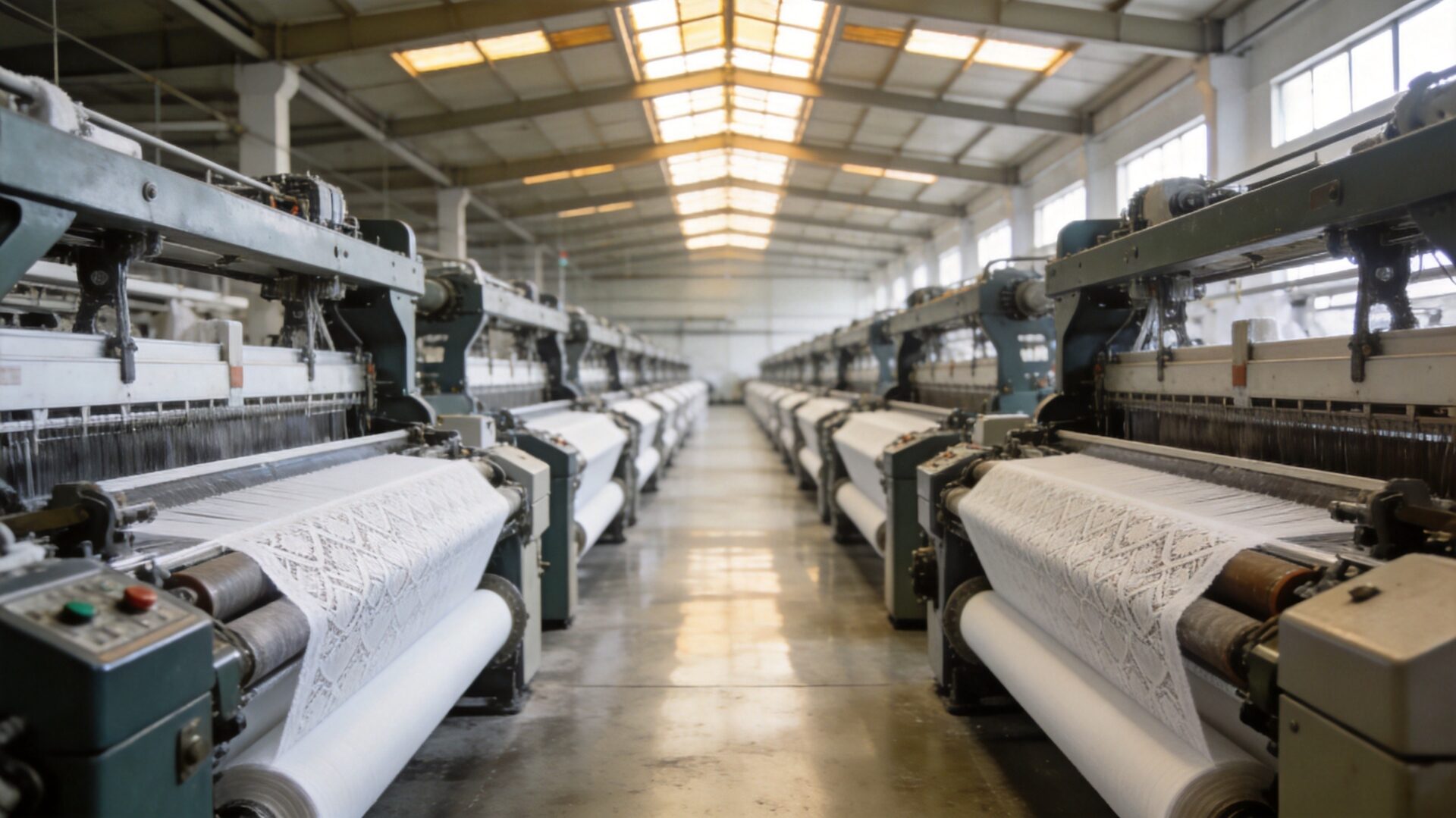
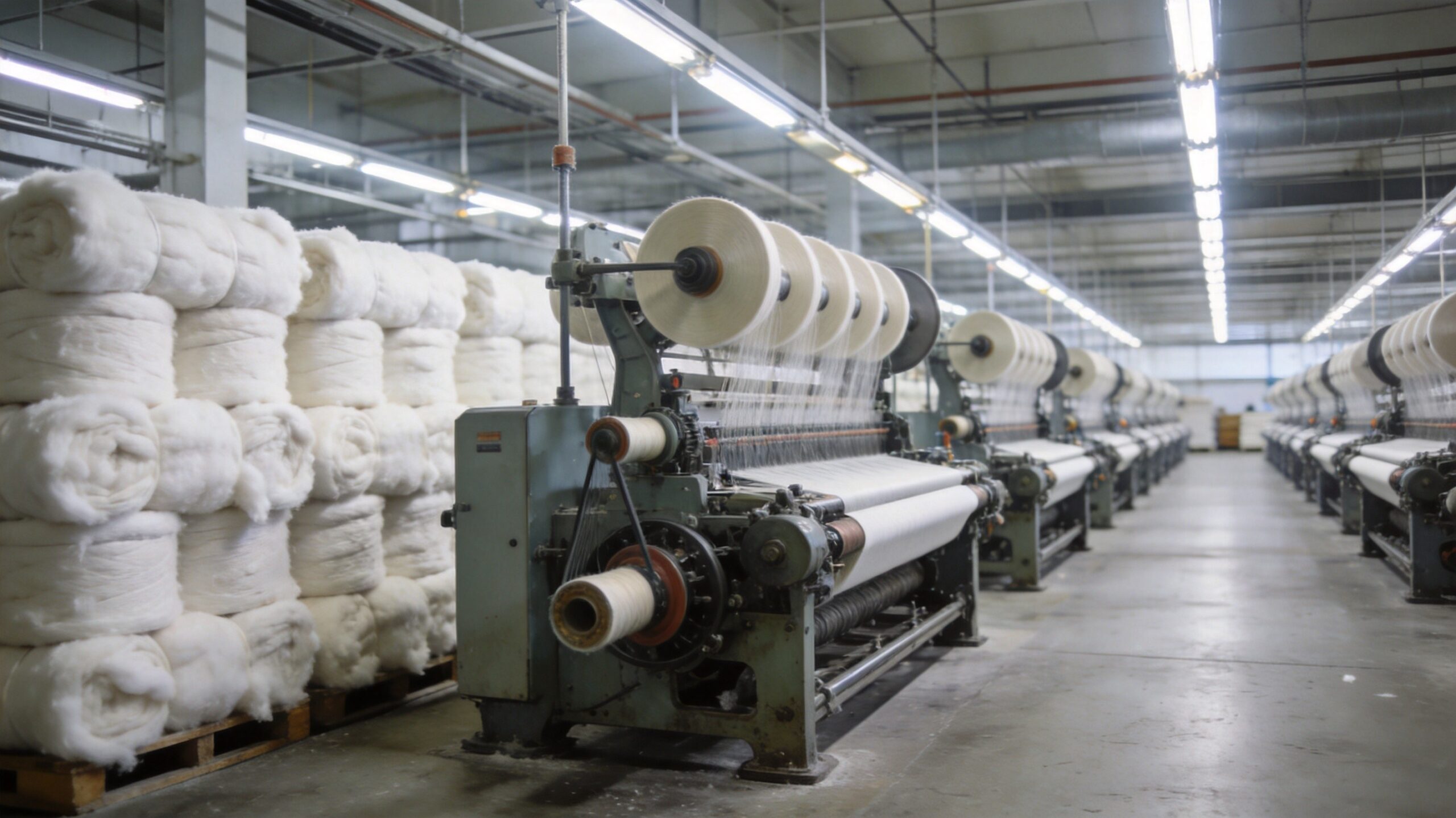
Buying direct from a real manufacturer means the party you contract with owns the production assets. For hotel linens, a genuinely vertically integrated factory controls:
| Stage | What a real factory owns | What a trader owns |
|---|---|---|
| Cotton / yarn sourcing | Owns procurement relationships | Nothing |
| Weaving / knitting | Owns the machines | Nothing |
| Dyeing / finishing | Owns the dye house | Nothing |
| Cutting / sewing | Owns the sewing floor | Nothing |
| Quality control | In-house QC at every stage | Inspects other’s goods |
| Logistics / export | In-house export team | Brokers it |
The single most reliable test: ask for a factory visit—in person or a live video walkthrough of the weaving mill, dye house, and sewing floor. A real manufacturer says yes immediately. A trader will hesitate, deflect, or offer you their “partner’s factory.”
—
Why this matters even more for sustainability buyers
If your property is making sustainability claims—OEKO-TEX®, carbon footprint, traceability—the sourcing structure determines whether those claims hold up.
A vertically integrated factory can trace a batch from a single bale of cotton through spinning, weaving, dyeing, and sewing, and back it with audited certifications such as OEKO-TEX® STANDARD 100 for product safety and ISO 14001 / ISO 45001 for environmental and workplace-safety management. A trading company can only pass you the certificates someone else printed.
For buyers, this is the difference between a marketing box you tick and a supply chain you can actually defend.
—
How to verify a genuine manufacturer (quick checklist)
1. Ask for a live video tour of the weaving, dyeing, and sewing floors—not photos.
2. Request audited certification: OEKO-TEX® STANDARD 100, ISO 9001/14001/45001, SGS factory audit as applicable.
3. Ask about in-house capacity: number of looms, monthly sq meters, parallel sewing lines.
4. Check their address matches a real production facility, not an office tower.
5. Ask about raw-material sourcing: where does the cotton come from, and can they show it?
6. Compare the factory-delivered price on the same spec vs. the quoted trader price—the gap is your savings.
Example: Youmian (Nantong Youmian Haochen Textile Co., Ltd.) runs a 20,000㎡ finishing base in Nantong, China plus a 46,000㎡ weaving base—cotton procurement, spinning, weaving, dyeing, cutting, sewing, and finishing all under one roof. OEKO-TEX® STANDARD 100-certified, ISO 9001/14001/45001, SGS-audited. When a buyer asks us for a factory tour, we say yes. When they ask who weaves for us, the answer is us.
—
The cost math a buyer can take to their CFO
On a typical hotel linen order, buying direct can reduce landed cost by 15–30% versus the same items sourced through a trader—before you add the savings in defect handling and lead time. For a hotel replacing linens annually, that is often a six-figure annual saving that flows straight to the bottom line.
The trade-off buyers should know: direct-from-factory usually means a real minimum order quantity (MOQ) and a longer first contact-to-sample cycle. Traders thrive on small, one-off orders. If your order volume justifies factory engagement—and for most operating hotels it does—the direct route wins on cost, quality, and traceability.
—
FAQ
Q: Is a smaller, one-off order better through a trading company?
A: Yes, for a single small trial. Traders consolidate small orders across buyers. But for recurring, volume linen purchases, direct-from-factory pricing and control beat any middleman.
Q: How do I know a company is a factory and not a reseller?
A: Ask for a live production floor tour and audited certifications (OEKO-TEX® STANDARD 100, ISO 9001/14001/45001, SGS). Confirm the physical facility exists and matches the company you contract.
Q: Do real factories always have a high MOQ?
A: Vertically integrated factories do carry meaningful MOQs—that’s what makes factory-direct pricing possible. The right partner balances MOQ with genuine quality, not artificially low minimums that hide a reseller.
Q: What should I inspect when buying direct?
A: Weaving, dyeing, and sewing floors; in-house QC process; certification validity; and the actual factory-delivered price on your exact spec.
—
Bottom line
Buying hotel linens “from the factory” is only true when the party you contract actually owns the production. A trading company is not evil—it is simply a cost layer you can remove. For hotels serious about cost, quality, and sustainability claims, direct sourcing from a vertically integrated manufacturer is the smarter, more defensible choice.
Partner with a factory that opens its doors: Youmian is a full-supply-chain hotel linen manufacturer—from a single bale of cotton to a good night’s sleep. See our end-to-end traceability. · Talk to our team.
Хотите узнать больше о наших продуктах?
Посмотреть все товары сейчас English
 Русский
 Español de México
 Português do Brasil
 العربية
