
Sábanas de hotel de percal vs. satén: ¿qué tipo de tejido deberías elegir?
Ir a la sección
Puntos clave
- Percale weave (one-over-one-under) produces a crisp, cool, matte-finish fabric — preferred by 70% of 4-5 star hotels for its fresh, breathable feel
- Sateen weave (four-over-one-under) creates a silky, lustrous, warmer surface — chosen by boutique hotels prioritizing luxury aesthetics
- Percale outperforms sateen in durability: 20–30% more wash-resistant due to tighter interlacing that reduces pilling and fiber migration
- Both weaves are available in identical thread counts (200–600 TC) and fiber compositions — the difference is hand-feel, not quality grade
- Guest satisfaction data shows percale rates higher for ‘sleep comfort’ (cool, lightweight), while sateen rates higher for ‘luxury perception’ (soft, silky)
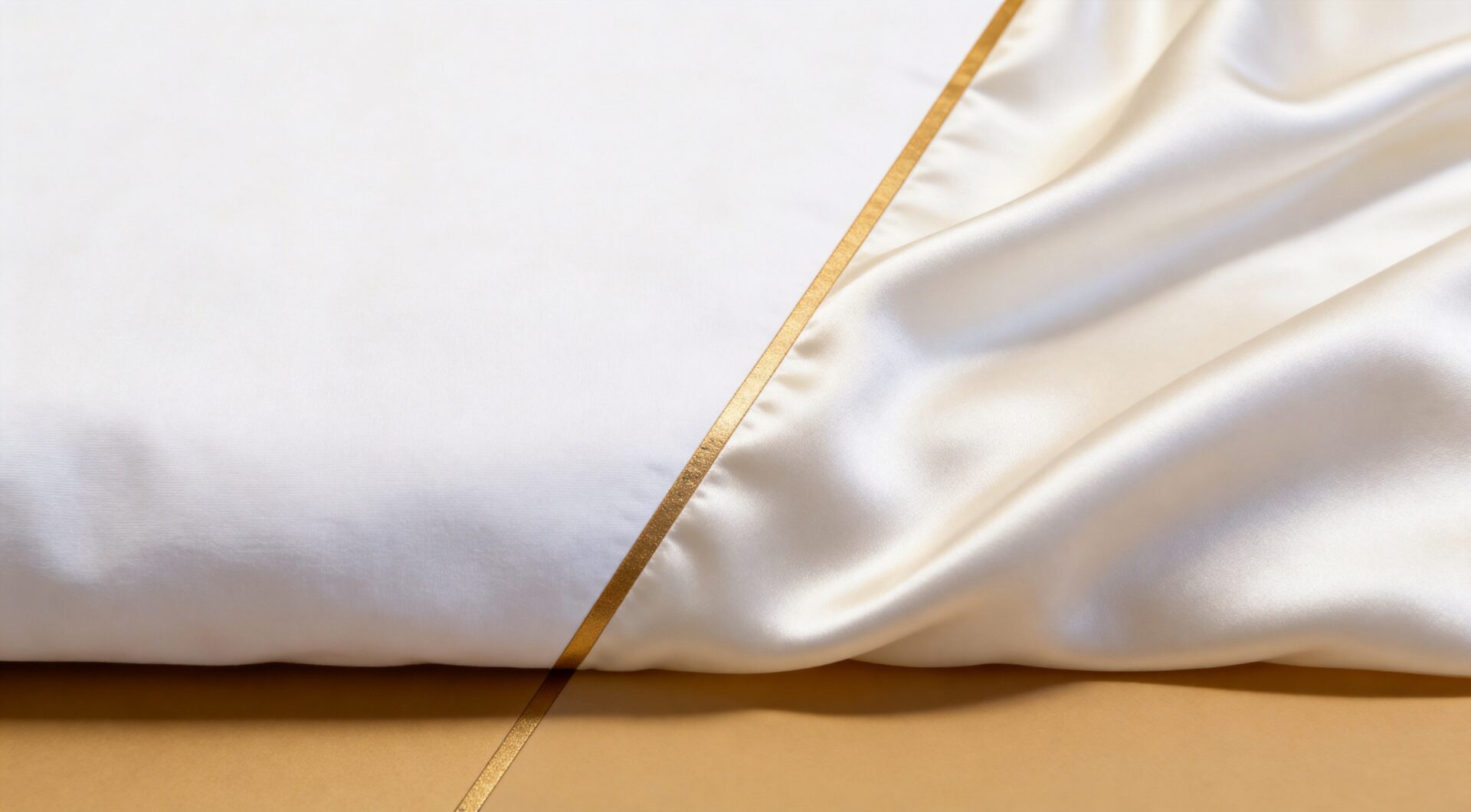
When hotel procurement managers evaluate bed linen options, the conversation almost always starts with thread count. Yet seasoned hospitality textile experts will tell you that the weave structure matters far more than the number printed on the spec sheet. Two sheets can share identical thread counts yet feel worlds apart—one crisp and cool, the other silky and luminous. The difference? Percale versus sateen.
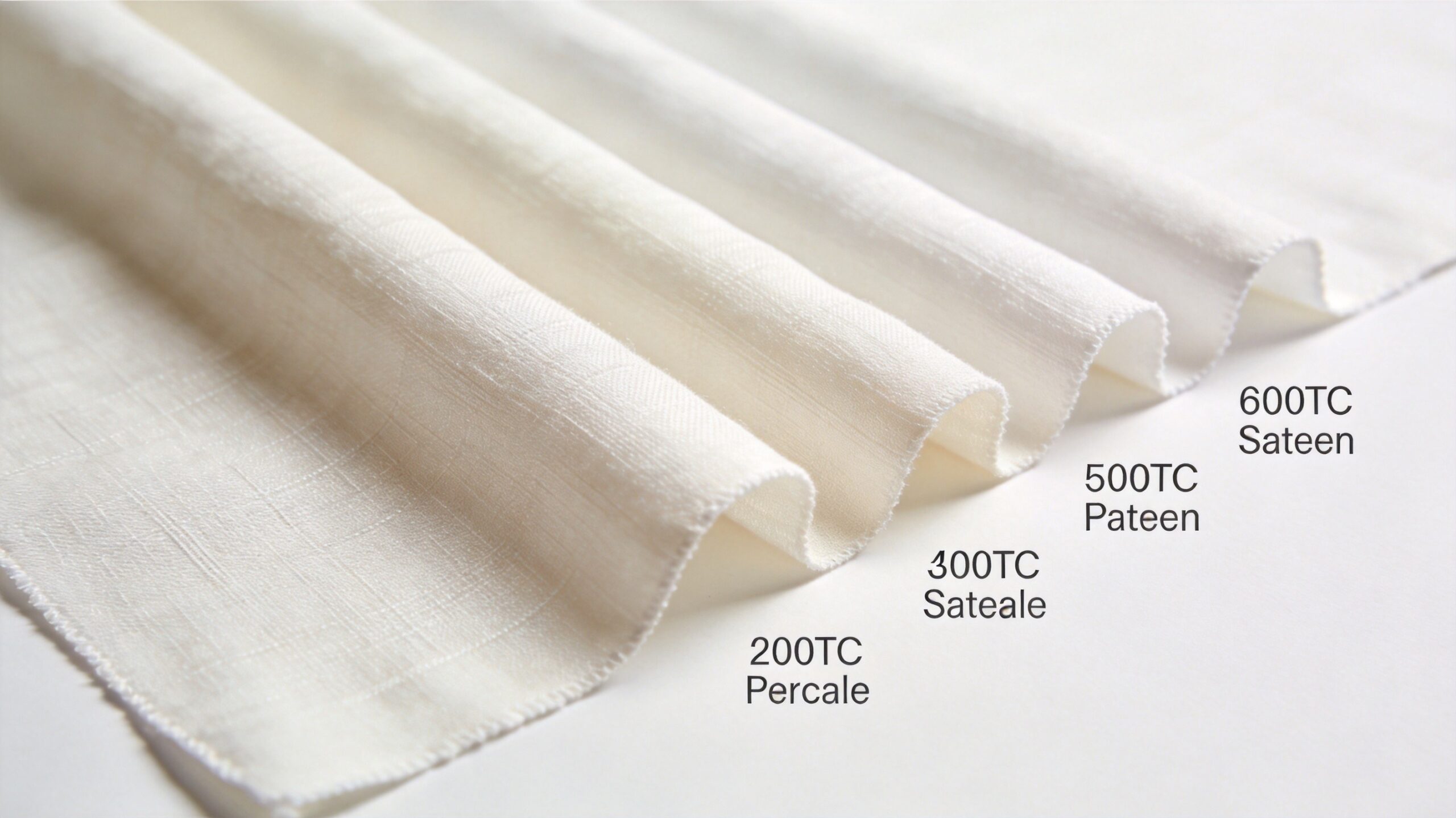
Understanding this distinction is not an academic exercise. The weave you select directly influences guest satisfaction scores, laundry lifecycle costs, replacement frequency, and even your hotel’s online review sentiment. A guest who overheats under sateen sheets in a tropical resort will leave a different review than one who sinks into silky sateen at a luxury city hotel. Both experiences are “correct”—but only if the weave matches the context.
In this comprehensive guide, we break down every dimension of the percale vs. sateen debate for hotel sheets—from the technical textile science to real-world procurement implications. Whether you are sourcing for a 50-room boutique inn or a 500-room convention property, this analysis will give you the framework to make an evidence-based sourcing decision that aligns with your brand, your climate, and your bottom line.
What Is Percale Weave?
Percal is a plain-weave fabric constructed using a simple one-over, one-under interlacing pattern (1/1 ratio). This is the most fundamental weave in textile manufacturing, and it produces a fabric that is matte-finished, lightweight, and notably breathable. In the context of hotel bed linens, percale is often described as “crisp”—the same refreshing sensation guests associate with luxury resort properties in tropical climates.
Key Characteristics of Percale Weave
- Texture: Crisp, cool, and smooth with a matte finish. The fabric feels like a freshly pressed dress shirt.
- Breathability: Superior airflow due to the uniform, open weave structure. Each yarn intersection creates a micro-channel for air circulation.
- Durabilidad: The balanced interlacing distributes stress evenly across the fabric, making percale highly resistant to pilling and abrasion over repeated industrial laundering.
- Weight: Typically lighter than sateen at equivalent thread counts, contributing to easier handling in large-scale laundry operations.
- Appearance: Clean, matte surface with no sheen. Patterns and embroidery render sharply on percale.
- Wrinkle behavior: Percale wrinkles more readily than sateen, though commercial pressing eliminates this between guest use.
Ideal para
Percale hotel sheets are ideal for warm-climate resorts, boutique hotels emphasizing a “fresh linen” aesthetic, and properties in regions where summer temperatures regularly exceed 25°C (77°F). They are particularly favored by hoteliers who prioritize longevity and low maintenance costs over surface luster. The crisp, cool feel of percale also aligns well with wellness-oriented brands that promote restorative sleep and temperature regulation as part of their guest experience promise.
What Is Percale Weave? A Note on Manufacturing
Producing percale requires precise tension control during weaving to ensure uniform interlacing. The simplicity of the plain-weave pattern means that any inconsistency in yarn thickness or tension becomes immediately visible in the finished fabric—making quality control during manufacturing especially important. This is why sourcing percale hotel sheets from established manufacturers with rigorous inspection processes is critical for consistent results across large production runs.
What Is Sateen Weave?
Sateen uses a satin-weave variation—typically four-over, one-under (4/1) or three-over, one-under (3/1). This structure exposes more yarn surface on the face of the fabric, creating the signature silky hand-feel and subtle luster that guests often associate with five-star luxury.
Key Characteristics of Sateen Weave
- Texture: Buttery soft with a noticeable sheen. The long “floats” (uninterrupted yarn segments) create a smooth, almost silk-like surface.
- Insulation: The tighter, denser face of sateen traps more body heat, making it feel warmer than percale at the same thread count.
- Drape: Sateen drapes more fluidly than percale, giving beds a plush, inviting appearance that photographs exceptionally well for OTAs and marketing materials.
- Softening over time: High-quality sateen becomes softer with each wash—a trait that improves the guest experience over the product lifecycle.
- Appearance: Lustrous surface with a gentle shimmer. The sheen catches ambient lighting, elevating perceived room quality.
- Pilling risk: The floating yarns are more exposed and can be prone to pilling if lower-grade fibers or shorter staple lengths are used.
Ideal para
Sateen hotel sheets excel in cooler climates, upscale urban hotels, and boutique properties where perceived luxury is a core brand differentiator. They are the preferred choice for properties targeting the upper-upscale and luxury segments (4-star and above) where the tactile first impression upon bed entry is critical to guest satisfaction metrics.
The Sateen Manufacturing Advantage
Modern sateen production has evolved significantly. Advanced weaving machines now produce sateen with more uniform float lengths and tighter tension control than was possible even a decade ago. This means today’s sateen hotel sheets are more durable and more consistent than their predecessors. The key differentiator between high-quality and low-quality sateen lies in the yarn preparation: combed and compact-spun yarns produce a smoother, stronger sateen face that resists pilling far better than carded yarn alternatives. When evaluating sateen suppliers, always ask about their yarn preparation process—not just the thread count or fiber origin.
Percale vs. Sateen for Hotel Sheets: Head-to-Head Comparison
The following table summarizes the seven most critical dimensions that hotel procurement teams should evaluate:
| Dimension | Percal | Sateen |
|---|---|---|
| Hand Feel | Crisp, cool, “fresh linen” sensation | Silky, smooth, buttery soft |
| Transpirabilidad | Excellent — ideal for warm climates and summer use | Moderate — retains more warmth due to denser face |
| Surface Luster | Matte, clean finish | Subtle sheen, luminous appearance |
| Durabilidad (ciclos de lavado) | High — 150–200+ industrial washes with minimal pilling | Moderate–High — 120–180 washes; depends on fiber quality |
| Price Point | Moderate — simpler weave, lower manufacturing complexity | Higher — more yarn per surface area, longer production time |
| Laundering Behavior | Wrinkles more, presses easily; shrinks minimally | Resists wrinkles naturally; requires careful temperature control |
| Best Hotel Type | Resort, extended-stay, mid-scale, warm-region properties | Luxury, boutique, urban upscale, cool-region properties |
Which Hotel Star Rating Uses Which Weave? Industry Benchmarks
Based on our 21 years of supplying hotel textiles to properties worldwide, we have observed clear industry patterns in weave selection by star rating:
| Hotel Category | Preferred Weave | Typical Thread Count Range | Rationale |
|---|---|---|---|
| 1–3 Star / Budget & Mid-Scale | Percal | 200–300 TC | Cost efficiency, high durability, easy care. Percale withstands high-volume commercial laundering with minimal degradation, keeping replacement costs predictable. |
| 4 Star / Upper-Upscale | Sateen (primary) or Percale (secondary) | 300–400 TC | Guests at this tier expect a luxurious tactile experience. Sateen’s silky drape delivers the premium perception these brands depend on. Some properties offer both options by season. |
| 5 Star / Luxury | Sateen (dominant) | 400–600 TC (long-staple cotton) | Luxury brands compete on sensory experience. Sateen with long-staple or Egyptian cotton delivers the unmistakable softness and sheen that defines the five-star bed experience. |
Note: These are benchmarks, not rigid rules. A beachfront 5-star resort in the Maldives may prioritize percale for its cooling properties, while a design-focused 3-star urban hotel might choose sateen to elevate perceived value. The key is aligning the weave with your brand promise and climate context.
Climate Considerations: Hot vs. Cold Regions
Climate is arguably the single most important operational factor in the percale vs. sateen decision—and it is frequently overlooked during the procurement process.
Hot & Tropical Climates (Southeast Asia, Middle East, Caribbean, Southern US)
In regions where ambient temperatures regularly exceed 28°C (82°F) with high humidity, percale is the overwhelmingly recommended choice. The open weave structure facilitates convective cooling—air passes through the fabric and carries body heat away from the sleeper. Hotels in Dubai, Bangkok, and Miami consistently report higher guest satisfaction scores when switching from sateen to percale during summer months.
Many resort chains operating in tropical zones adopt a percale-first policy, reserving sateen for VIP suites or cooler winter seasons. This dual-inventory approach is increasingly common among procurement teams managing properties across multiple climate zones.
Cool & Temperate Climates (Northern Europe, Canada, Northern US, UK)
In cooler climates, sateen gains a clear advantage. The denser weave retains more body heat, and the luxurious hand-feel aligns with guests’ expectations for warmth and comfort during colder months. Urban hotels in London, Toronto, and Stockholm favor sateen year-round for its combination of warmth and premium aesthetics.
Four-Season Properties
Hotels in regions with significant seasonal temperature variation (such as central China, the northeastern US, or central Europe) often maintain two linen inventories or specify a mid-weight weave that performs adequately across seasons. A 300 TC percale in summer and a 400 TC sateen in winter is a common strategy among quality-conscious operators.
Air Conditioning & Indoor Climate Control
It is worth noting that climate-controlled environments change the calculus. Hotels with powerful HVAC systems that maintain room temperatures between 20–22°C (68–72°F) year-round can use either weave regardless of outdoor climate. In these cases, the decision shifts from thermal comfort to brand aesthetics and guest expectation. Properties targeting international business travelers—who often prefer cooler rooms—tend to find that both weaves perform adequately, making sateen’s luxury appeal the deciding factor.
Care & Maintenance Differences for Hotel Laundry Operations
For hotel operations teams, the maintenance profile of hotel bed linens directly impacts OPEX. Laundry costs typically account for 15–25% of total linen lifecycle expenditure, making weave-dependent differences in wash time, drying time, and pressing labor highly significant at scale. For a 300-room hotel processing 2,000+ sheets per week, even a 10% difference in drying time translates to meaningful energy savings over the product’s usable life. Here is what procurement managers need to know:
Percale Maintenance
- Washing: Tolerates higher wash temperatures (up to 75°C / 167°F) without significant fiber degradation. Compatible with standard commercial detergents and bleach cycles.
- Secado: Dries faster due to its open weave, reducing dryer cycle time by approximately 10–15% compared to sateen.
- Ironing/Pressing: Wrinkles more readily but presses crisply. Flatwork ironers produce excellent results on percale.
- Lifespan: Maintains structural integrity longer under industrial wash conditions. Expect 150–200+ wash cycles before replacement is needed, depending on fiber quality and wash chemistry.
- Encogimiento: Minimal if properly finished during manufacturing (under 3%).
Sateen Maintenance
- Washing: Best laundered at moderate temperatures (40–60°C / 104–140°F). High-temperature washes accelerate the breakdown of floating yarns.
- Secado: Takes longer to dry due to denser construction. Tumble dry on medium to preserve softness.
- Ironing/Pressing: Naturally wrinkle-resistant due to the satin structure. Requires less pressing time—a labor saving in high-volume laundry operations.
- Lifespan: Generally 120–180 wash cycles. Floating yarns are more susceptible to abrasion. Using long-staple cotton (minimum 1.5″ staple length) significantly extends usable life.
- Pilling management: Higher risk of pilling over time, particularly with shorter-staple fibers. Sourcing from suppliers who use combed or compact-spun yarns reduces this risk substantially.
Expert Insight: “We recommend that hotels using sateen bed linens specify combed long-staple cotton from reputable spinners. The incremental cost per unit is modest—typically 8–12% more—but the lifespan extension is 30–40%, making the total cost of ownership lower than cheaper alternatives.” — Technical team, Nantong Youmian Haochen Textile Co., Ltd. (YouMian)
Expert Recommendation: Which Weave Should Your Hotel Choose?
After two decades of supplying hotel textiles to properties across 40+ countries, our recommendation framework is straightforward:
| If Your Property Is… | We Recommend… | Why |
|---|---|---|
| A beach resort in a tropical climate | Percal, 250–300 TC, combed cotton | Maximum breathability and cooling; withstands salt-air and high-frequency laundering |
| An urban 4-star hotel in a temperate city | Sateen, 300–400 TC, long-staple cotton | Luxury hand-feel that meets brand standards; excellent drape and sheen for marketing photography |
| A limited-service or select-service hotel | Percal, 200–250 TC | Best total cost of ownership; durable, fast-drying, easy to maintain |
| A luxury boutique hotel | Sateen, 400–600 TC, Egyptian or Supima cotton | Delivers the unmistakable luxury experience that justifies premium room rates |
| An extended-stay or apartment-style property | Percal o Percale-Sateen blend | Durability for long-term use with sufficient comfort for extended guest stays |
| A casino or convention hotel with high turnover | Percal for standard rooms; Sateen for suites | Segmented approach balances durability (high-turnover rooms) with luxury (premium suites) |
Direct Answer: There is no universally “better” weave between percale and sateen for hotel sheets. The right choice depends on your hotel’s star rating, climate zone, brand positioning, and laundry operation capabilities. Percale wins on breathability and durability; sateen wins on luxury feel and visual appeal. The best hotel operators match the weave to the guest experience they are promising.
Preguntas frecuentes
1. Is percale or sateen better for hotel sheets?
Neither is universally better—it depends on your hotel’s context. Percale is better for warm climates, budget-to-mid-scale properties, and operations prioritizing durability and lower replacement costs. Sateen is better for luxury positioning, cooler climates, and properties where tactile first impressions directly impact guest satisfaction scores and online reviews.
2. Does sateen pill more than percale?
Yes, sateen is generally more prone to pilling than percale because its floating yarn structure exposes longer yarn segments to friction. However, this risk is significantly reduced when the sateen is manufactured with long-staple or combed cotton fibers and proper finishing processes. Specifying minimum 1.5-inch staple length cotton from your supplier is the most effective way to mitigate pilling in sateen hotel sheets.
3. Can hotels use both percale and sateen linens?
Absolutely. Many hotels—particularly those in four-season climates or with tiered room categories—use percale for standard rooms and sateen for premium rooms and suites. Some resort chains implement seasonal rotation, deploying percale in summer and sateen in winter. This segmented approach optimizes both guest comfort and operational cost.
4. What thread count should I specify for hotel bed linens?
For percale, 200–300 thread count provides the optimal balance of crispness, breathability, and durability for hospitality use. For sateen, 300–400 thread count delivers a luxurious feel without sacrificing structural integrity. Thread counts above 600 are generally unnecessary for commercial hospitality use and may actually reduce breathability without meaningful quality improvement. Always prioritize fiber quality (staple length, yarn type) over thread count as the primary quality indicator.
Request Your Percale & Sateen Sample Swatches
Online research and specification reviews can only take you so far—at some point, you need to feel the difference between percale and sateen with your own hands.
Nantong Youmian Haochen Textile Co., Ltd. (YouMian) offers complimentary fabric swatch kits containing both percale and sateen samples in various thread counts and fiber compositions. With 21 years of hotel textile manufacturing experience, a 30,000㎡ production facility in Nantong—the heartland of China’s home textile industry—and SGS + ISO9001 certifications, we supply hotel bed linens, duvet covers, pillowcases, towels, and bathrobes to properties in over 40 countries.
Whether you are refreshing an existing property or launching a new hotel, our team can help you specify the right weave, fiber, and thread count for your exact requirements.
Our capabilities include:
- Custom weaving: Percale and sateen in thread counts from 200 to 800 TC
- Fiber options: Combed cotton, long-staple cotton, Egyptian cotton, Supima, cotton-polyester blends
- Full product range: Flat sheets, fitted sheets, duvet covers, pillowcases, towels, and bathrobes
- Customization: Embroidery, jacquard patterns, custom sizing, and private-label packaging
- Certifications: SGS tested, ISO9001 quality management system
- MOQ flexibility: Suitable for both boutique properties (50+ rooms) and large-scale chain deployments
Visit YouMian’s website or contact our hospitality textile specialists today to receive your complimentary sample kit and discuss your project requirements.
¿Quieres saber más sobre nuestros productos?
Ver todos los productos ahora English
  Русский
  Español de México
  Português do Brasil
  العربية