
Hotel Linen vs. Home Linen: The Complete Guide to the Difference
Ir a la sección
Puntos clave
- Hotel linen is engineered for durability, withstanding 300–500 industrial wash cycles vs. 100–150 for home linen
- Commercial fabrics use higher thread counts (200–600 TC) with poly-cotton blends for strength, while home linen prioritizes softness with pure cotton
- Hotel linen features reinforced hems and seams (double-stitched) vs. single-stitched home linen edges
- Commercial laundering requires higher temperatures (70–80°C) and harsher chemicals, requiring more resilient fabrics
- Hotel linen replacement cycles are 1.5–3 years based on occupancy, while home linen lasts 5–10 years with proper care
Preguntas frecuentes
What is the main difference between hotel linen and home linen?
Hotel linens are engineered for commercial durability, withstanding 300–500 industrial wash cycles compared to 100–150 for home linens. They feature reinforced seams, higher fabric density (200+ TC percale), and treatments for stain resistance. Home linens prioritize softness and decorative appeal over heavy-duty performance.
How does durability compare between hotel and home linens?
Hotel linens use heavier fabric weights (4.5–5.5 oz/yd²) and tighter weaves, giving them 2–3× the lifespan of typical home linens. Double-stitched hems and corner reinforcement prevent tearing during high-temperature industrial laundering. Home linens with similar thread counts typically last only half as long under commercial conditions.
What washing temperature do hotel linens require?
Hotel linens are designed for wash temperatures of 65–75°C (150–167°F) to meet sanitation standards. This is significantly higher than most home laundry (30–40°C). Hotel fabrics maintain integrity at these temperatures due to mercerized cotton fibers and industrial-grade construction that prevents shrinkage.
Which fabrics are best for hotel versus home use?
Hotels primarily use 100% combed cotton or poly-cotton blends (65/35) at 200–300 TC for durability and ease of care. Home linens offer more variety including sateen, linen, bamboo, and silk blends. For hotel properties, stick with percale weave cotton or TC blends that withstand repeated industrial processing.
How often should hotels replace their linens?
Hotels should replace sheets every 300–500 wash cycles (typically 18–24 months for 80%+ occupancy properties) and towels every 150–250 cycles (12–18 months). Signs of replacement include visible pilling, thinning fabric, permanent staining, or fraying edges. A rotation schedule of 3 sets per room ensures even wear.
When procuring bed sheets, pillowcases, and towels, hospitality buyers face a fundamental decision: should they invest in commercial-grade hotel linen, or will standard home linen suffice? The answer has significant implications for guest satisfaction, operational costs, and replacement frequency.
This comprehensive guide breaks down the material, construction, performance, and economic differences between hotel linen and home linen—backed by textile industry standards and real-world hospitality procurement data.
1. What Is Hotel Linen?
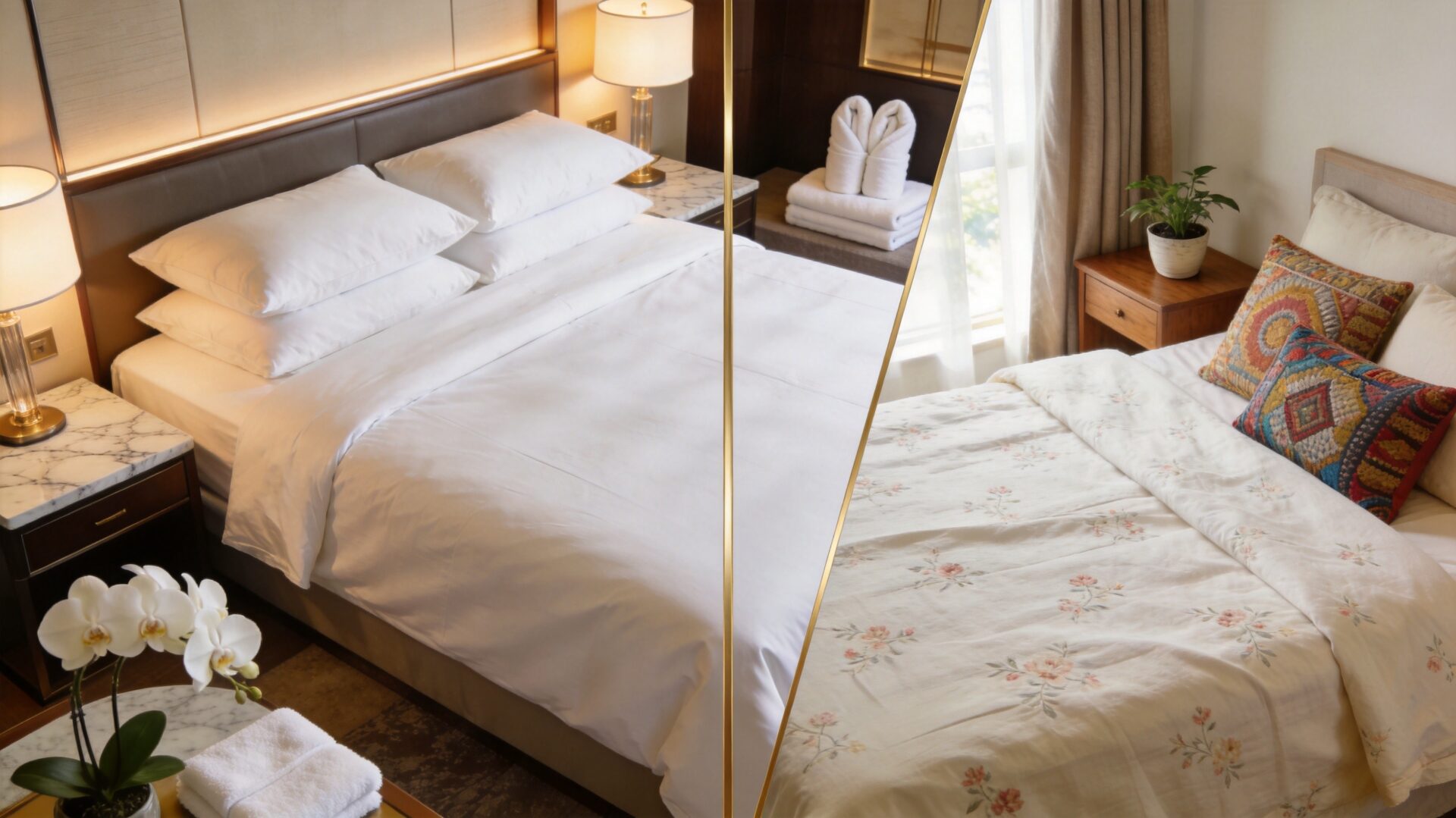
Hotel linen (also called commercial linen or hospitality linen) refers to bed sheets, pillowcases, towels, and tablecloths manufactured to meet the rigorous demands of commercial laundry operations in hotels, hospitals, and cruise lines.
Key defining characteristics of hotel linen include:
- Wash durability: Designed to withstand 300–500 industrial wash cycles at 70–80°C with alkaline detergents and bleach
- Fabric composition: Typically 50/50 or 60/40 poly-cotton blends for balanced strength and comfort
- Thread count range: 200–600 TC for sheets; measured differently than retail home linen
- Reinforced construction: Double-stitched hems, bar-tacked stress points, and selvedge edges
- Flame retardancy: Must comply with NFPA 701, BS 5867 Part 2, or equivalent fire safety standards
- Shrinkage control: Maximum 3–5% shrinkage after industrial laundering
2. What Is Home Linen?
Home linen refers to bedding and bath textiles designed for residential use, prioritizing softness, aesthetics, and comfort over industrial durability.
Typical characteristics of home linen:
- Wash durability: Designed for gentle domestic cycles at 40–60°C, typically lasting 100–150 washes
- Fabric composition: Often 100% cotton (Egyptian, Pima, Supima), bamboo, or linen flax
- Thread count range: 200–1,000+ TC (consumer marketing often inflates TC claims)
- Construction: Single-stitched hems, decorative finishes, printed patterns
- Priority: Aesthetics, softness, and brand appeal
- Replacement cycle: 5–10 years with proper care
3. Material & Fiber Composition
Hotel Linen Fibers
Hotel linen predominantly uses poly-cotton blends, with the most common ratios being:
- 50/50 Poly-Cotton: Maximum durability for 3–4 star hotels. Polyester provides tensile strength while cotton adds breathability. Most common in mid-range properties.
- 60/40 Cotton-Poly: Higher cotton content for luxury properties (4–5 star). Better hand-feel while maintaining commercial wash resistance.
- 100% Cotton (Carded or Combed): Used in premium and boutique hotels. Requires more careful laundering but offers superior comfort.
- 100% Microfiber: Budget and extended-stay hotels. Extremely durable, quick-drying, wrinkle-resistant, but less breathable.
Home Linen Fibers
- 100% Egyptian Cotton: Extra-long staple (ELS) fibers for premium softness. Thread counts up to 1,000+.
- 100% Pima/Supima Cotton: American-grown ELS cotton, comparable to Egyptian.
- Bamboo Viscose/Lyocell: Eco-friendly, naturally antibacterial, extremely soft hand-feel.
- Linen (Flax): Premium natural fiber, highly breathable, distinctive textured look.
- Silk: Ultra-luxury segment, requires specialized care.
Key difference: Hotel linen prioritizes fiber strength and wash endurance; home linen prioritizes hand-feel and natural fiber purity.
4. Thread Count: Apples to Oranges
Thread count (TC) is one of the most misunderstood metrics in textiles. The same TC number means different things in hotel vs. home linen contexts.
| Aspect | Hotel Linen TC | Home Linen TC |
|---|---|---|
| Typical Range | 200–600 TC | 200–1,000+ TC |
| Measurement Standard | Single-ply count (accurate) | Often multi-ply inflated (2-ply × 300 = “600 TC”) |
| 200 TC Equivalent | Standard commercial grade | Budget/entry level |
| 300 TC Equivalent | Mid-range hotel | Quality residential |
| 600 TC Equivalent | Luxury hotel | Premium/ultra-luxury |
| Tipo de tejido | Percale dominant (crisp, cool) | Percale or sateen (sateen = silky) |
Buyer’s note: A hotel 300 TC percale sheet will feel crisper and more durable than a home 300 TC sateen sheet, even though the number is identical. Always compare weave type alongside TC.
5. Construction & Durability Features
Seams & Hems
- Hotel: Double-needle lockstitch seams, 12–15 stitches per inch. Bottom hem 5–7 cm. Side hems 2–3 cm. Stress points bar-tacked.
- Home: Single-needle stitch, 8–10 stitches per inch. Narrow hems 1–2 cm. Decorative edges (piping, embroidery).
Shrinkage & Dimensional Stability
| Propiedad | Hotel Linen | Home Linen |
|---|---|---|
| Max Shrinkage (Warp) | 3–5% | 5–8% |
| Max Shrinkage (Weft) | 3–5% | 5–8% |
| Tensile Strength (Warp) | ≥250 N | ≥150 N |
| Tear Strength | ≥25 N | ≥15 N |
| Pilling Grade (after 50 washes) | ≥3–4 (ISO 12945-2) | ≥3 (no standard required) |
Color Fastness
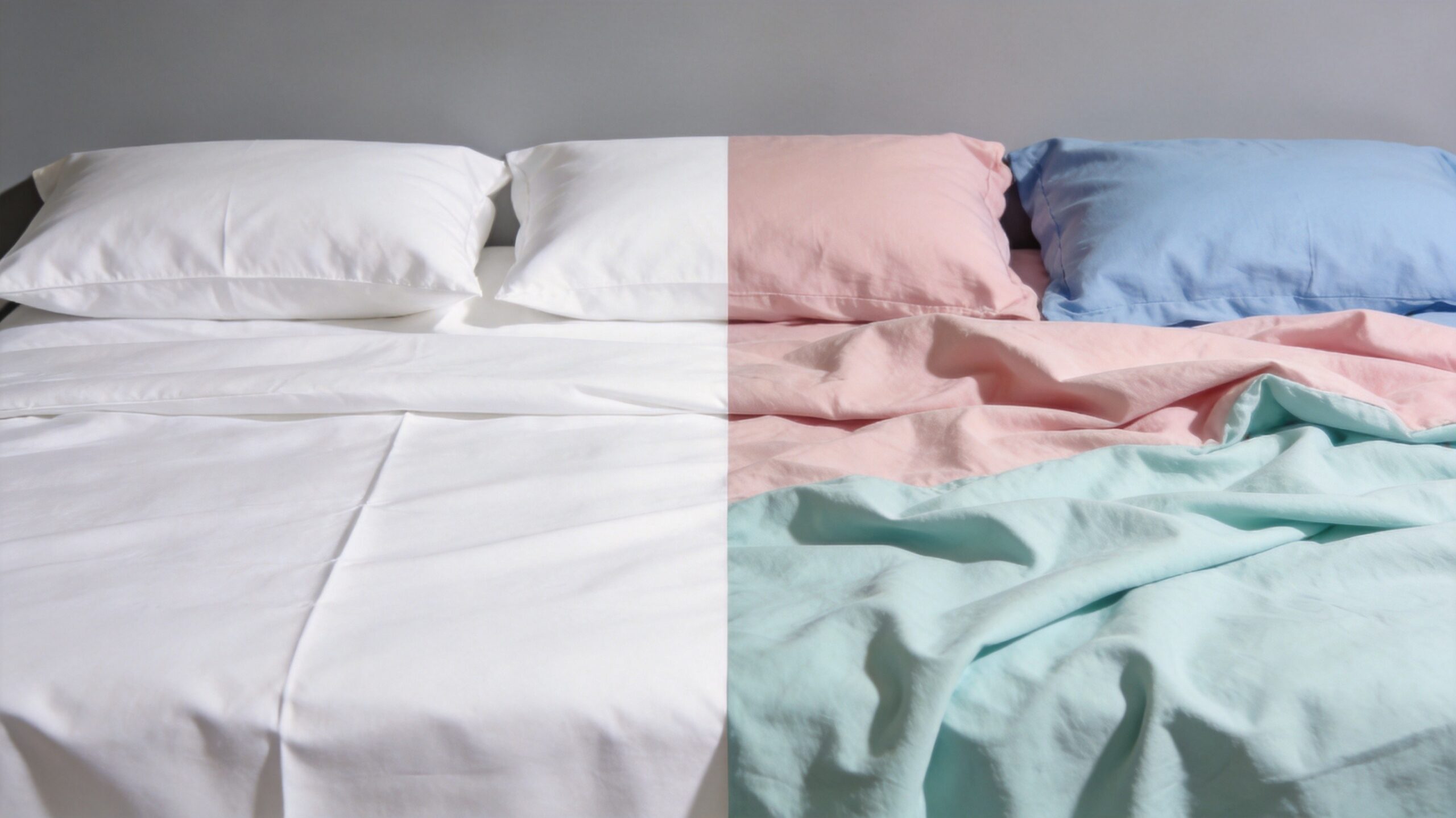
Hotel linen is predominantly white or off-white because:
- White fabrics withstand chlorine bleach and high-temperature washing without visible degradation
- Colored home linen uses reactive dyes that fade after 20–30 commercial wash cycles
- Hotel brands maintain consistency—white signals cleanliness to guests
6. Washing & Care Standards
This is where the difference becomes most critical. Hotel linen must survive conditions that would destroy home linen within weeks.
| Parámetro | Hotel/Commercial Wash | Home/Domestic Wash |
|---|---|---|
| Temperature | 70–80°C (158–176°F) | 30–60°C (86–140°F) |
| Wash Cycle Duration | 30–45 minutes | 45–90 minutes |
| Detergent Type | High-alkaline commercial (pH 12–13) | Mild/neutral (pH 7–10) |
| Bleach | Chlorine bleach (150–200 ppm) | Oxygen bleach or none |
| Extract Speed | 400 G-force (high-speed) | 100–200 G-force |
| Ironing/Finishing | Calendar ironing at 160°C | Tumble dry or line dry |
| Expected Wash Life | 300–500 cycles | 100–150 cycles |
Bottom line: If you put home linen through commercial washing conditions, it will degrade within 20–30 washes. Hotel linen in a domestic washer will last years but may feel “too crisp” compared to home textiles.
7. Sizing & Specifications
Flat Sheets
| Bed Size | Hotel Flat Sheet | Home Flat Sheet (US) |
|---|---|---|
| Single/Twin | 180 × 270 cm | 165 × 244 cm (65″ × 96″) |
| Double/Full | 230 × 270 cm | 206 × 244 cm (81″ × 96″) |
| Reina | 250 × 270 cm | 231 × 254 cm (90″ × 100″) |
| Rey | 280 × 290 cm | 262 × 254 cm (103″ × 100″) |
Hotel sheets are generally longer and wider to accommodate deep mattresses (30–35 cm) with generous tuck-in margins for hospital corners.
Fitted Sheets
Hotel fitted sheets feature:
- Deeper pockets (25–35 cm vs. 20–25 cm standard)
- All-around elastic (not just corners)
- Stronger elastic channels that resist degradation from bleach and heat
8. Cost & Lifecycle Analysis
The initial purchase price tells only part of the story. Total cost of ownership (TCO) reveals the real economics.
| Métrico | Hotel Linen (per set) | Home Linen (per set, queen) |
|---|---|---|
| Purchase Price | $25–60 | $40–200+ |
| Expected Lifespan (commercial wash) | 2–3 years (300–500 cycles) | N/A (not rated for commercial) |
| Expected Lifespan (home wash) | 5–8 years | 5–10 years |
| Cost per Wash (commercial) | $0.05–0.20 | Would fail after 20–30 washes |
| Replacement Triggers | Staining, thinning, torn hems | Wear, pilling, faded color |
For a 200-room hotel:
- 3 par inventory × 200 rooms × $40/set = $24,000 initial investment
- Annual replacement (33% turnover) = $8,000/year
- Using home linen would result in 6–10× higher replacement frequency in commercial conditions
9. Which Should You Choose?
Choose Hotel Linen If:
- You operate a hotel, Airbnb, or short-term rental with commercial laundering
- You use an industrial laundry service (linen hire or owned facility)
- You need consistent replacement inventory with standardized sizing
- Durability and wash endurance matter more than aesthetics
- You need fire-retardant compliance
Choose Home Linen If:
- You’re outfitting a residential home
- You wash with domestic machines and mild detergents
- Aesthetics, patterns, and hand-feel are priorities
- You prefer natural fibers (Egyptian cotton, bamboo, linen)
- You want ultra-high thread counts (800+)
The Hybrid Approach
Some boutique hotels use premium home linen (100% cotton, 400–600 TC sateen) but outsource laundering to commercial facilities that adjust wash parameters for delicate fabrics. This requires a dedicated wash program with lower temperatures (60°C) and oxygen-based bleach. It works—but reduces linen life by 30–40%.
10. Frequently Asked Questions
Can I use home linen in my hotel?
Technically yes, but it will degrade 5–10× faster under commercial washing. The cost savings on initial purchase are quickly offset by replacement costs. Only viable for very small properties (under 10 rooms) doing in-house domestic washing.
Can I use hotel linen at home?
Absolutely. Hotel linen in domestic conditions will last far longer than at home. The trade-off is the “crisp” percale hand-feel (some find it less cozy than sateen). Many consumers appreciate hotel-style bedding for its cool, fresh feel.
What thread count do luxury hotels actually use?
Most 5-star hotels use 300–400 TC percale in 60/40 cotton-poly or 100% combed cotton. Some ultra-luxury properties (Four Seasons, Ritz-Carlton) use 600 TC sateen in 100% cotton. The key is not the highest TC, but the right balance of durability and comfort.
Why is hotel linen mostly white?
White withstands chlorine bleach and high-temperature washing without visible fading. It also signals cleanliness to guests—any stain or discoloration is immediately visible, ensuring quality control.
How often should hotels replace their linen?
Based on occupancy and wash frequency: a hotel at 70% occupancy with daily changes will reach 300 wash cycles in approximately 14 months. Industry standard replacement is every 18–36 months for sheets and 12–24 months for towels, depending on quality grade.
Conclusion
Hotel linen and home linen are engineered for fundamentally different environments. Hotel linen prioritizes wash endurance, dimensional stability, and operational efficiency under industrial conditions. Home linen prioritizes aesthetics, softness, and natural fiber purity under gentle domestic care.
For hospitality procurement, the decision isn’t about which is “better”—it’s about matching the product to the wash environment. Using the wrong category leads to premature failure, inflated costs, and compromised guest experience.
If you’re sourcing hotel linen for your property, focus on: wash-cycle rating (300+), poly-cotton blend ratio, reinforced seams, and compliance with fire safety standards. A reputable supplier will provide test reports for tensile strength, shrinkage, and pilling resistance.
Youmian Textile has been manufacturing hotel linen for over 20 years, supplying 4- and 5-star hotels across 50+ countries. Contáctanos for samples and custom specifications.
¿Quieres saber más sobre nuestros productos?
Ver todos los productos ahora English
  Русский
  Español de México
  Português do Brasil
  العربية