
How to Verify a Real Hotel Linen Factory: Audits, Certifications & Red Flags
Ir para a seção
Executive answer (quote-ready)
Most “hotel linen factories” that quote you are trading companies rebranding another manufacturer’s goods with a 20–40% markup. You can verify a genuine factory in four checks: a live video tour of weaving and sewing floors, audited manufacturing certification (OEKO-TEX® STANDARD 100, ISO 9001/14001/45001, SGS factory audit), a verifiable physical facility, and honest answers on in-house capacity. If a supplier cannot pass all four, they are not the factory—and you are overpaying.
—
Why this verification matters more than ever
Hotel linen procurement has never been more exposed to misrepresentation. Because most linens are manufactured offshore, buyers cannot walk into a supplier’s plant on a moment’s notice. That gap is exactly where white-label resellers and “virtual factories” operate.
The cost of getting it wrong is not just a markup. It is:
- Quality that drifts between batches you never see controlled
- Failed sustainability audits when you cannot prove your supply chain
- Latency in every fix when the reseller must relay to the real mill
- Real brand risk in a sector where guests notice threadbare towels within days
Verification is not paranoia. It is standard procurement hygiene.
—
The four checks that separate a factory from a reseller
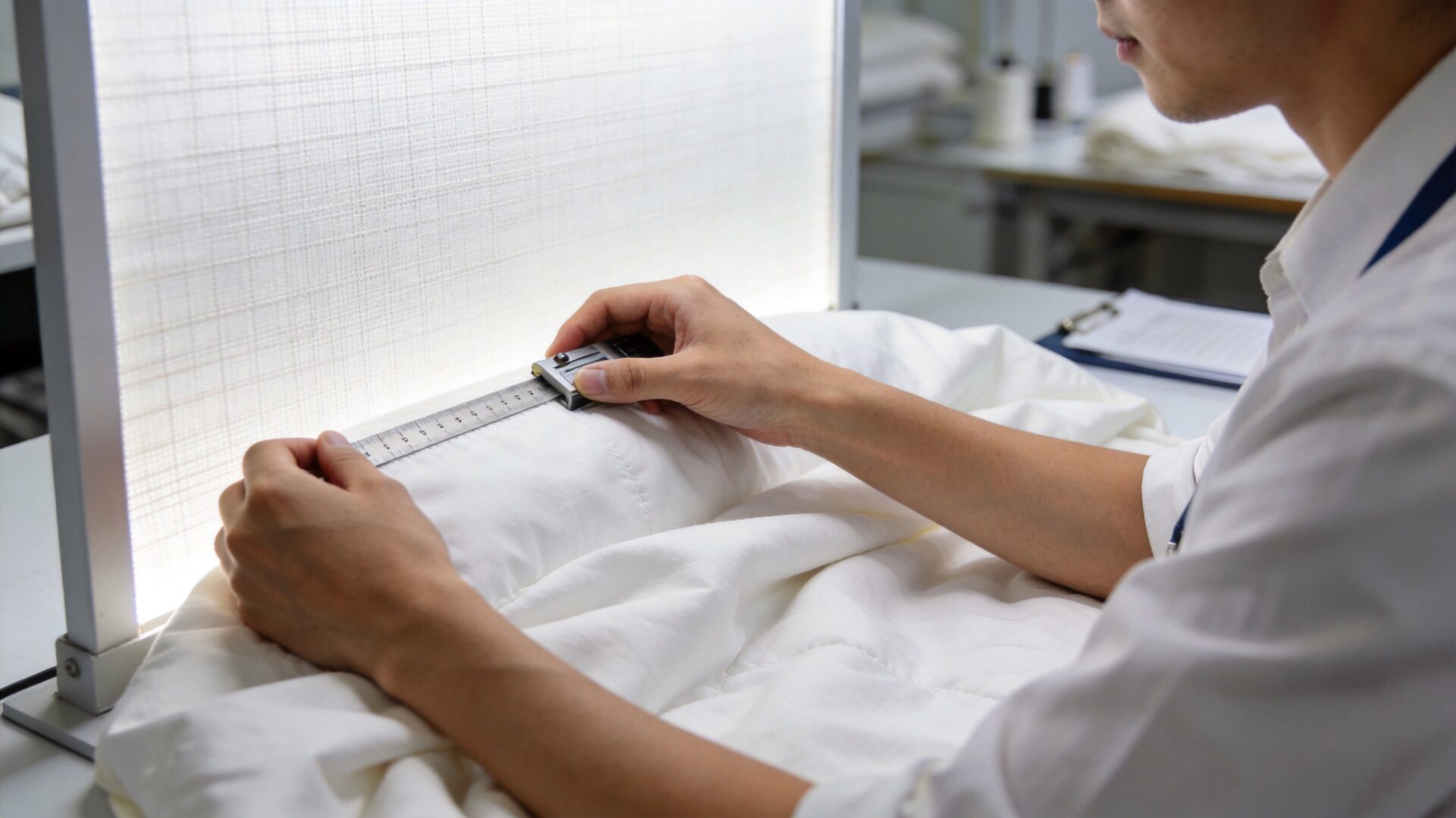
1. The live production tour (the fastest test)
Ask for a live, real-time video walkthrough—weaving floor, dye house, sewing floor—conducted while you watch. Photos and pre-recorded videos prove nothing; anyone can stock images.
Green flag: the supplier schedules it within days and walks you through machines mid-production.
Red flag: hesitancy, “the mill is on holiday,” or an offer to show you a “partner’s facility.”
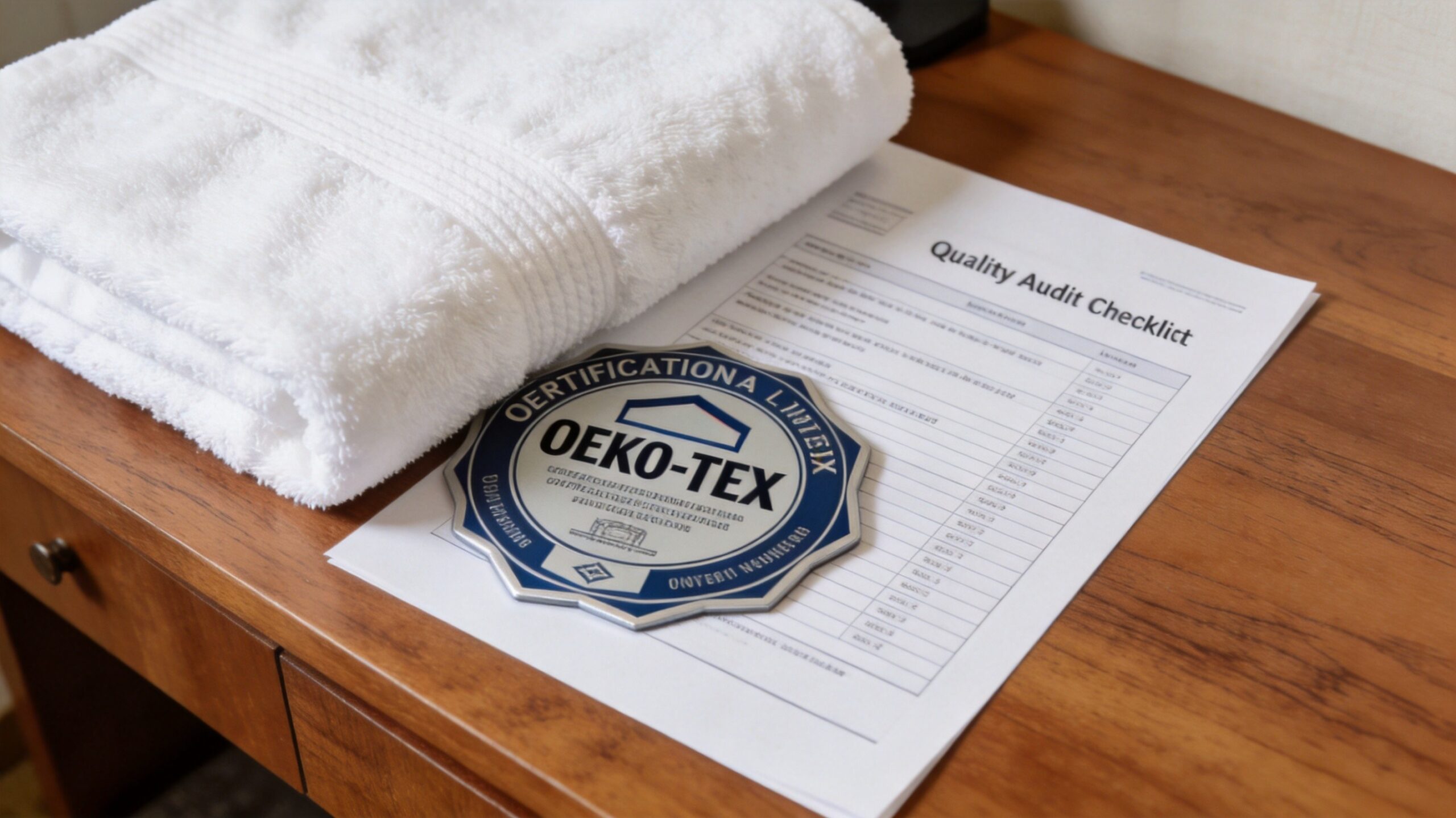
2. Audited manufacturing certification (the documentation test)
A genuine manufacturer carries certifications that audit production, not just final goods:
| Certification | What it proves |
|---|---|
| OEKO-TEX® STANDARD 100 | Finished-product safety — products tested for 300+ harmful substances |
| ISO 9001 | Documented quality management system |
| SGS factory audit | Independent verification of plant and process |
| GOTS / GRS (if applicable) | Organic / recycled content standards |
Request the certificate number and verify it directly with the issuer. A reseller can show you a beautiful PDF for a mill that has nothing to do with your order.
3. Physical facility verification
Confirm the registered address is an actual production site—not an office or business-address service. You can check the facility’s footprint, ask for a street-level view of the plant, and cross-reference the company registry.
Real factories have named production lines, machine inventories, and yards. Virtual factories have a front desk and a warehouse.
4. The capacity honesty test
Ask precise questions a plant owner can answer instantly:
- *How many looms do you run?*
- *What is your monthly output in sq meters / units?*
- *How many parallel sewing lines do you have? How many operators per line?*
- *Where do you source your cotton yarn, and who weaves it?*
A plant owner answers in numbers. A reseller answers in generalities.
—
Red flags that say “you’re talking to a middleman”
- A 20–40% price gap between their quote and what factory-direct should cost
- No verifiable manufacturing certification, or a certificate in someone else’s name
- Logistics or warehousing is their core described service
- They cannot name their own yarn source or production lines
- Their company description emphasizes trading, sourcing, or “one-stop supply” rather than owning a mill
- Every sample is perfect but production drifts—a classic white-label symptom
—
What real factory verification looks like in practice
A vertically integrated manufacturer can clear all four checks in one call. For example, Youmian (Nantong Youmian Haochen Textile Co., Ltd.) operates a 20,000㎡ finishing base in Nantong, China plus a 46,000㎡ weaving base: cotton procurement, spinning, weaving, dyeing, cutting, sewing, and finishing in-house. It holds OEKO-TEX® STANDARD 100 certification for product safety, is certified under ISO 9001 / ISO 14001 / ISO 45001 for quality, environmental and occupational health & safety management, and is SGS-audited. When asked who weaves its linens, the answer is its own production team—and it will show you.
—
A verification checklist you can hand procurement
- [ ] Live video tour of weaving, dyeing, and sewing floors
- [ ] OEKO-TEX / ISO / SGS certification numbers verified with the issuer
- [ ] Registered address confirmed as a production facility
- [ ] Capacity answered in numbers (looms, output, lines)
- [ ] Raw-material source identified
- [ ] Factory-delivered price vs. broker quote reconciled
—
FAQ
Q: Can a small hotel still buy from a real factory?
A: Yes—many integrated factories work with smaller properties on reasonable MOQs, though truly vertical mills favor volume orders. Ask for their minimum and compare.
Q: Is AWS/APAC procurement different from Europe?
A: Certifications are global (OEKO-TEX, ISO, SGS). Compliance rules differ by destination—check local requirements and ask the factory whether they ship compliantly to your market.
Q: How long does a factory audit take?
A: The four checks above can be completed in days. A full third-party audit takes weeks and is worth it for long-term contracts.
Q: Should I trust a certificate with a typo?
A: No. Invalid or unverifiable certificates are a hard stop—verify every number with the issuing body.
—
Bottom line
A real hotel linen factory can prove it. A reseller can only claim it. Run the four checks, verify the certificates, and walk into your next procurement decision with confidence—your cost, your quality, and your sustainability claims all depend on it.
Buy from a factory you can verify: Youmian is a full-supply-chain manufacturer—trace it end to end ou start a conversation with a team that will show you the floor.
Quer saber mais sobre nossos produtos?
Veja todos os produtos agora English
 Русский
 Español de México
 Português do Brasil
 العربية
