
Outsourced Laundry vs OPL: Pros, Cons, and Decision Framework
Ir para a seção
For hotel operators, the decision between outsourcing laundry and operating an on-premise laundry (OPL) represents one of the most significant operational and financial choices affecting both the balance sheet and guest experience. Commercial laundry operations process 15–35 pounds of linens per occupied room daily, translating to 3,000–10,000 pounds per day for a mid-size hotel. The outsourced laundry vs OPL debate hinges on capital expenditure, labor costs, quality control, linen lifespan, and sustainability metrics. This guide provides a comprehensive comparison, industry benchmarks, and a decision framework to help hotel procurement managers and operations directors make the optimal choice for their property.
Defining the Two Models
On-Premise Laundry (OPL)
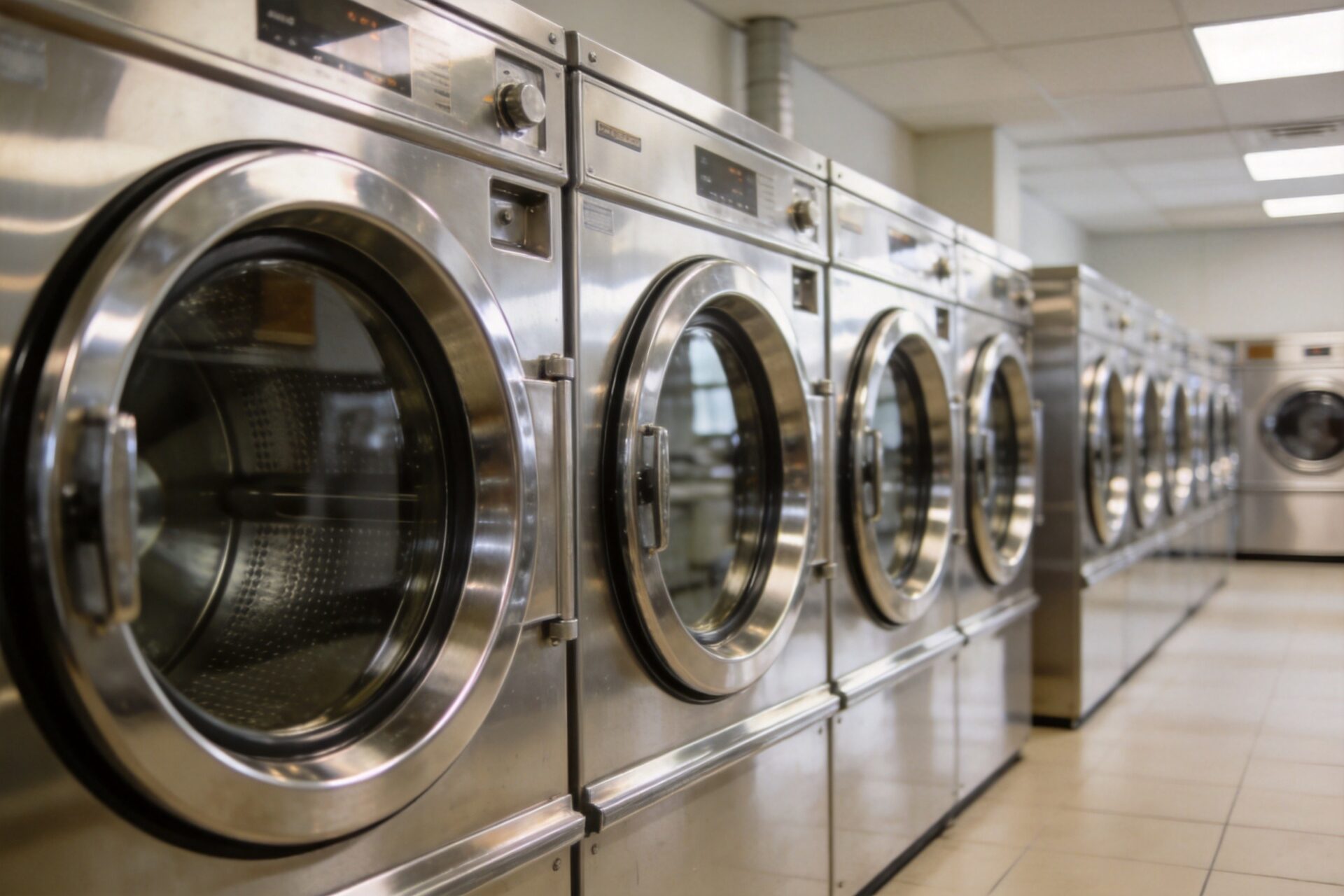
An OPL is a self-operated laundry facility located within or adjacent to the hotel property. It requires industrial washers, dryers, flatwork ironers, folders, and dedicated laundry staff. Hotels with OPLs control the entire laundering process from sorting to folding, enabling real-time quality oversight. The model is most common in large full-service hotels, resorts, and casino properties where laundry volume exceeds 3,000 pounds per day and where the property has available floor space and utility infrastructure.
Outsourced Commercial Laundry
Outsourced laundry involves contracting with a third-party industrial laundry service that picks up soiled linens, processes them at a centralized plant, and returns clean parcels on a scheduled basis. Many outsourced providers also offer linen rental programs, eliminating the need for hotels to own linens entirely. This model is prevalent among limited-service hotels, boutique properties, and hotels in high-labor-cost urban markets where real estate and wages make OPL uneconomical.
Cost Comparison: Breaking Down the Numbers
The most critical factor in the outsourced laundry vs OPL decision is total cost. The table below compares cost structures for a 300-room full-service hotel processing approximately 6,000 pounds of laundry per day (2.19 million pounds annually).
| Cost Component | OPL (Annual) | Outsourced (Annual) | Notas |
|---|---|---|---|
| Labor (including benefits) | $280,000–$420,000 | Included in service fee | OPL requires 8–12 FTEs |
| Equipment Depreciation | $45,000–$75,000 | $0 | OPL equipment: $350K–$600K over 7–10 years |
| Water & Sewer | $35,000–$55,000 | Included | 2.5–3.5 gallons per pound processed |
| Natural Gas/Electricity | $45,000–$70,000 | Included | Heating water and drying |
| Chemicals (detergent, bleach, softener) | $18,000–$28,000 | Included | Bulk commercial chemicals |
| Equipment Maintenance | $12,000–$20,000 | $0 | Preventive and reactive repairs |
| Linen Replacement | $40,000–$65,000 | $0 (if rental) or $40K–$65K | OPL tends to extend linen life |
| Service Fee | $0 | $480,000–$660,000 | $0.22–$0.30 per pound |
| Transportation/Fuel | $0 | Included (usually) | Some providers charge fuel surcharges |
| Total Annual Cost | $475,000–$733,000 | $480,000–$660,000 | |
| Cost Per Pound | $0.22–$0.34 | $0.22–$0.30 |
At comparable volumes, the cost differential is often narrower than hoteliers expect. However, costs vary dramatically based on local utility rates, minimum wage levels, linen quality, and the efficiency of the OPL operation. In high-wage markets like New York, San Francisco, or London, outsourced laundry frequently undercuts OPL by 15–25%. In lower-wage markets or properties with surplus utility capacity, OPL can be 10–20% cheaper.
Quality Control and Linen Longevity
The OPL Quality Advantage
Hotels that operate their own laundries exercise direct control over wash formulas, water temperature, chemical dosing, and drying cycles. This control translates directly to longer linen life. Industry data indicates that OPL-processed linens typically last 20–40% longer than those processed by commercial laundries, because in-house teams can use gentler wash formulas tailored to specific fabric types and soil levels. A 250-thread-count cotton sheet that lasts 250 washes in an OPL may only survive 180–200 washes at a high-volume commercial plant where standardization prioritizes throughput over fabric care.
Outsourced Quality Trade-offs
Commercial laundries process millions of pounds annually using tunnel washers that apply fixed formulas across all customer linens. While these systems are highly efficient, they cannot always accommodate specialized requirements—such as the lower-temperature washing that organic cotton or TENCEL™ fabrics require. Hotels that invest in premium conjuntos de cama para hotéis may see accelerated degradation when those linens are processed through aggressive commercial wash cycles. Additionally, mixed-client processing increases the risk of foreign object contamination, dye transfer, and loss or mis-sorting.
However, top-tier commercial laundries have invested heavily in quality systems including RFID tracking, automated soil sorting, and optical stain detection. These facilities can match or exceed OPL quality standards when service level agreements (SLAs) include specific quality metrics, rejection rates, and linen loss allowances (typically 2–3% annually).
Labor Considerations
Labor is the single largest cost in OPL operations, accounting for 50–60% of total OPL expenses. Managing laundry staff involves recruiting, training, scheduling, and retaining employees in a historically high-turnover position. Industrial laundry work is physically demanding—employees stand for full shifts, handle wet linens, and work in hot, humid environments—and annual turnover rates of 40–60% are common.
Outsourcing eliminates these HR burdens entirely. The commercial laundry provider handles all staffing, training, workers’ compensation, and shift coverage. For hotels in tight labor markets, this advantage alone can justify outsourcing, especially when housekeeping departments already face staffing shortages that affect room readiness.
Capacity, Scalability, and Peak Demand
OPL capacity is fixed. A laundry designed for 5,000 pounds per day cannot easily process 8,000 pounds during a sold-out conference week without overtime costs, equipment strain, and delayed turnaround. This capacity constraint often forces OPL hotels to outsource overflow during peak periods, paying premium rush rates that erode the OPL cost advantage.
Outsourced laundry offers virtually unlimited scalability. Commercial plants routinely process 50,000–200,000 pounds per day and can accommodate seasonal peaks with advance notice. For resort properties with extreme seasonality—such as beach hotels at 90% occupancy in summer and 30% in winter—outsourcing provides a variable cost structure that aligns with revenue fluctuations, whereas OPL represents a fixed cost that persists through slow seasons.
Sustainability and Environmental Impact
| Environmental Factor | OPL | Outsourced Commercial Laundry |
|---|---|---|
| Water Usage (per pound) | 2.5–3.5 gallons | 1.5–2.0 gallons (tunnel washers) |
| Energy Efficiency | Variable (depends on equipment age) | Typically higher (modern equipment, heat recovery) |
| Chemical Dosing Precision | Moderate (manual or semi-automated) | High (computer-controlled, closed-loop) |
| Wastewater Recycling | Rare (high capital cost) | Common at large plants |
| Transportation Emissions | Minimal (on-site) | Daily truck routes (diesel/CNG) |
| Linen Lifespan | Longer (gentler, customized cycles) | Shorter (standardized aggressive cycles) |
The sustainability comparison is nuanced. Large commercial laundries achieve superior water and energy efficiency per pound through economies of scale and advanced equipment, but daily truck transportation adds a carbon footprint that OPLs avoid. For hotels prioritizing ESG reporting, the net carbon comparison depends on distance to the laundry plant, vehicle fuel type, and the relative efficiency of on-site equipment. Hotels with aging OPL equipment (over 10 years old) may find that outsourcing to a modern, water-recycling commercial plant reduces their environmental impact despite transportation emissions.
Decision Framework: Which Model Is Right for Your Hotel?
Use the following weighted scoring framework to evaluate your property’s specific situation. Score each factor from 1 (strongly favors OPL) to 5 (strongly favors outsourcing), then calculate the weighted total.
| Fator | Peso | Favors OPL (1–2) | Neutral (3) | Favors Outsourced (4–5) |
|---|---|---|---|---|
| Daily laundry volume | 20% | >5,000 lbs/day | 3,000–5,000 lbs/day | <3,000 lbs/day |
| Local labor costs | 20% | Below national average | Average | High-cost metro market |
| Available space & utilities | 15% | Existing OPL space with hookups | Space available, needs retrofit | No available space |
| Linen quality standards | 15% | Premium/luxury linens requiring specialized care | Mid-tier commercial linens | Standard linens, rental acceptable |
| Occupancy volatility | 10% | Stable year-round (70%+) | Moderate seasonal variation | Highly seasonal/resort model |
| Capital availability | 10% | Capital budget available for equipment | Limited capital, lease possible | No CapEx budget |
| Sustainability goals | 10% | On-site solar/water recycling planned | General sustainability targets | Need third-party verified ESG data |
Interpretation: A weighted score below 2.0 strongly favors OPL. A score above 3.5 strongly favors outsourcing. Scores between 2.0 and 3.5 indicate a hybrid model may be optimal—operating an OPL for core linen processing while outsourcing overflow, specialty items, or bulky goods like duvets and blankets during peak periods.
The Hybrid Approach: Best of Both Worlds
An increasing number of hotels adopt a hybrid laundry strategy. In this model, the OPL handles daily room linen processing (sheets, pillowcases, towels) where quality control and quick turnaround matter most, while outsourcing bulky or periodic items—duvet inserts, bedspreads, blackout curtains, and banquet linens—to a commercial laundry. This approach reduces required OPL equipment capacity by 20–30%, lowers labor needs, and ensures premium toalhas de banho de hotel and bedding receive the careful processing that extends their lifespan.
Hybrid models also provide a safety net: if the OPL experiences equipment failure, the outsourced partner can process emergency volumes within 24–48 hours, preventing the operational crisis that occurs when an OPL-only hotel loses laundry capability.
Perguntas frequentes
What is the break-even volume for an OPL?
For most markets, the OPL break-even point falls between 2,500 and 4,000 pounds per day. Below this volume, fixed costs (equipment depreciation, minimum staffing, utilities) make OPL more expensive per pound than outsourcing. Above 5,000 pounds per day, OPL typically achieves a 10–20% cost advantage in average labor markets. Exact break-even depends on local wages, utility costs, and whether the space already exists.
How much does it cost to build a hotel OPL?
A commercial-grade OPL for a 200–400 room hotel costs $350,000–$600,000 in equipment alone, including washers, dryers, flatwork ironers, folders, and water heating systems. Build-out including ventilation, drainage, floor coatings, and utility upgrades adds $100,000–$250,000. Total investment typically ranges from $450,000 to $850,000 with a 7–10 year equipment lifespan.
Can I switch from OPL to outsourcing mid-operation?
Yes, but plan for a 60–90 day transition. You will need to negotiate an SLA with a commercial laundry, conduct trial runs to validate quality, establish par levels for 24–48 hour turnaround, and arrange for equipment disposal or repurposing. If you own your linens, ensure the outsourced provider can process them without voiding fabric warranties—some commercial tunnels use chemicals or temperatures that damage premium fabrics.
What should be included in a commercial laundry SLA?
Key SLA terms include: per-pound pricing with volume tiers, pickup and delivery schedules (minimum 6 days/week), quality rejection rates (target <2%), linen loss allowance (2–3% annually), replacement policy for damaged or lost items, stain treatment specifications, emergency service guarantees, and audit rights to inspect the processing facility. Include penalties for missed pickups and quality failures.
Does outsourcing or OPL have a smaller carbon footprint?
It depends. Modern commercial tunnel washers use 1.5–2.0 gallons of water per pound versus 2.5–3.5 for typical OPL equipment, and large plants often implement heat recovery and water recycling. However, daily truck transportation adds emissions. If your OPL uses equipment less than 5 years old with heat reclamation, the OPL may have a lower footprint. If OPL equipment is aging, outsourcing to an efficient plant is typically greener overall.
Conclusion: Make a Data-Driven Laundry Decision
The outsourced laundry vs OPL decision is not a one-size-fits-all proposition. Hotels with high daily volumes, stable occupancy, available space, and premium linen investments tend to benefit from OPL operations. Smaller properties, seasonal resorts, and hotels in high-cost labor markets typically find outsourcing more economical and operationally flexible. Many properties optimize with a hybrid model that captures the quality advantages of in-house processing for core linens while leveraging commercial laundry for overflow and bulky items. Regardless of which model you choose, investing in durable, well-constructed linens from a reliable hotel linen manufacturer reduces replacement frequency and lowers total linen cost across both operating models. Ready to evaluate linen options designed to withstand either OPL or commercial processing? Entre em contato com a Youmian Textile for fabric specifications, wash-care recommendations, and bulk pricing tailored to your operation.
Quer saber mais sobre nossos produtos?
Veja todos os produtos agora English
  Русский
  Español de México
  Português do Brasil
  العربية