
Hotel Linen Stain Removal Guide: Blood, Makeup, Wine, Coffee and More
Ir para a seção
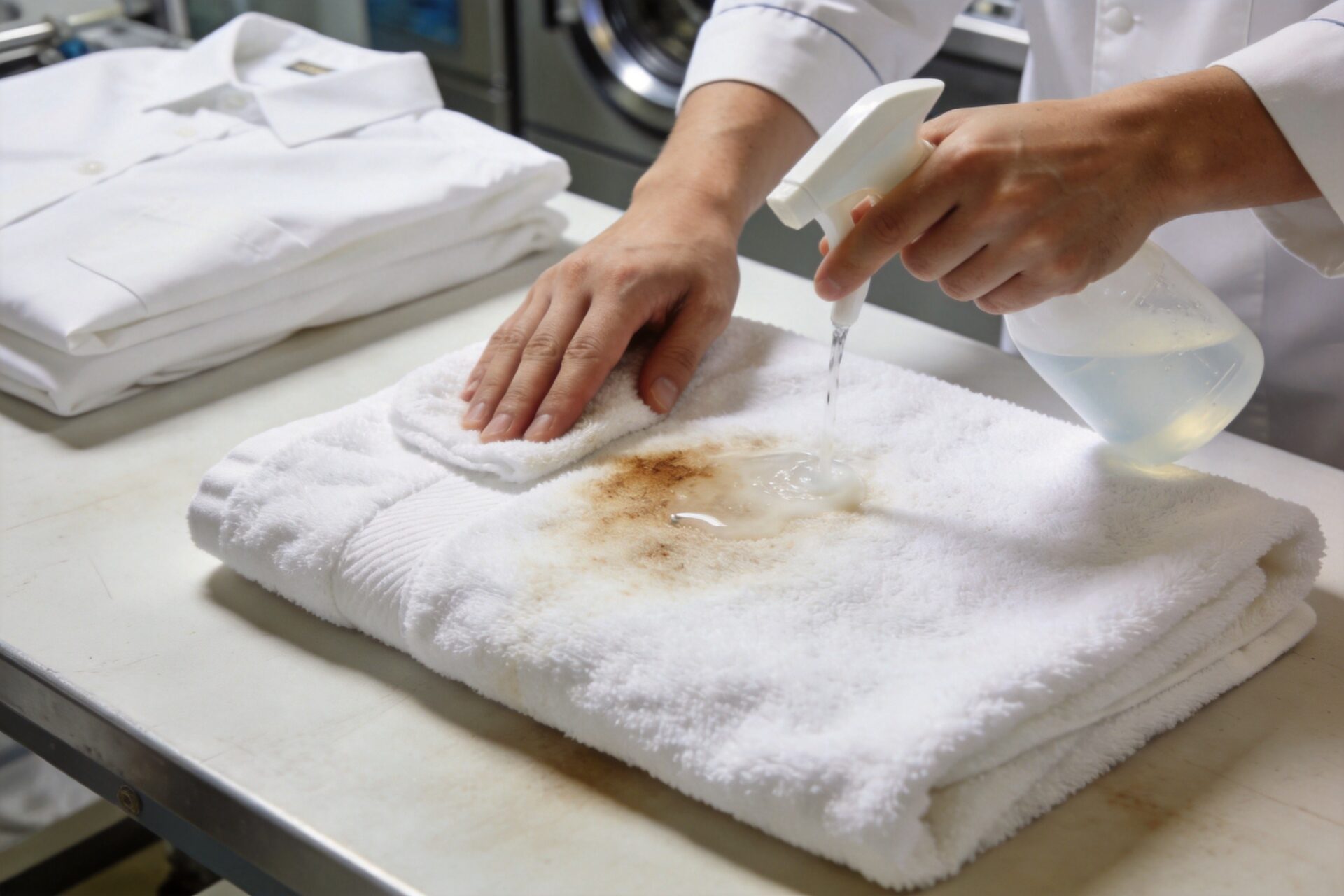
Stains are an unavoidable reality in hotel operations. From blood and makeup to red wine, coffee, and food oils, housekeeping teams encounter a wide range of stubborn soils on sheets, pillowcases, duvet covers, towels, and table linens every day. Effective stain removal is not just about aesthetics—it directly affects linen replacement costs, guest satisfaction scores, and environmental impact. This comprehensive hotel linen stain removal guide provides evidence-based protocols for the most common stains encountered in hospitality, organized by stain type, with temperature guidelines, chemical recommendations, and prevention strategies designed to extend linen life and reduce operational costs.
The Science of Stain Removal in Commercial Laundry
Successful stain removal depends on four factors, often called the “Sinner’s Circle” or wash cycle: chemical action, mechanical action, temperature, and time. Each factor compensates for the others—if temperature is reduced, more chemical or mechanical action is needed. In commercial hotel laundries, tunnel washers or washer-extractors use precisely calibrated combinations of these factors to remove soils efficiently while preserving fabric integrity.
The golden rule of stain removal is to treat stains as quickly as possible. Fresh stains remove 80%–90% more easily than dried or heat-set stains. Once a stain has been through a dryer or ironer, the heat bonds the stain molecules to the fiber, making removal significantly more difficult. Housekeeping staff should be trained to identify and pre-treat stains before linens enter the general wash cycle.
General Stain Treatment Protocol
Before addressing specific stain types, follow these universal steps:
- 1. Scrape or blot: Remove excess solid or liquid material with a dull scraper or clean, absorbent cloth. Blot from the outside of the stain inward to prevent spreading.
- 2. Identify the stain: Correct identification determines the treatment method. When in doubt, cold water is the safest starting point—hot water can set protein-based stains permanently.
- 3. Pre-treat: Apply the appropriate pre-treatment agent and allow it to dwell for 5–15 minutes before washing.
- 4. Wash at the recommended temperature: Use the temperature specified for the stain type, not a one-size-fits-all hot wash.
- 5. Inspect before drying: Check the stained area after washing. If the stain remains, repeat the treatment before drying—never dry a stained item.
Blood Stains
Blood is a protein-based stain that is among the most common in hotel linens, particularly on sheets and pillowcases. The critical rule is: never use hot water on blood. Heat coagulates the protein, bonding it permanently to the fabric fibers.
Treatment Steps
- Rinse immediately in cold water (15–25°C) from the back of the fabric to push the stain out.
- Soak in cold water with an enzymatic detergent (protease enzyme) for 30–60 minutes. Enzymes break down protein molecules without damaging fibers.
- For dried blood, apply a paste of cold water and meat tenderizer (papain/bromelain enzyme) or a commercial protein stain remover. Let it dwell for 30 minutes.
- Wash in cold to lukewarm water (maximum 40°C) with a built detergent containing protease.
- Inspect and repeat if necessary before drying.
Chemical Recommendations
Use an enzymatic laundry detergent with protease (e.g., products containing subtilisin). For stubborn stains, a 3% hydrogen peroxide solution can be applied to white or colorfast fabrics after enzymatic treatment—test on an inconspicuous area first, as peroxide can bleach colored linens. Avoid chlorine bleach on blood; it reacts with iron in hemoglobin and can cause yellowing.
Makeup and Cosmetics
Foundation, lipstick, mascara, self-tanner, and eyeliner are among the most challenging stains because they often combine oils, pigments, waxes, and silicones. White pillowcases and towels are the most common victims.
Treatment Steps
- Blot excess makeup with a dry cloth. Do not rub, as this pushes the stain deeper into the fibers.
- Apply a solvent-based pre-treatment (containing d-limonene or petroleum distillates) to dissolve oil-based makeup. Allow 5–10 minutes dwell time.
- For water-based foundation or self-tanner, apply a liquid detergent containing nonionic surfactants directly to the stain.
- Wash at 50–60°C with a heavy-duty detergent. For white linens, an oxygen bleach (sodium percarbonate) boost helps remove residual pigment.
- Check before drying; repeat if a trace remains.
Special Notes for Self-Tanner
Self-tanning products contain dihydroxyacetone (DHA), which reacts with amino acids in the skin to produce a brown color. DHA can also bind to cotton and polyester fibers, creating a yellow-brown stain that is notoriously difficult to remove. Treat immediately with a surfactant-based pre-treatment and wash at 60°C with oxygen bleach. For persistent DHA stains, a reducing agent such as sodium bisulfite or sodium hydrosulfite may be required—use only on white fabrics and follow chemical safety protocols.
Red Wine
Red wine contains tannins, anthocyanin pigments, and alcohol. The classic home remedy of pouring white wine or salt has limited effectiveness in commercial settings. A systematic approach yields better results.
Treatment Steps
- Blot immediately with a clean, dry cloth to absorb as much wine as possible. Do not rub.
- Stretch the fabric over a basin or bucket and slowly pour boiling water from a height of 30–60 cm through the stain. The force of the water helps flush the tannins from the fibers. This method is most effective on fresh stains and white or colorfast fabrics.
- Alternatively, apply a tannin-specific stain remover or a paste of baking soda and water. Let it dwell for 15 minutes.
- Wash at 50–60°C with a detergent containing built enzymes and oxygen bleach.
- For dried red wine stains, soak in an oxygen bleach solution (sodium percarbonate dissolved in warm water at 40–50°C) for 2–4 hours before washing.
Coffee and Tea
Coffee and tea are tannin-based stains, similar to red wine, but they also contain proteins (from milk or cream if added) and may include sugar. Black coffee is easier to remove than coffee with milk and sugar, which requires protein treatment first.
Treatment Steps
- Rinse the stain from the back with cold water if the coffee/tea contained milk or cream (to prevent protein setting).
- Apply a liquid detergent directly to the stain and gently work it into the fabric.
- For black coffee or tea, rinse with warm water (not hot if milk was present).
- Wash at 50–60°C with oxygen bleach for white fabrics. For colored linens, use a color-safe oxygen bleach at 40–50°C.
- For stubborn tannin residues, apply a tannin stain remover containing citric acid or oxalic acid before washing.
Food Oils and Grease
Cooking oil, butter, salad dressing, and fried food residues are common on restaurant table linens and room-service trays. Oil-based stains require surfactant chemistry to break the surface tension and emulsify the oil.
Treatment Steps
- Blot excess oil with a paper towel or absorbent cloth. Do not use water initially—it can spread the oil.
- Apply a heavy-duty liquid detergent or a degreaser containing nonionic surfactants (e.g., alcohol ethoxylates) directly to the stain. Work it in gently and let it dwell for 10–15 minutes.
- For heavy grease, use a solvent-based pre-treatment (d-limonene or mineral spirits-based) for 5 minutes before applying detergent.
- Wash at the hottest temperature the fabric allows (60–75°C for cotton white linens, 50–60°C for colors and blends).
- Add a built alkaline detergent booster (sodium metasilicate or sodium carbonate) to saponify fatty residues.
Chlorine and Saltwater (Pool and Spa Stains)
While not stains in the traditional sense, chlorine and saltwater from pools and spas can damage hotel towels, bathrobes, and slippers. Chlorine weakens cotton fibers, causing premature breakdown and a sour or mildew odor. Salt crystals abrade fibers and attract moisture.
Prevention and Treatment
- Provide dedicated pool towels—typically 100% cotton or cotton-rPET blend in 400–550 GSM—that are separate from bath towels. This prevents chlorine and sunscreen residues from contaminating the general linen stock.
- Rinse pool towels in cold water immediately after collection to dilute chlorine before it sets in the fibers.
- Wash at 50–60°C with a detergent containing a chlorine neutralizer (sodium thiosulfate) in the final rinse to extend towel life.
- Avoid fabric softeners on pool towels—they reduce absorbency and can trap chlorine residues.
Youmian Textile offers specialized toalhas de hotel including pool and sports towels designed to withstand chlorine exposure and frequent laundering.
Ink and Dye Stains
Pen ink (ballpoint, gel, fountain), fabric dye transfer from guest clothing, and hair dye are among the most difficult stains to remove. Success depends on the ink type and fabric color.
Ballpoint Ink
Apply rubbing alcohol (isopropyl alcohol, 70%+) or a specialized ink remover to the stain from the back, placing a clean cloth underneath to absorb the ink as it dissolves. Blot repeatedly with a clean section of cloth. Wash at 40–50°C after treatment. Repeat as needed.
Gel Ink
Gel ink is water-based but contains pigments that bond strongly to fibers. Flush with cold water, apply a glycerin-based stain remover, and let it dwell for 30 minutes before washing. Multiple treatments may be required.
Dye Transfer and Hair Dye
Dye transfer occurs when a colored item bleeds onto white or light-colored linen during washing. Prevent this by sorting linens by color and testing new colored items for colorfastness. For existing dye transfer on white fabrics, use a reducing agent (sodium hydrosulfite) or oxygen bleach soak. Hair dye stains are often permanent—treat immediately with a dye solvent and accept that severely stained items may need to be removed from service.
Stain Removal Quick Reference Table
| Tipo de mancha | Category | Wash Temp | Key Agent | Avoid |
|---|---|---|---|---|
| Sangue | Protein | Cold (≤40°C) | Protease enzyme | Hot water, chlorine bleach |
| Makeup (oil-based) | Oil/Pigment | 50–60°C | Solvent pre-treatment | Rubbing while wet |
| Self-Tanner | DHA/Pigment | 60 °C | Oxygen bleach + surfactant | Chlorine bleach |
| Red Wine | Tannin | 50–60°C | Oxygen bleach, boiling water | Salt (on fabric) |
| Coffee/Tea (black) | Tannin | 50–60°C | Oxygen bleach | Bar soap (sets tannin) |
| Coffee with Milk | Tannin + Protein | Cold first, then 50°C | Enzyme + oxygen bleach | Hot water initially |
| Food Oil/Grease | Oil | 60–75°C | Degreaser, alkali booster | Cold water alone |
| Ballpoint Ink | Dye/Solvent | 40–50°C | Isopropyl alcohol | Água quente |
| Dye Transfer | Dye | 40–60°C | Reducing agent (whites) | Drying before removal |
| Urine/Vomit | Protein + Acid | Cold first, then 60°C | Enzyme + oxygen bleach | Hot water initially |
Choosing the Right Laundry Chemicals
Hotel laundry operations typically use a multi-component chemical system rather than a single detergent. The standard formulation includes:
- Built Detergent: Contains surfactants, alkalis (sodium carbonate, sodium metasilicate), and anti-redeposition agents. Used in the main wash cycle.
- Bleach: Chlorine bleach (sodium hypochlorite) for white cotton at 60–70°C; oxygen bleach (sodium percarbonate) for colored fabrics and lower temperatures.
- Sour/Softener: A mild acid (acetic, citric, or formic acid) in the final rinse neutralizes residual alkali, prevents yellowing, and softens fabrics.
- Enzyme Booster: Protease, amylase, and lipase enzymes added to the wash for targeted protein, starch, and fat removal at lower temperatures (30–50°C).
- Fabric Softener: Cationic surfactants that reduce static and improve hand feel. Use sparingly—overuse reduces absorbency in towels.
Work with a reputable laundry chemical supplier to calibrate dosing based on your water hardness, soil levels, and machine type. Over-dosing wastes chemicals, damages fabrics, and increases environmental impact; under-dosing results in poor wash quality and shorter linen life.
Preventing Permanent Staining: Best Practices
- Train housekeeping staff: Equiply room attendants with stain identification cards and pre-treatment sprays on their carts. A 30-second pre-treatment at the point of collection can save a $30 sheet from replacement.
- Sort linens properly: Separate heavily soiled items (kitchen cloths, bath mats) from lightly soiled ones (bed linens). Sort by color and fabric type to prevent dye transfer and fiber damage.
- Do not over-dry: Over-drying sets stains and weakens fibers. Use moisture-sensing dryers or set temperatures based on fabric type (60–70°C for cotton, lower for blends).
- Use mattress and pillow protectors: Waterproof protectors prevent bodily fluids, spills, and allergens from reaching pillows and mattresses, dramatically reducing deep staining. Explore hotel mattress protectors designed for commercial use.
- Establish a linen retirement standard: Define when stained or worn linens should be removed from guest service. Stained items that cannot be restored can be downgraded to housekeeping rags or donated.
Perguntas frequentes
Can baking soda remove hotel linen stains?
Baking soda (sodium bicarbonate) is a mild abrasive and deodorizer, not a primary stain remover—a paste can help lift fresh stains and neutralize odors, but it should not replace formulated detergents, enzymes and oxygen bleach in commercial laundry. Reserve it for pre-treating delicate or colourable items and rely on commercial chemistry for industrial levels of stain removal. (为定性经验结论,正文未给出去除率等量化数据。)
Is it safe to use bleach on white hotel sheets?
Chlorine bleach can be used on 100% white cotton linens at 60–70°C, but regular use weakens fibers and shortens fabric life by 15%–30%. Oxygen bleach (sodium percarbonate) is a safer alternative that is effective at 40–60°C and is gentler on fibers. Reserve chlorine bleach for occasional disinfection or severe whitening needs.
Como os hotéis mantêm as toalhas brancas e macias?
Hotels maintain white towels by: (1) sorting whites from colors, (2) washing at 60–75°C with a built detergent and oxygen or chlorine bleach, (3) using a sour in the final rinse to neutralize alkali and prevent yellowing, (4) avoiding fabric softener buildup (which reduces absorbency), and (5) replacing towels before they become gray or thin. A small amount of optical brightener in the detergent also enhances whiteness.
What temperature kills bacteria in hotel laundry?
Washing at 71°C (160°F) for a minimum of 25 minutes kills most bacteria and viruses, including MRSA and norovirus. For energy efficiency, many hotels wash at 40–50°C using chemicals—specifically oxygen bleach or activated oxygen detergents—that achieve equivalent disinfection. The CDC recommends a 71°C wash or an EPA-registered laundry sanitizer for healthcare-adjacent settings.
How many times can hotel linens be washed before replacement?
Hotel sheets typically last 200–300 industrial washes, bath towels 150–300 washes depending on GSM and quality, and pillowcases 200–300 washes. Proper stain treatment, correct wash chemistry, and avoiding over-drying can extend these ranges by 15%–25%. Track linen by par level and purchase date to establish replacement cycles based on actual usage.
Conclusion
Effective hotel linen stain management combines rapid response, correct stain identification, appropriate chemistry, and disciplined wash procedures. The single most impactful practice is pre-treating stains before they are heat-set in a dryer or ironer—this simple step can reduce linen replacement rates by 20%–30%. Equipping housekeeping teams with the right tools and training, working with a knowledgeable chemical supplier, and using quality protectors and durable hotel bedding will minimize losses and extend your linen investment.
Youmian Textile manufactures high-performance conjuntos de cama para hotéis, toalhas, e mattress protectors designed to withstand 200+ industrial wash cycles while retaining softness, color, and structural integrity. Our OEKO-TEX and ISO 9001-certified factory offers 100% cotton, organic cotton, and performance-blend options with a 500-piece MOQ and 30–45 day lead times. Entre em contato conosco to request a sample pack or discuss OEM/ODM customization for your property.
Quer saber mais sobre nossos produtos?
Veja todos os produtos agora English
 Русский
 Español de México
 Português do Brasil
 العربية
