
Hotel Towel Embroidery and Customization: Branding That Lasts
Ir a la sección
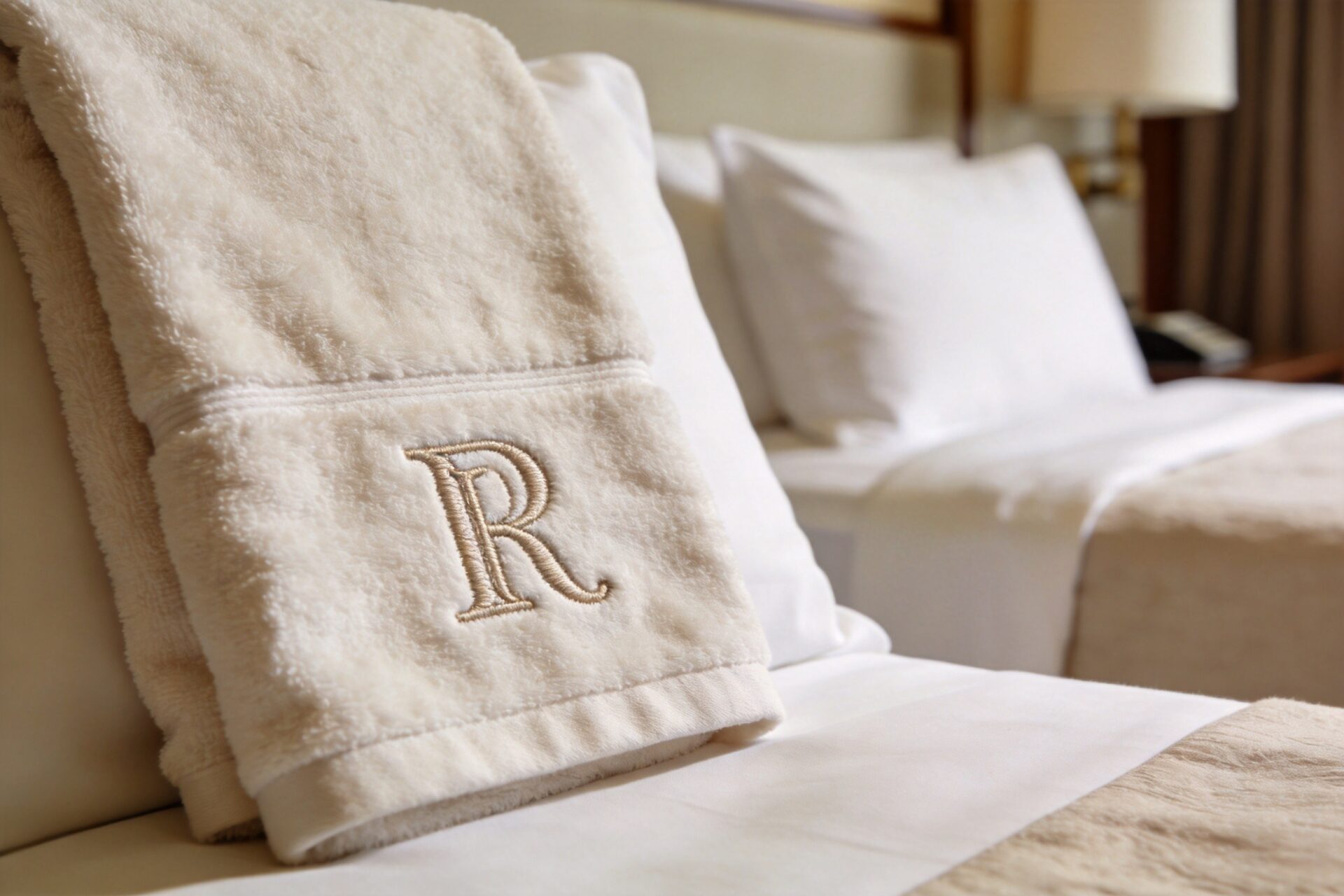
Custom-embroidered hotel towels are one of the most cost-effective branding investments a hospitality property can make. Every time a guest reaches for a towel bearing your logo, they experience a subtle reinforcement of your brand identity—a tactile reminder of where they are and the standards you represent. But embroidery is not simply about aesthetics; poorly executed embroidery can scratch skin, unravel after a few washes, or damage the towel fabric itself. This guide explains the embroidery and customization options available for hotel towels, examines technical considerations that determine durability and guest comfort, compares branding methods, and provides sourcing guidance to ensure your custom towels look impeccable through hundreds of commercial wash cycles.
Why Custom Embroidery Matters for Hotel Brands
Embroidery serves three strategic purposes beyond mere decoration:
- Brand reinforcement: A logo on a towel extends brand presence from the lobby and signage into the intimate space of the guest bathroom and pool area.
- Loss deterrence: Branded towels are less likely to be taken by guests because they are clearly identifiable as hotel property. Properties with embroidered towels report 30–50% lower towel loss rates compared to unbranded inventory.
- Perceived value: Customization signals attention to detail and investment in the guest experience. A towel with a well-executed logo feels more premium than a plain equivalent, even when the underlying fabric is identical.
Embroidery Methods for Hotel Towels
Direct Machine Embroidery
Direct embroidery is the most common customization method for hotel towels. A computerized embroidery machine stitches thread directly onto the towel fabric according to a digital design file. Direct embroidery offers:
- Durabilidad: With proper thread and backing, embroidered logos withstand 300+ commercial wash cycles
- Precision: Modern multi-head machines reproduce detailed logos with accuracy down to 0.1 mm
- Texture and dimension: Embroidery creates a raised, tactile finish that conveys quality
- Color range: Up to 15 thread colors per design, matching PMS or brand-specific colors
However, direct embroidery on terry cloth presents unique challenges. The looped pile of towel fabric can cause stitches to sink or become obscured. Skilled embroiderers address this through specialized techniques:
- Underlay stitching: A base layer of stitching flattens the terry loops before the design is applied, creating a smooth surface for the top stitches
- Appliqué backing: A piece of woven fabric (often twill or felt) is first stitched to the towel, and the logo is embroidered over it, providing a stable, high-contrast background
- 3D foam embroidery: A layer of foam is placed under the stitches to create a raised, three-dimensional effect—best for simple, bold logos on bath sheets or pool towels
Tejido jacquard
Jacquard logos are woven directly into the towel fabric during the manufacturing process, rather than added afterward. The logo is created by varying the weave pattern—typically using a combination of terry and flat-woven (sheared) areas to create contrast through texture. This method offers:
- Exceptional durability: Because the logo is part of the fabric structure, it cannot peel, unravel, or separate. It lasts the entire life of the towel.
- Seamless comfort: There are no raised threads or backing materials against the skin
- Aspecto de alta calidad: Woven logos have a subtle, sophisticated look associated with luxury hotel brands
Limitations include higher minimum order quantities (typically 1,000+ pieces per design due to loom setup), limited color options (usually 1–3 colors), and longer lead times because customization occurs during weaving rather than as a post-production step.
Screen Printing and Heat Transfer
Screen printing and heat transfer methods apply ink or vinyl designs to the towel surface. These are generally not recommended for hotel bath towels because:
- Printed designs crack, fade, and peel after repeated washing—often within 50–100 cycles
- The printed area reduces absorbency in the affected fabric
- Heat transfer vinyl can feel stiff and uncomfortable against skin
- They are less durable than embroidery or jacquard, creating a cheap appearance as they degrade
Printing may be suitable for low-cost promotional towels or single-event giveaways, but it is not appropriate for operational hotel inventory.
Technical Specifications for Long-Lasting Embroidery
Thread Selection
| Thread Type | Durabilidad | Solidez del color | Cost | Recommended Use |
|---|---|---|---|---|
| Polyester embroidery thread | Excelente | Excellent (chlorine-resistant) | Bajo–Moderado | All hotel towels, especially pool towels |
| Poly-wrapped core thread | Muy bien | Muy bien | Moderado | Bath towels, hand towels, bath sheets |
| Rayon/viscose thread | Moderado | Fair (fades with chlorine) | Low | Not recommended for commercial laundry |
| Cotton embroidery thread | Bien | Bien | Moderado-alto | Premium towels; natural aesthetic |
Polyester thread is the industry standard for hotel towel embroidery because it resists chlorine bleach, maintains color through hot-water commercial washing, and does not shrink or break down under chemical exposure. Always specify polyester or poly-wrapped thread for hospitality embroidery—rayon may look lustrous initially but fades rapidly under commercial laundering conditions.
Logo Placement
Placement affects both visibility and comfort. Standard locations include:
- Bottom hem corner (most common): Positioned 2–3 inches above the hem on the bottom right corner when the towel is laid flat. Visible when folded or hung, and away from body contact areas.
- Center of dobby border: Many hotel towels feature a flat-woven dobby border along one or both ends. The center of this border is an ideal embroidery surface—flat, stable, and visible when towels are folded for presentation.
- Center of towel (pool/beach towels): Large, bold logos centered on the body of the towel work well for pool and beach towels where the towel is frequently spread on lounge chairs. Keep designs simple to avoid discomfort.
- Hook label/edge: A small embroidered label near the hanging loop is subtle and does not interfere with the towel’s function.
Logo Size and Complexity
For bath and hand towels, logo width should be 2.5–4 inches. Smaller logos (1.5–2.5 inches) work for washcloths and fingertip towels. For pool and beach towels, logos can range from 4–8 inches depending on design complexity. As a rule of thumb:
- Limit designs to 1–4 colors for best durability and cost efficiency
- Avoid fine details smaller than 0.05 inches (1.3 mm), as stitches may merge or become illegible after washing
- Text should be at least 0.25 inches (6 mm) high for readability
- Avoid large solid-fill embroidery areas on towels that contact skin, as dense stitching reduces absorbency and comfort
Customization Beyond the Logo
Custom Dobby Borders and Patterns
Many manufacturers offer custom dobby border designs—woven patterns along the towel edges that incorporate geometric shapes, stripes, or brand motifs without added thread. Custom dobby patterns are created during the weaving process and share the durability advantage of jacquard logos. They are an excellent way to differentiate towels without the cost and comfort trade-offs of heavy embroidery.
Color Coordination
For properties using colored or striped pool towels, select embroidery thread colors that complement or contrast with the towel fabric. White embroidery on navy or black towels creates a classic, high-contrast look; tone-on-tone embroidery (matching thread on a similar towel color) offers a more subtle, refined appearance. Request a physical sewn sample before approving production, as digital color representations may differ from actual thread under different lighting.
Size and Weight Customization
OEM/ODM partners like Youmian Textile can produce towels in custom dimensions, weights, and border designs to match your brand specifications. Whether you need oversized 40″ × 80″ bath sheets for suites, uniquely sized spa towels, or towels with a custom weave pattern, a manufacturer with integrated production—from spinning through embroidery—can deliver coordinated custom products without the quality risks of multi-vendor sourcing.
Quality Control for Embroidered Towels
When ordering custom-embroidered towels, implement the following quality checks:
- Pre-production sample approval: Always approve a physical sewn sample before bulk production begins. Check stitch density, thread color, placement accuracy, and the feel of the embroidered area against skin.
- Wash test: Launder the sample through at least 10 commercial wash cycles (hot water, bleach, commercial dryer) to verify thread colorfastness, stitch integrity, and absence of puckering or backing separation.
- Backing inspection: Ensure cut-away or tear-away backing is neatly trimmed and does not create a stiff, uncomfortable patch against the skin. For bath towels, soft cut-away backing is preferred over tear-away.
- Density check: Proper embroidery density on terry cloth is 4,000–6,000 stitches per square inch. Too few stitches look sparse; too many create a hard, board-like patch.
- Random audit during production: For orders over 1,000 pieces, arrange for mid-production inspection or request random samples before shipment.
Cost Considerations and MOQ
| Customization Method | Typical MOQ | Setup Cost | Per-Unit Embroidery Cost | Lead Time Impact |
|---|---|---|---|---|
| Direct embroidery (post-production) | 100–500 pieces | $20–$100 (digitizing) | $0.50–$2.50 | +3–7 days |
| Jacquard woven logo | 500–1,000 pieces | $100–$300 (loom setup) | $0.20–$0.80 | +10–20 days |
| Custom dobby border | 500–1,000 pieces | $150–$400 | Included in unit price | +10–15 days |
| Appliqué + embroidery | 200–500 pieces | $50–$150 | $1.50–$4.00 | +5–10 days |
For hotels ordering fewer than 500 pieces, local embroiderers may offer lower minimums and faster turnaround, but per-unit costs are typically higher. For orders of 500+ pieces, working directly with a manufacturer that provides in-house embroidery—such as Youmian Textile’s 50,000 sqm integrated facility—delivers the best combination of price, quality control, and customization flexibility. In-house embroidery eliminates the risk of damage during transit between weaver and embroiderer and ensures consistent quality across all custom hotel towels.
Preguntas frecuentes
Does embroidery ruin towel absorbency?
Not when done correctly. Embroidery placed on the dobby border or corner hem—areas that are not part of the absorbent terry pile—has negligible impact on absorbency. Avoid large, densely stitched designs in the center of the towel body, as these can create a non-absorbent patch. A skilled embroiderer uses proper underlay and appropriate stitch density to minimize impact on the surrounding fabric.
How long does embroidered branding last on hotel towels?
With polyester thread and proper embroidery technique, logos should last the full service life of the towel—300–500 wash cycles for quality bath towels. Jacquard-woven logos last the entire life of the towel without degradation. Rayon thread or poorly executed embroidery may begin fading or unraveling within 50–100 washes.
Can I embroider existing towels I already own?
Yes, post-production embroidery can be applied to existing inventory. However, towels that have already been through commercial washing may have shrinkage or fabric softener residue that affects embroidery quality. For best results, embroidery should be applied to new, unwashed towels before they enter service. If embroidering used towels, wash them once without fabric softener and ensure they are completely dry before embroidery.
What file format do I need to provide for embroidery?
Embroidery requires a digitized file in formats such as .dst, .pes, .jef, or .exp, depending on the machine brand. A vector logo file (.ai, .eps, or high-resolution .pdf) is needed to create the digitized embroidery file. Most embroiderers provide digitizing services for $20–$100. For jacquard weaving, a vector file is also required for loom programming.
Is embroidered or jacquard branding better for hotel towels?
It depends on your priorities. Embroidery offers more colors, lower MOQ, and faster turnaround, making it ideal for smaller properties and multi-brand operators. Jacquard weaving provides superior durability, a seamless luxury feel, and lower per-unit cost at high volumes, making it the preferred choice for major hotel groups and large resorts placing orders of 1,000+ pieces per SKU.
Conclusion: Branding That Endures
Custom embroidery and branding transform hotel towels from functional commodities into brand assets that enhance guest experience, reduce loss, and communicate quality. The key to success lies in selecting the right method for your volume and budget, using durable materials—especially polyester thread—placing logos where they are visible but not uncomfortable, and rigorously testing samples before bulk production. Whether you choose direct embroidery for flexibility, jacquard weaving for maximum durability, or a combination across different product lines, the investment in customized toallas de baño de hotel delivers returns through reduced theft, elevated brand perception, and a more cohesive guest experience. To discuss custom embroidery, jacquard options, or OEM/ODM towel programs tailored to your brand, Póngase en contacto con Youmian Textile for a free design consultation and sample evaluation.
¿Quieres saber más sobre nuestros productos?
Ver todos los productos ahora English
  Русский
  Español de México
  Português do Brasil
  العربية