
Hotel Linen Color Trends: Beyond White — Cream, Grey, and Statement Palettes
Ir a la sección
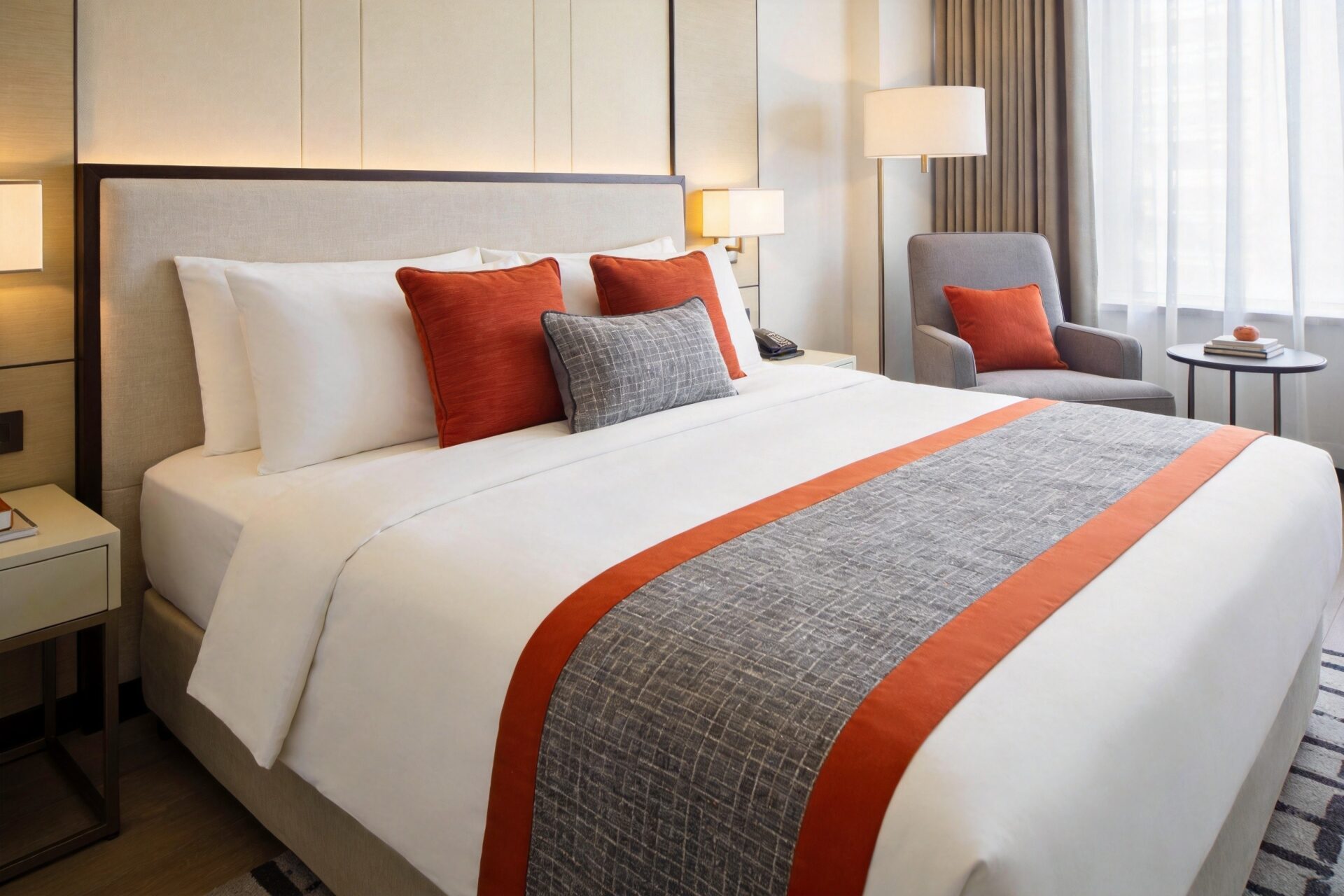
For decades, crisp white linens have been the undisputed standard in hospitality. White signals cleanliness, matches any décor, and launders reliably at high temperatures. But a growing number of hotels—from boutique lifestyle brands to luxury resorts—are embracing color as a deliberate design strategy. Cream, grey, charcoal, sage, navy, and even bold statement palettes are reshaping the hotel bed and bathroom. This guide explores the hotel linen color trends of 2026–2027, the psychology behind color choices, practical considerations for colored linens in commercial laundering, and how procurement teams can introduce color without compromising durability or brand standards.
Why White Dominated Hotel Linens for So Long
Before diving into trends, it is worth understanding why white became the default in the first place. The white standard was popularized in the 1990s by Westin Hotels’ “Heavenly Bed,” which signaled luxury through pristine, all-white bedding. The practical advantages are well known:
- Perceived cleanliness: Guests equate white with sterile and fresh. Any stain is immediately visible, which reassures guests that linens have been changed.
- Laundering flexibility: White cotton can be washed at 75°C with chlorine bleach, the most effective combination for stain removal and disinfection.
- Universal coordination: White matches any wall color, furniture finish, or decorative element.
- Inventory simplicity: One color across all rooms simplifies purchasing, par management, and replacement.
- Damage concealment: Minor fading is invisible on white; stains can be bleached out rather than replaced.
These advantages remain compelling, which is why white will continue to dominate large chain hotels. But the design pendulum is swinging—particularly among independent, boutique, and lifestyle properties where differentiation is a competitive necessity.
The Shift Toward Color: Market Data
Industry indicators confirm that colored linens are gaining share:
- A 2025 American Hotel & Lodging Association survey found that 34% of boutique hotels and 22% of lifestyle brand hotels now use non-white bedding or bath linens, up from 12% in 2020.
- Pinterest reported a 47% year-over-year increase in saves for “colored hotel bedding” and “moody bedroom” aesthetics in 2025.
- Major hotel brands including Ace Hotel, Hoxton, CitizenM, and Soho House have built signature looks around non-white linens.
- OEM manufacturers report that custom-color orders grew 35% from 2023 to 2025, with Pantone matching becoming a routine OEM request.
Youmian Textile has responded to this demand by expanding custom dyeing capabilities across our ropa de cama, towel, and bathrobe lines, supporting full Pantone color matching through our OEM/ODM program.
Trend 1: Warm Neutrals — Cream, Ivory, and Oatmeal
The most accessible departure from white is the warm neutral family. Cream, ivory, oatmeal, and champagne tones create a softer, more residential feel than crisp white while maintaining the perception of cleanliness.
Why It Works
- Warm neutrals photograph beautifully in social media content, generating higher engagement than stark white in lifestyle photography.
- They complement natural wood, rattan, jute, and terracotta materials popular in biophilic and Mediterranean-inspired design.
- Cream is forgiving of slight fading and minor discoloration, extending perceived service life compared to bright white, which shows graying immediately.
Best Applications
Cream and ivory are ideal for boutique hotels, bed-and-breakfasts, wellness retreats, and properties targeting the “quiet luxury” aesthetic. They pair naturally with linen-textured fabrics, unbleached cotton, and TENCEL™ materials.
Laundering Considerations
Cream and ivory can be washed at 60°C with oxygen bleach. Avoid chlorine bleach, which causes yellowing or uneven whitening. Specify solution-dyed or vat-dyed fabrics for maximum colorfastness (Grade 4+ on the AATCC gray scale). Natural, unbleached cotton (which has a cream tone without dye) is an excellent zero-dye option for eco-focused properties.
Trend 2: Cool Greys — Silver, Charcoal, and Slate
Grey is the second most popular non-white color in hotel linens, spanning pale silver to deep charcoal. Grey conveys modernity, sophistication, and calm—making it a favorite of design-led lifestyle hotels and urban properties.
Why It Works
- Grey creates a high-contrast, contemporary look when paired with white or cream accents (white pillows on a grey duvet, for example).
- It hides minor stains and makeup marks better than white, reducing rewash rates by 8–12% according to hotel laundry data.
- Grey works across design styles from industrial minimalism to Art Deco glamour, depending on the shade and texture.
Best Applications
Light grey works well as an all-over bedding color in urban business hotels. Charcoal and slate make dramatic statement duvets or coverlets in boutique properties. Grey towels in bathrooms create a spa-like, monochromatic aesthetic when paired with grey stone or concrete finishes.
Laundering Considerations
Grey cotton requires cool-to-warm washing (40–60°C) with oxygen bleach only. Chlorine bleach causes irreversible discoloration. Dark charcoal may show lint from white towels if sorted improperly—maintain separate dark and light wash loads. Expect 10–15% faster fading on dark greys compared to white or cream; budget for slightly higher replacement rates or specify indigo-dyed fabrics for superior fade resistance.
Trend 3: Earth Tones — Sage, Terracotta, Sand, and Clay
The biophilic design movement has brought nature-inspired colors into hotel interiors. Sage green, terracotta, sand, clay, and warm brown tones create connections to the natural environment and support wellness-oriented design narratives.
Why It Works
- Earth tones align with the sustainability story that many hotels now tell. When produced with GOTS-certified dyes on organic cotton, colored linens reinforce an eco-luxury positioning.
- Psychologically, green tones reduce stress and lower heart rate, making them ideal for spas, wellness retreats, and resort properties.
- Terracotta and clay colors evoke warmth and place—particularly effective for properties in Mediterranean, desert, or Latin American locations.
Best Applications
Earth tones work best as accent pieces rather than full-bed color. A sage green coverlet, terracotta throw blanket, or sand-colored waffle bathrobe adds personality without overwhelming the room. For full immersion, jungle and safari lodges use olive and khaki linens as part of a camouflage-meets-luxury aesthetic.
Trend 4: Statement Palettes — Navy, Burgundy, Forest, and Jewel Tones
At the bold end of the spectrum, deep navy, burgundy, forest green, and jewel tones (emerald, sapphire, plum) create dramatic, memorable beds that define a property’s visual identity.
Why It Works
- Brand differentiation: A signature color on the bed becomes instantly recognizable in social media and marketing content. Several boutique hotel groups have built their visual identity around a single statement linen color.
- Perceived luxury: Deep, saturated colors signal richness and opulence, especially in velvet, sateen, or high-thread-count fabrics.
- Seasonal flexibility: Dark colors feel cozy in winter; lighter accent pillows and throws can lighten the mood in summer.
Best Applications
Statement colors are most commonly used for duvet covers, coverlets, or decorative throws rather than the sheets guests sleep directly against. A navy duvet with white sheets and pillowcases strikes a balance between drama and the perceived cleanliness of white. Some luxury properties use colored pillowcases as a signature touch—burgundy or forest green cases on white beds, for example.
Laundering Considerations
Deep colors require the most careful laundering:
- Wash separately from whites and light colors for the first 10–15 cycles to remove excess dye (crocking).
- Use cold-water dye-catching sheets in mixed loads as a precaution.
- Specify reactive-dyed or vat-dyed fabrics with minimum Grade 4 colorfastness to washing and Grade 3.5+ to crocking (rubbing).
- Avoid optical brighteners in detergent, which can cause color shift.
- Expect 10–20% higher replacement rates due to fading; budget accordingly.
Trend 5: Two-Tone and Color-Blocked Designs
An emerging trend is two-tone or color-blocked linens that combine white with a single accent color. Examples include:
- White towels with a colored dobby border (navy, charcoal, or sage).
- Duvet covers with a colored flange or piping on a white body.
- Pillowcases with contrasting hemstitching or embroidery.
- Bathrobes with colored shawl collars or piping on white terry.
This approach offers the best of both worlds: the cleanliness perception and laundering ease of white, with a branded color accent that ties into the room’s interior design. The colored portion is typically a narrow border or trim, minimizing dye-related laundry concerns while still providing visual interest.
Color and Brand Standards: Consistency Across Properties
For hotel groups introducing colored linens across multiple properties, consistency is critical. A “navy” duvet from one batch should match a “navy” duvet produced six months later. To achieve this:
- Specify by Pantone number rather than color name. Provide a physical Pantone cotton swatch to the manufacturer for dyeing approval.
- Approve a lab dip (a fabric sample dyed to the specified color) before bulk production. Evaluate under both natural daylight and standard room lighting (D65 and CWF).
- Set colorfastness tolerances in your purchase specification: minimum Grade 4 to washing, Grade 3.5 to light, Grade 3.5 to crocking (AATCC or ISO standards).
- Order spare inventory (10–15% over par) from the same dye lot to ensure matching replacements. Dye lot variations are normal and can be noticeable in deep colors.
- Establish a replacement schedule that retires colored linens on a batch basis, mixing faded and new pieces on the same shelf creates visible inconsistency in guest rooms.
Cost Comparison: White vs. Colored Linens
| Factor | White | Cream/Neutral | Grey/Earth Tone | Dark/Statement |
|---|---|---|---|---|
| Per-unit cost premium | Línea de base | +0–5% | +5–10% | +10–20% |
| Dye lot MOQ | None | 500/SKU | 500–1,000/SKU | 1,000+/SKU |
| Wash temperature | 75 °C | 60 °C | 40–60°C | 30–40°C |
| Bleach allowed | Chlorine OK | Oxygen only | Oxygen only | None recommended |
| Expected lifespan (cycles) | 300–500 | 280–450 | 250–400 | 200–350 |
| Rewash rate | 5–8% | 4–6% | 3–5% | 3–5% (fading causes replacement) |
| Replacement frequency | Estándar | +5–10% | +10–15% | +15–25% |
Despite the higher cost and shorter lifespan, colored linens can deliver a strong return on investment through higher ADR (average daily rate), improved guest review scores, and stronger social media presence. A 2024 study by STR found that design-led boutique hotels with distinctive bedding color schemes achieved a 7–12% ADR premium over comparable white-only properties in the same markets.
Preguntas frecuentes
Are colored hotel towels less hygienic than white ones?
No. Color does not affect cleanliness or sanitation. Hot water (60°C), appropriate detergent, and oxygen bleach achieve the same antimicrobial results on colored cotton as chlorine bleach on white. The perception that white is “more hygienic” is psychological, not microbiological—commercial laundry standards ensure all colors meet the same sanitation benchmarks.
Can I use bleach on colored hotel linens?
Chlorine bleach should never be used on colored linens—it causes fading, discoloration, and weakens dye bonds. Oxygen bleach (hydrogen peroxide or sodium percarbonate) is safe for most colorfast fabrics at concentrations up to 150 ppm. Always test a small area first and follow the chemical manufacturer’s guidelines. For deep colors, consider enzyme-based stain removers as a bleach alternative.
How do I prevent different colored linens from bleeding in the wash?
Sort by color family: whites, lights, darks, and reds/brights. Wash new colored items separately for the first 10–15 cycles. Use cold water for dark colors and add a dye-catching sheet to the wash as insurance. Most importantly, specify reactive-dyed or vat-dyed fabrics from your manufacturer—these dye methods produce minimal bleeding compared to direct or sulfur dyes.
What is the most popular non-white hotel linen color?
Grey—from pale silver to charcoal—is currently the most popular non-white hotel linen color, followed by cream/ivory and navy. Its appeal comes from versatility across design styles, forgiveness on minor stains, and a look that reads both modern and calming. (正文为定性结论,无明确市场份额数字。)
Can Youmian Textile produce custom-colored hotel linens?
Yes. Through our OEM/ODM program, we offer full Pantone color matching on sheets, duvet covers, pillowcases, towels, bathrobes, and table linens. Colour matching is quoted on the dye lot the order actually needs, with lab dip approval within 7–10 days. We use reactive and vat dyes for Grade 4+ colorfastness and provide third-party colorfastness test reports with every shipment.
Conclusion: Color as a Brand Strategy
The move beyond white hotel linens is not a rejection of tradition—it is an expansion of the design toolkit available to hoteliers. Warm neutrals offer a low-risk entry into color; cool greys provide contemporary sophistication; earth tones connect guests to nature and sustainability; and bold statement palettes create unforgettable brand identities. The key is to match color ambition to laundering capability, specify high-quality dyeing, and maintain strict color consistency across orders. For hotels willing to invest in the right products and processes, color is a powerful differentiator that enhances guest experience, supports premium positioning, and generates the kind of visual content that drives bookings in an increasingly image-driven market.
Ready to explore colored linens for your property? Póngase en contacto con Youmian Textile to request a Pantone color card, lab dip samples, and a custom quotation for your next bedding or towel program.
¿Quieres saber más sobre nuestros productos?
Ver todos los productos ahora English
 Русский
 Español de México
 Português do Brasil
 العربية
