
Custom Hotel Slippers: Logo, Packaging, and Material Options
Ir a la sección
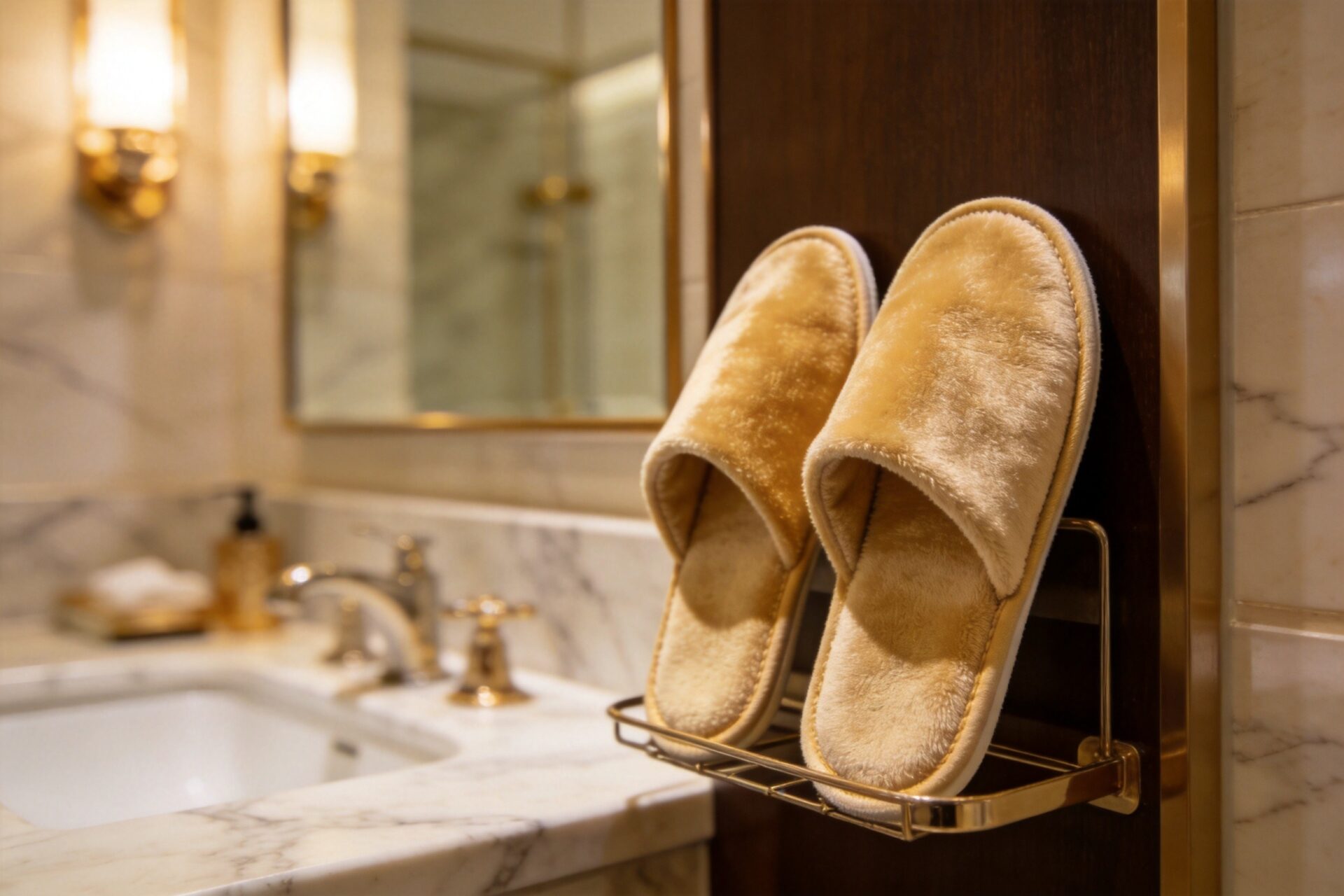
Custom hotel slippers are among the most underrated brand touchpoints in hospitality. A pair of well-designed, comfortable slippers bearing a hotel’s logo or monogram reinforces brand identity from the moment a guest steps out of the shower. For procurement managers and hotel group buyers, sourcing custom slippers involves decisions about materials, branding methods, packaging, and sizing. This comprehensive guide walks through every option available when ordering custom hotel slippers from an OEM/ODM manufacturer.
Why Custom Hotel Slippers Matter for Your Brand
Hotel slippers are no longer generic amenities. Luxury properties, boutique hotels, and even mid-scale chains increasingly treat slippers as a brand extension. Research shows that 68% of hotel guests notice and remember branded in-room amenities, and slippers consistently rank among the top three items guests take home—extending brand exposure long after checkout.
Custom slippers serve multiple purposes:
- Brand reinforcement: A logo or embroidered monogram creates a subtle but memorable impression.
- Guest comfort: Quality slippers signal attention to detail and elevate the in-room experience.
- Hygiene assurance: Individually packaged, disposable or semi-durable slippers communicate cleanliness.
- Revenue opportunity: Premium retail-packaged slippers can be sold in hotel gift shops or online stores.
At Youmian Textile, our OEM/ODM customization capabilities allow hotels to create slippers that align with their brand standards, budget, and sustainability goals.
Hotel Slipper Materials: A Complete Comparison
The choice of material is the most critical decision in custom slipper procurement. It affects comfort, durability, cost, environmental footprint, and the quality of logo application. Below is a detailed breakdown of the most common materials used in hotel slippers today.
| Material | Comfort Level | Durability (Wears) | Cost per Pair | Respeto al medio ambiente | Ideal para |
|---|---|---|---|---|---|
| Coral Fleece | High (soft, plush) | 3–5 wears | $0.40–$0.80 | Low (synthetic) | Mid-scale hotels, resorts |
| Velour/Waffle Velvet | Medium-High | 5–10 wears | $0.60–$1.20 | Medio | Boutique/luxury hotels |
| 100% Cotton Terry | High (absorbent) | 10–20 wears | $1.00–$2.00 | High (natural, washable) | Luxury hotels, eco-resorts |
| Waffle Weave Cotton | Medium (breathable) | 15–30 wears | $1.20–$2.50 | High (washable, durable) | Premium hotels, spas |
| EVA Foam (disposable) | Bajo-Medio | 1–2 wears | $0.15–$0.35 | Very Low | Budget hotels, events |
| rPET Fleece | Alto | 5–10 wears | $0.70–$1.30 | High (recycled) | Eco-certified hotels |
| Bamboo Velour | High (silky) | 10–15 wears | $1.50–$2.80 | Very High | Luxury eco-resorts |
Coral Fleece: The Industry Standard
Coral fleece (also called velvet fleece or plush microfiber) is the most widely used material for hotel slippers. It offers a soft, luxurious feel at a competitive price point. Available in weights from 180–300 GSM, coral fleece slippers can be produced in virtually any Pantone color and accept embroidery, printing, and debossing well. The primary drawback is that coral fleece is 100% polyester and not biodegradable.
Cotton Terry and Waffle Weave: The Washable Alternative
For hotels pursuing sustainability or seeking a more premium feel, cotton terry and waffle weave slippers are the preferred options. These slippers are designed for repeated washing—typically 30–50 industrial cycles before replacement. They align with the same quality standards as toallas de baño de hotel and can be produced in matching colors and weaves for a coordinated bathroom experience. Waffle weave is particularly popular in spas and boutique hotels due to its textured, artisanal appearance.
rPET and Bamboo: The Sustainable Choices
As green hotel certifications increasingly influence procurement, rPET (recycled polyester from plastic bottles) and bamboo velour have gained market share. rPET fleece offers a nearly identical hand feel to virgin coral fleece but with a 70% lower carbon footprint. Bamboo velour is naturally hypoallergenic, silky to the touch, and biodegradable. Both materials accept embroidery and can be paired with recycled or FSC-certified cardboard packaging for a fully eco-friendly product.
Logo and Branding Options for Custom Slippers
There are five primary methods for applying a hotel’s logo or brand mark to custom slippers. Each has different setup costs, minimum quantities, durability, and aesthetic outcomes.
1. Embroidery
Embroidery is the most premium and durable branding option. Using polyester or rayon thread, the logo is stitched directly onto the slipper’s upper (vamp). Key specifications include:
- Maximum size: Typically 5 × 5 cm on standard slipper vamps; up to 8 × 8 cm on oversized models.
- Thread colors: Up to 8 colors per design; metallic threads available at a premium.
- Setup: Digitizing fee ($15–$40); sample approval before mass production.
- Durabilidad: Withstands 50+ washes on cotton slippers; permanent on disposable models.
- Ideal para: Luxury hotels, resorts, and any brand wanting a textured, premium appearance.
2. Screen Printing
Screen printing applies ink through a stencil onto the slipper fabric. It is cost-effective for large orders but has limitations:
- Maximum colors: 1–4 colors; gradients not recommended on plush fabrics.
- Setup: Screen fee ($20–$50 per color).
- Durabilidad: 20–30 washes on cotton; may crack on stretch fabrics.
- Ideal para: Simple one-color logos on flat-surface slippers, large volume orders.
3. Heat Transfer / Sublimation Printing
Heat transfer uses a vinyl or digital print applied with a heat press. It allows for full-color, photographic-quality logos but is less durable than embroidery:
- Full-color capability: Unlimited colors, gradients, and fine detail.
- Setup: No screen fee; minimal setup cost.
- Durabilidad: 10–20 washes; may peel on high-pile fabrics.
- Ideal para: Complex multi-color logos, small batch orders, promotional events.
4. Debossing / Embossing
Debossing presses a logo into the slipper strap or EVA sole using heat and metal dies. It creates a subtle, tone-on-tone effect:
- Appearance: Elegant, understated; no ink or thread.
- Setup: Die creation ($30–$80).
- Durabilidad: Permanent; does not wash or wear off.
- Ideal para: High-end boutique hotels, minimalist luxury brands.
5. Woven Labels
Sewn-in woven damask labels provide a fashion-industry finish. Labels can be stitched onto the vamp, heel, or sole:
- Size: 2 × 4 cm to 5 × 8 cm.
- Setup: Jacquard loom setup ($25–$60).
- Durabilidad: Excellent; withstands all washing.
- Ideal para: Retail-ready premium slippers, spa lines, gift shop merchandise.
Slipper Sole Options
The sole is equally important to the upper material. Hotel slipper soles serve three functions: slip resistance, floor protection, and durability.
| Sole Type | Thickness | Slip Resistance | Indoor/Outdoor | Durabilidad |
|---|---|---|---|---|
| EVA Foam | 3–5 mm | Basic | Indoor only | 1–3 wears |
| EVA + Non-slip TPR patch | 5–7 mm | Bien | Indoor/pool deck | 5–10 wears |
| TPR (thermoplastic rubber) | 5–8 mm | Excelente | Indoor/outdoor | 20+ wears |
| Memory foam + EVA | 8–12 mm | Bien | Indoor | 10–20 wears |
| Rubber (washable) | 6–10 mm | Excelente | Indoor/outdoor | 50+ washes |
For luxury properties, a memory foam midsole layered with EVA provides the most cushioned step. For eco-resorts and washable programs, a natural rubber or TPR sole paired with a cotton upper offers the best sustainability profile.
Packaging Options for Custom Hotel Slippers
Packaging serves both functional and branding purposes. It keeps slippers clean during storage and distribution, and it is the first thing guests see when they unbox the amenity.
Standard Packaging
- Poly bag with insert card: The most economical option. A clear or printed PE/PP bag with a paper insert card. Cost: $0.02–$0.05 per pair. Best for budget and mid-scale properties.
- Non-woven drawstring pouch: A reusable fabric pouch that guests can keep. Cost: $0.10–$0.25. Common in resort and spa settings.
- Kraft paper sleeve: Eco-friendly FSC-certified cardboard sleeve. Cost: $0.08–$0.18. Preferred by green-certified hotels.
Premium and Retail Packaging
- Rigid gift box: A magnetic-closure or sleeve-style box with custom printing and tissue paper. Cost: $0.50–$1.50 per pair. Ideal for luxury hotel gift shops or VIP turndown gifts.
- Cotton dust bag: A branded cotton drawstring bag that doubles as a travel pouch. Cost: $0.30–$0.60. Used by five-star hotel groups for retail slipper lines.
- Blister pack with hang tab: Retail-ready packaging for gift shop display. Cost: $0.20–$0.45.
All packaging can be fully customized with hotel logos, brand colors, care instructions, and sustainability messaging. For environmentally focused properties, Youmian Textile offers 100% plastic-free packaging options including recycled cardboard, soy-based inks, and compostable PLA bags.
Sizing, Fit, and Style Variations
Hotel slippers come in several style configurations:
- Open-toe slide: The most common hotel style; one-size-fits-all or S/M and L/XL sizing. Best for warm climates and quick use.
- Closed-toe mule/Bootie: Covers toes for warmth; popular in colder climates and luxury winter resorts. Can be produced with fleece or sherpa lining.
- Spa wrap/ballerina: A lightweight, feminine style with a gathered or bow detail. Common in destination spas.
- Full boot/slipper sock: Ankle-height slipper with non-slip sole; used in ski resorts and cold-weather properties.
Sizing typically follows a unisex model. Most manufacturers offer standard sizes: S/M (US Women’s 5–9 / EU 35–39) and L/XL (US Men’s 8–12 / EU 40–45). Children’s sizes are available for family resorts; they are scheduled alongside the adult order rather than under a separate minimum. Custom sizing for regional markets—including wider fits for the North American market or narrower lasts for Asian markets—can be accommodated through OEM/ODM partnerships.
Order Planning and Lead Times
Understanding what sets the order quantity, and how the production timeline runs, is what makes procurement planning work.
| Order Type | What sets the schedule | Sample Time | Production Time |
|---|---|---|---|
| Standard design, no logo | Stock material — scheduled to your delivery date | 5–7 days | 15–20 days |
| Custom logo (embroidery/print) | Logo programme setup — planned per design | 7–10 days | 20–25 days |
| Custom material + color | Yarn and dye scheduling — planned per colour | 10–14 days | 25–35 days |
| Full custom (mold/packaging) | Tooling lead time — scheduled per project | 14–21 days | 35–45 days |
| Reorder (no changes) | No new setup — fastest route | — | 15–20 days |
For hotel groups ordering across multiple properties, consolidated orders can reduce per-unit costs by 10–20%. We recommend ordering 1.2–1.5× your projected annual usage to account for loss, damage, and guest take-home. For a 200-room hotel with 70% occupancy, this typically translates to 3,000–5,000 pairs per year.
Preguntas frecuentes
How are order quantities set for custom hotel slippers?
We do not apply a fixed threshold. Custom-logo slippers are planned around the property and the rollout schedule. Full custom designs with unique materials or bespoke packaging molds take longer to schedule because tooling has to be made, but they are not gated by a number. Reorders are simpler still.
Can I order a sample before placing a bulk order?
Yes. Pre-production samples with your logo are available for $20–$50 per pair (refundable on bulk orders). Sample delivery typically takes 7–14 days depending on the branding method and material complexity.
Are custom hotel slippers machine washable?
Cotton terry, waffle weave, and rPET slippers with TPR or rubber soles are designed for industrial washing (up to 50+ cycles). Coral fleece and EVA disposable models are not intended for repeated washing. Always specify washable vs. disposable when requesting a quote.
What file format is needed for logo embroidery?
Vector files (AI, EPS, or PDF) produce the best embroidery results. High-resolution PNG (300 DPI, transparent background) is acceptable for heat transfer and printing. Our design team can convert most formats and provide a digital proof for approval before production.
How do I balance sustainability with budget for custom slippers?
rPET fleece slippers offer the best value-to-sustainability ratio—typically only 10–15% more expensive than virgin coral fleece but made from recycled plastic bottles. Pairing rPET uppers with EVA soles and kraft paper sleeves creates a budget-friendly, eco-conscious product. For the lowest total cost of ownership, washable cotton slippers, despite higher upfront cost, last 5–10× longer than disposable models.
Conclusion: Step Up Your Slipper Game
Custom hotel slippers are a small investment with outsized brand impact. The right combination of material, branding method, packaging, and sole construction turns a functional amenity into a memorable brand moment. Whether you operate a 50-room boutique hotel or a 500-room resort, working with an OEM/ODM manufacturer that offers full customization—from Pantone-matched colors to embroidered logos to plastic-free packaging—ensures your slippers reflect the quality and values of your brand.
Explore Youmian Textile’s full range of custom hotel slipper and bathrobe options, o bien ponte en contacto con nuestro equipo for a personalized quotation and sample.
¿Quieres saber más sobre nuestros productos?
Ver todos los productos ahora English
 Русский
 Español de México
 Português do Brasil
 العربية
