
Hotel Towel Lifespan: How Long Should Hotel Towels Really Last?
الانتقال إلى القسم
How long should a hotel towel last? The answer depends on towel quality, laundry practices, water conditions, and how the property defines “end of life.” For procurement managers and housekeeping directors, understanding towel lifespan in terms of wash cycles—not months or years—is the key to budgeting, inventory planning, and maintaining the plush, absorbent experience guests expect. This guide examines the factors that determine hotel towel longevity, provides benchmark data by towel type and quality tier, and explains how to extend service life without compromising guest satisfaction.
The Short Answer: 300 to 500 Wash Cycles
A well-constructed commercial hotel bath towel, properly laundered, lasts between 300 and 500 industrial wash cycles. At a typical full-service hotel with 3 par inventory and 70% occupancy, this translates to 2–4 years of service. Budget or lower-quality towels may fail at 150–250 cycles, while premium long-staple cotton towels in well-managed laundry programs can exceed 500 cycles.
However, these benchmarks are averages. The actual lifespan of any towel depends on a constellation of factors that procurement and housekeeping teams can actively manage.
| Towel Type | Low Quality | Commercial Standard | بريميوم |
|---|---|---|---|
| Bath towel (500–700 GSM) | 150–250 cycles | 300–500 دورة | 450–600 cycles |
| Hand towel (400–550 GSM) | 200–300 دورة | 300–500 دورة | 400–550 cycles |
| Washcloth (350–500 GSM) | 100–200 cycles | 200–350 cycles | 300–450 cycles |
| Bath mat (700–900 GSM) | 100–200 cycles | 200–300 دورة | 300–400 دورة |
| Pool/beach towel (350–500 GSM) | 100–200 cycles | 200–400 cycles | 350–500 cycles |
What Actually Causes Towels to Wear Out?
Towels degrade through several interrelated mechanisms. Understanding each one helps target interventions that extend life.
1. Fiber Breakage and Linting
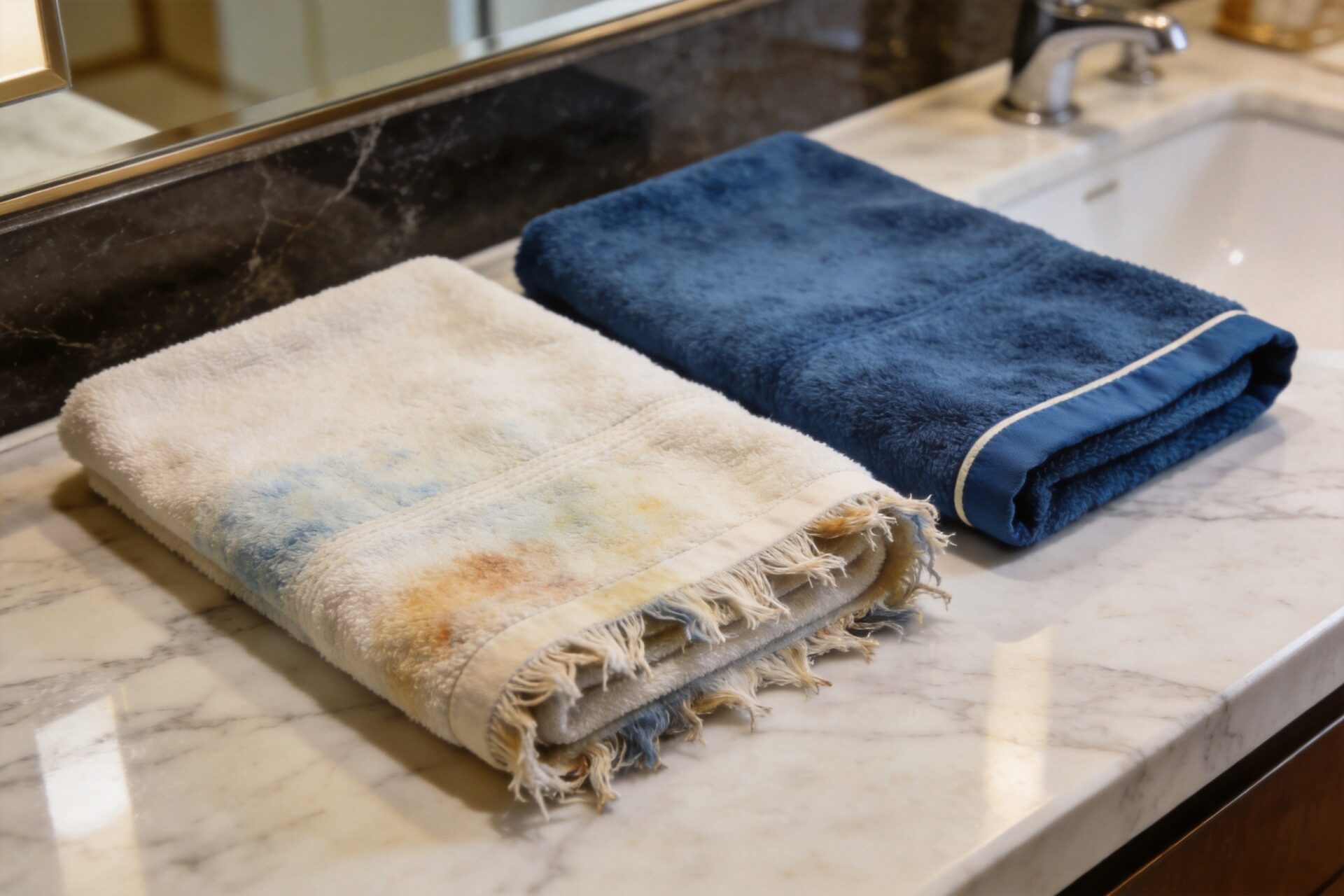
Every wash cycle subjects cotton fibers to mechanical agitation, extraction, and tumble drying. Over time, the short staple fibers on the towel’s surface break off, forming lint. As lint accumulates in the dryer trap and on guest clothing, the towel loses surface density, becomes thinner, and feels less plush. The type of cotton used is the single biggest predictor of lint resistance:
- Open-end (rotor-spun) yarn: Uses shorter, cheaper fibers. Produces more lint and has a rougher hand feel. Typical lifespan: 150–250 cycles.
- Ring-spun yarn: Longer fibers twisted together for a smoother, stronger yarn. Produces less lint and feels softer. Typical lifespan: 300–450 cycles.
- Combed ring-spun yarn: Short fibers are combed out before spinning, leaving only the longest staples. The gold standard for hotel towels. Typical lifespan: 400–600 cycles.
- Two-ply yarn: Two yarns twisted together for added strength and absorbency. Reduces lint and extends life by 15–25% over single-ply equivalents.
2. Chemical Degradation
Laundry chemicals are necessary for cleaning but damage cotton fibers when used excessively or incorrectly:
- مبيض الكلور: Oxidizes cellulose molecules in cotton, weakening fibers by 15–25% after 50 washes. Towels washed regularly with chlorine bleach become thin, ragged, and prone to tearing at the hems.
- High-pH detergents: Alkaline residue left in fibers causes them to become brittle and stiff. If not properly rinsed and neutralized (soured), high pH accelerates fiber breakage by 20–30%.
- منعمات الأقمشة: Silicone and wax-based softeners coat fibers, reducing absorbency and trapping soil that requires more aggressive washing—a vicious cycle that shortens towel life.
- Optical brighteners: These degrade with UV light and repeated washing, causing towels to appear gray and prompting premature replacement even when structurally sound.
3. Mechanical Damage
- Over-extraction: Washer-extractors generating 300+ G-force can weaken towel fibers and damage selvedges if overloaded or improperly balanced.
- الإفراط في التجفيف: Exposing already-dry cotton to high heat causes fiber brittleness and shrinkage. Towels dried at 85°C for 10 minutes past dryness lose 10–15% of their tensile strength per 100 cycles compared to properly dried towels.
- Sorting damage: Metal snaps on bathrobes, zippers on pillow protectors, and hooks on shower curtains snag towel loops during mixed loads.
4. Mineral Deposits
Hard water causes calcium and magnesium to precipitate onto cotton fibers during washing. These mineral deposits make towels stiff, reduce absorbency, and abrade fibers from within during use and drying. In areas with water hardness above 150 ppm, towel lifespan can be reduced by 20–30% without water softening or chelating agents.
5. Microbial Degradation
Towels left damp in laundry piles or folded before fully drying develop mildew and bacteria. The metabolic byproducts of these microorganisms weaken cellulose fibers and produce persistent musty odors that are difficult to remove. In severe cases, mildew can cause visible dark spots that make towels unsuitable for guest use even after washing.
GSM, Construction, and Towel Durability
GSM (grams per square meter) measures fabric weight and is the most commonly cited specification for hotel towels. While higher GSM generally indicates a plusher, more luxurious towel, it does not automatically mean a longer-lasting one. Construction quality matters as much as weight.
| نطاق شبكة GSM | الفئة | Typical Hotel Tier | الدورات المتوقعة | الأفضل لـ |
|---|---|---|---|---|
| 300–400 | خفيف الوزن | Budget, economy | 150–300 | Pool, gym, quick-dry environments |
| 400–500 | Mid-weight | Mid-scale, select-service | 250–400 | Standard guest rooms, high-turnover properties |
| 500–600 | بريميوم | Upscale, full-service | 350–500 | Four-star hotels, business hotels |
| 600–700 | الرفاهية | Luxury, five-star | 400–550 | Five-star hotels, resorts, spas |
| 700–900 | Ultra-plush | Ultra-luxury | 300–450 | Bath mats, premium suites (slower drying) |
Key construction features that extend towel life beyond GSM:
- Double-turned hems with double-stitching: Prevent unraveling at edges, which is the most common point of towel failure.
- Dobby border: A tightly woven border at the hem prevents the terry loops from pulling loose.
- Zero-twist or low-twist yarn: Provides exceptional softness but can pill and shed more than standard twist. Best for luxury properties that accept higher replacement rates in exchange for superior guest feel.
- Ring-spun or combed cotton: As noted above, stronger yarn means longer life regardless of GSM.
- Reinforced hang loop: A bar-tacked fabric loop at the center of the long side allows laundries to hang towels for drying or sorting without stressing the hem.
Measuring Towel End-of-Life: Objective Criteria
Many hotels retire towels based on subjective appearance (“it looks old”) rather than objective criteria. Establishing measurable thresholds ensures consistent decisions and prevents premature replacement. Use this evaluation framework during quarterly linen audits:
| المعلمة | Test Method | Retirement Threshold |
|---|---|---|
| القدرة على الامتصاص | Drop 1 tsp water from 5 cm; measure time to fully absorb | Longer than 5 seconds (beading indicates softener/mineral buildup) |
| Weight retention | Weigh towel; compare to original specification | Below 80% of original GSM (excessive lint loss) |
| Tensile strength | Pull test at corner and center | Tears with minimal force; visible thinning at stress points |
| Appearance | Visual inspection under standard lighting | Permanent stains, discoloration, or visible mildew |
| Trim integrity | Check hems and dobby borders | Unraveling over 2 cm; missing stitching over 5 cm |
| Odor | Smell test after drying | Persistent musty or sour odor after washing |
Towels that fail guest-room standards do not necessarily need to be discarded. They can be downgraded to staff use (cleaning rags, pool towels), donated to shelters, or recycled through textile recycling programs. This tiered approach maximizes the value extracted from every towel before final disposal.
How Laundry Practices Extend or Shorten Towel Life
The same towel can last 200 cycles or 600 cycles depending entirely on how it is laundered. These best practices consistently deliver the longest towel life in commercial operations:
Optimize Wash Formulas
- Use oxygen bleach (hydrogen peroxide or peracetic acid) instead of chlorine bleach. This single change extends towel life by 20–30% while maintaining whitening performance.
- Maintain wash pH between 9.5 and 10.5 for cotton towels. Higher pH damages fibers; lower pH reduces cleaning power.
- Include a sour/neutralizer in the final rinse to bring towel pH to 5.5–6.5. This restores natural softness and prevents the stiff, scratchy feel that causes guests to complain.
- Add a periodic (monthly) desizing wash with white vinegar or a commercial de-builder to remove accumulated detergent, softener, and mineral deposits.
Control Drying
- Dry towels at 70–75°C maximum. Higher temperatures do not dry faster—they damage cotton and increase shrinkage.
- Use moisture-sensing dryers that stop when towels reach 95% dryness. Follow with a 5-minute cooling cycle. Over-drying is the #1 cause of premature towel retirement in well-managed laundries.
- Do not mix towels with sheets in the dryer. Sheets dry faster and can become over-dried while waiting for towels to finish.
Manage Inventory Par Levels
Maintaining 3.5–4 par (one in the room, one in laundry, one on the shelf, 0.5–1 in reserve) gives each towel adequate rest time between wash cycles. Cotton fibers partially recover their natural resilience during 24–48 hours of rest after laundering. Towels forced back into service immediately after drying degrade faster. For مناشف حمام فندقية فاخرة expected to last 500+ cycles, 3.5 par is the recommended minimum.
Implement a Towel Reuse Program
Offering guests the option to reuse towels reduces wash volume by 15–25%, directly extending towel life by the same percentage. A well-designed program includes:
- Clear in-room signage explaining the environmental benefit.
- A designated towel rack or hook for reused towels.
- Staff training to identify and honor reused towels rather than automatically replacing them.
- Optional guest incentives (loyalty points, F&B credits) for participation.
Cost of Ownership: Quality Pays for Itself
Procurement decisions based solely on per-unit price can be misleading. The true cost of a towel is its purchase price divided by the number of washes it delivers, plus the cost of laundering and replacement labor. Consider this 5-year comparison for a 200-room hotel using 400 bath towels (2 per room, 3.5 par = 1,400 towels):
| Factor | Budget Towel ($4.50, 200 cycles) | Premium Towel ($9.00, 450 cycles) |
|---|---|---|
| Initial investment (1,400 towels) | $6,300 | $12,600 |
| Towels replaced over 5 years | ~2,100 | ~933 |
| Replacement purchase cost | $9,450 | $8,400 |
| Total towel cost (5 years) | $15,750 | $21,000 |
| Cost per wash (towel only) | $0.0225 | $0.0200 |
| Rewash rate impact | 5–8% (stiff, low absorbency) | 2–3% (better guest satisfaction) |
| 5-year total cost of ownership | Higher due to rewash + labor | Lower per-use cost; fewer replacements |
While the premium towel requires a higher upfront investment, its lower cost per wash and reduced replacement frequency make it the more economical choice over a 5-year horizon. Add the guest satisfaction benefit of plush, absorbent towels—directly reflected in review scores and repeat bookings—and the case for quality is compelling.
الأسئلة المتداولة
How often should hotels replace bath towels?
Commercial hotel bath towels should be replaced after 300–500 wash cycles, which typically takes 2–4 years depending on occupancy, par levels, and laundry practices. Rather than replacing on a fixed schedule, conduct quarterly audits using objective criteria (absorbency, weight retention, tensile strength) and retire towels that no longer meet guest standards.
How to stop hotel towels from losing their softness?
Towels stiffen from detergent residue, fabric-softener buildup and hard-water mineral deposits; fix it with proper rinsing, a sour/neutralizer in the final rinse (targeting a towel pH of 5.5–6.0) and dropping liquid fabric softeners. Run a monthly vinegar strip—1/2 cup white vinegar per 50-lb load—to dissolve buildup and restore softness without coating fibers, and dry at 70–75°C max to avoid strength loss.
What GSM towel do luxury hotels use?
Most five-star hotels specify bath towels between 550 and 700 GSM in combed or ring-spun cotton. Ultra-luxury properties may use 700–800 GSM, though heavier towels take longer to dry and increase laundry energy costs. The sweet spot for luxury durability and efficient laundering is 550–650 GSM with double-stitched hems and a dobby border.
Do white or colored towels last longer?
White towels typically last longer because they can be washed hotter with oxygen bleach that removes stains and kills bacteria without fade concerns; colored towels need lower temperatures and color-safe detergents, so stains and bacteria can build up. Colour-coded exception: solution-dyed or vat-dyed towels common in resorts can match white-towel lifespan—around 500+ cycles—when proper color-care protocols are followed.
Can old hotel towels be recycled?
Yes. Worn cotton towels have several end-of-life pathways: donation to animal shelters (which use them for bedding), conversion to industrial wiping cloths, textile-to-textile recycling (cotton can be shredded and respun into lower-grade yarn), and composting (100% cotton without synthetic trims). Partner with organizations such as Helpsy, I:CO, or local textile recyclers to achieve 70%+ landfill diversion for retired towels.
Conclusion: Invest Upfront, Maintain Diligently, Reap the Returns
The lifespan of a hotel towel is not predetermined—it is actively managed by procurement decisions (specifying combed ring-spun cotton, proper GSM, and reinforced construction) and laundry operations (oxygen bleach, pH control, proper drying, and adequate par levels). A 450-cycle premium towel costs less per use than a 200-cycle budget towel, delivers a better guest experience, and reduces the environmental impact of frequent replacement. For hotel groups and independent properties alike, the formula for towel longevity is straightforward: buy quality, launder intelligently, audit objectively, and retire responsibly.
Discover Youmian Textile’s full range of commercial hotel bath towels—available in 400–700 GSM combed ring-spun cotton, OEKO-TEX certified, and engineered for 400+ wash cycles. Request samples and feel the difference quality construction makes.
هل تريد معرفة المزيد عن منتجاتنا؟
عرض جميع المنتجات الآن English
 Русский
 Español de México
 Português do Brasil
 العربية
