
Hotel Slippers Guide: Disposable vs Washable, Materials and Sizing
الانتقال إلى القسم
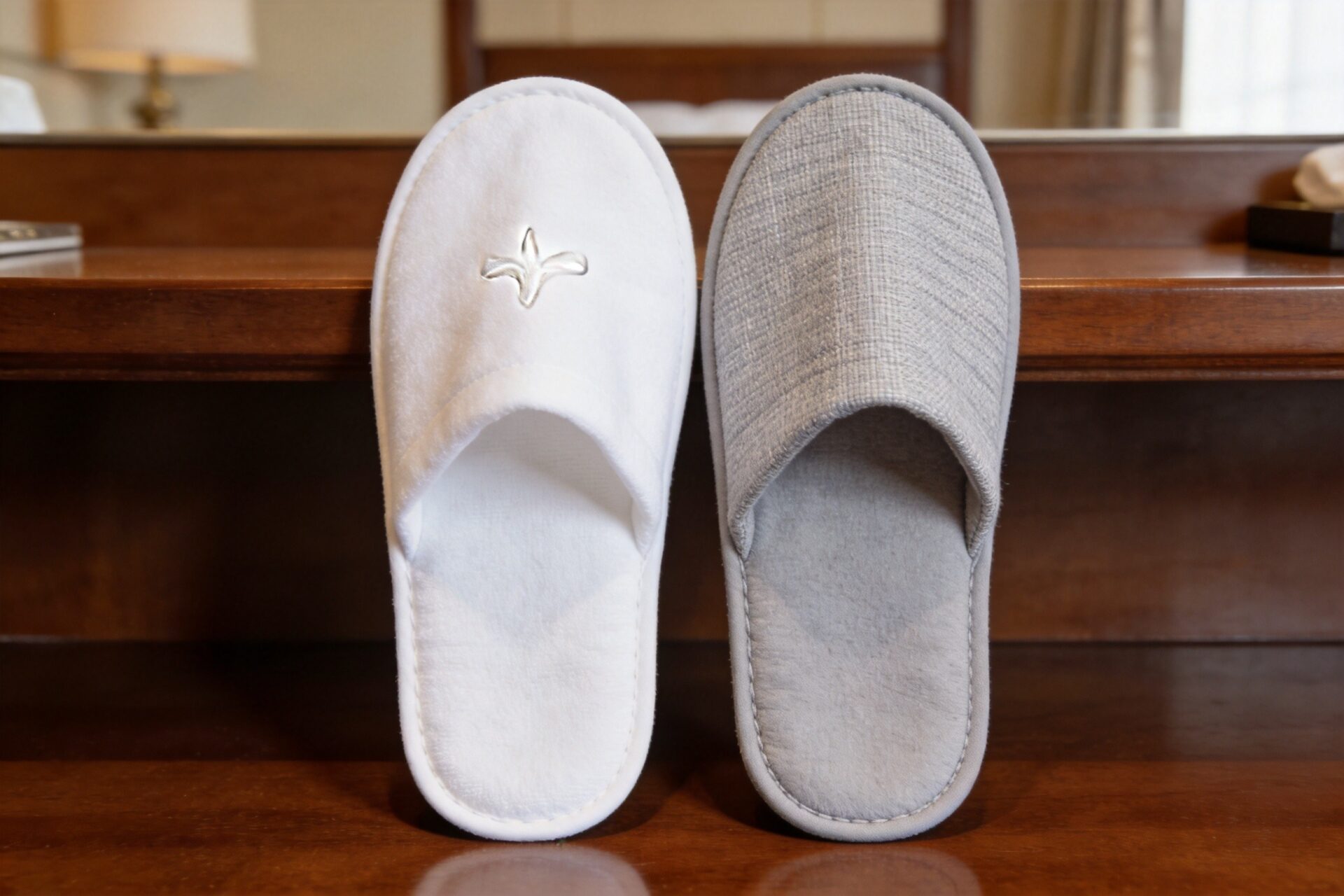
Hotel slippers are a small but significant detail that shapes the guest experience from the moment they step out of bed or the shower. A quality pair of slippers signals comfort, hygiene, and attention to detail; a flimsy or ill-fitting pair undermines even the most luxurious room presentation. For procurement managers, selecting the right slippers involves balancing guest comfort, durability, cost, hygiene considerations, sustainability goals, and brand identity. This comprehensive guide compares disposable versus washable slippers, examines materials from toweling to velvet to waffle, explains sizing standards, and provides practical recommendations for selecting slippers that meet your property’s service standards and budget.
Disposable vs. Washable Hotel Slippers: A Fundamental Decision
The first and most consequential choice is whether to provide single-use disposable slippers or multi-use washable slippers. Each model carries distinct implications for cost, hygiene, guest perception, and environmental impact.
Disposable Slippers
Disposable slippers are designed for single-guest use and are typically discarded after checkout. They are the standard in most international hotels, particularly in Asia and the Middle East, and are increasingly common in European and North American properties.
Advantages:
- Hygiene assurance: Every guest receives a new pair, eliminating cross-contamination concerns and reinforcing perceptions of cleanliness
- Low labor cost: No laundering, folding, or inspection required; housekeeping simply replaces the pair during room turnover
- Low unit cost: Basic disposable slippers cost $0.30–$1.50 per pair wholesale
- No storage for used inventory: Once discarded, slippers do not occupy laundry or storage space
- Branding opportunity: Custom-printed or embroidered slippers create an in-room brand touchpoint that guests often take home as souvenirs
Disadvantages:
- Waste generation: A 200-room hotel at 80% occupancy discards 4,800–6,000 pairs per month, contributing to landfill waste
- Recurring cost: Although cheap per pair, disposable slippers represent a recurring monthly expense that accumulates to $3,000–$15,000 annually depending on quality and occupancy
- Variable quality: The cheapest disposable slippers use thin soles and low-density materials that tear or flatten during a single stay
- Sustainability concerns: Most disposable slippers use non-woven polyester or EVA soles that are not biodegradable
Washable Slippers
Washable slippers are constructed from durable fabrics—terry cloth, waffle weave, or microfiber—with rubber or EVA soles that withstand repeated commercial laundering. They are collected after checkout, washed, inspected, and returned to inventory.
Advantages:
- Lower long-term cost: A $5–$15 pair of washable slippers lasts 50–200+ washes, reducing cost per use to $0.03–$0.15
- Superior comfort: Washable slippers use thicker, higher-quality materials that feel more substantial and luxurious
- Environmental sustainability: Dramatically reduces waste compared to single-use models
- Premium perception: Terry cloth or velvet washable slippers are associated with luxury hotels and spas
Disadvantages:
- Hygiene concerns: Guests may be uncomfortable wearing slippers worn by previous occupants, even after laundering
- Laundry burden: Slippers require washing, drying, inspection, and pairing—increasing housekeeping labor and utility costs
- Higher upfront investment: Outfitting a 200-room hotel at 3 par requires 600 pairs at $5–$15 each, representing $3,000–$9,000 in initial inventory
- Degradation: Soles can separate, fabric can pill, and Velcro or elastic can fail after repeated washing
- Loss and theft: Higher-quality slippers are more likely to be taken by guests, increasing replacement costs
| Factor | Disposable | قابل للغسل |
|---|---|---|
| Cost per pair | $0.30–$1.50 | $5–$15 |
| Cost per use | $0.30–$1.50 | $0.03–$0.15 |
| Comfort level | Basic–Moderate | High–Luxury |
| Environmental impact | High (landfill waste) | Low (reusable) |
| Housekeeping labor | Low (replace only) | Moderate–High (wash, inspect, pair) |
| Hygiene perception | Excellent (new per guest) | Moderate (depends on guest trust) |
| Annual cost (200 rooms, 80% occ.) | $3,000–$15,000 | $1,500–$4,000 (including laundry) |
Material Options for Hotel Slippers
Non-Woven Fabric (Disposable)
The most common material for budget disposable slippers, non-woven polypropylene is lightweight, inexpensive, and available in a range of colors and thicknesses (40–80 gsm). It has a smooth, slightly papery texture. While functional, thin non-woven slippers (under 50 gsm) feel cheap and may tear during use. For a more premium disposable option, look for non-woven fabric of 60 gsm or higher with a cushioned EVA insole.
Terry Cloth (Washable)
Cotton terry cloth is the classic luxury hotel slipper material. Soft, absorbent, and plush, terry slippers provide a spa-like feel that guests associate with high-end properties. They typically feature:
- 100% cotton or cotton-poly blend upper at 300–500 GSM
- Open- or closed-toe designs
- Cushioned EVA or rubber sole (5–10 mm thick)
- Elastic binding or Velcro closure
Terry cloth slippers withstand 100–200 commercial wash cycles when laundered in mesh bags on gentle cycles. They are the preferred choice for five-star hotels and resorts in North America and Europe.
Waffle Weave (Washable or Disposable)
Waffle weave slippers use the same honeycomb-textured cotton found in waffle bathrobes. They are lighter and more breathable than terry, with a refined, spa-inspired appearance. Waffle slippers are available as both washable cotton versions and disposable non-woven versions that mimic the waffle texture. They dry quickly, making them ideal for spa and poolside use. Expected lifespan for washable cotton waffle slippers is 50–100 cycles.
Velvet and Velour (Premium Disposable or Washable)
Velvet and velour slippers represent the premium end of the disposable market and are also available in washable versions. Their soft, lustrous surface creates a luxurious first impression, and they take embroidery exceptionally well. Common in Middle Eastern and Asian luxury hotels, velvet slippers typically feature:
- Polyester velvet or cotton velour upper
- Textured, non-slip EVA or rubber outsole
- Custom embroidery or woven label branding
- Standard/One Size (US Men’s 6–9 / EU 39–42): Fits the majority of guests, particularly in Asian and European markets
- Large/X-Large (US Men’s 9–12 / EU 43–46): Accommodates guests with larger feet, important for North American, Middle Eastern, and Northern European markets
- Embroidery: A stitched logo on the upper or strap is the most durable and premium option. Polyester thread is recommended for washable slippers; rayon works for disposable versions. Typical logo size is 1.5–2.5 inches wide.
- Woven or printed labels: Sewn-in woven labels or heat-transfer prints on the footbed or strap provide branding at lower cost. Woven labels are more durable than prints.
- Custom packaging: Individual paper or fabric bags, sleeves, or boxes with your logo create an unboxing moment that elevates perceived value. Custom packaging costs $0.10–$0.50 per pair but significantly improves presentation.
- Custom colors: Match slipper fabric to your brand colors. Most manufacturers offer 10–20 standard colors, with custom pantone matching available at higher MOQs.
- Recyclable or biodegradable materials: Some manufacturers now offer disposable slippers with biodegradable EVA soles, recycled PET uppers, or plant-based non-woven fabrics. These reduce environmental impact without changing the operational model.
- “Take me home” programs: Encourage guests to take their disposable slippers home for continued use, extending the product lifecycle and reducing immediate waste. Signage such as “These slippers are yours to keep” reframes the disposable model as a complimentary gift.
- Opt-in model: Rather than placing slippers in every room, make them available on request. This can reduce usage by 30–50% while still serving guests who want them.
- Hybrid model: Provide high-quality washable slippers in suites and premium rooms while offering disposable options in standard rooms.
Disposable velvet slippers cost $1.00–$3.00 per pair and offer a significant upgrade in perceived quality over standard non-woven options.
Microfiber (Washable)
Microfiber slippers use ultra-fine synthetic fibers to create a soft, suede-like texture. They are lightweight, quick-drying, and durable through 100+ washes. Microfiber is often blended with spandex for stretch and shape retention. These slippers are an excellent mid-range option for properties seeking the comfort of terry with faster drying and lower maintenance.
Coral Fleece and Plush (Disposable)
Coral fleece and plush polyester slippers provide a fluffy, cozy feel at a moderate price point ($0.80–$2.00 per pair). They are warmer than non-woven or waffle options, making them popular in cold climates and winter seasons. However, their long fibers can mat and flatten quickly, and they generate more lint during use.
Sole Construction and Safety
The sole is the most critical functional component of hotel slippers, as it must provide safe traction on wet bathroom floors and hotel corridors while protecting feet from cold surfaces.
| Sole Type | السُمك | المتانة | الأفضل لـ |
|---|---|---|---|
| EVA foam (basic) | 3–5 mm | Single use (disposable) | Budget hotels, basic amenity |
| EVA foam (cushioned) | 5–10 mm | Single use or limited reuse | Mid-scale to upscale disposable |
| Rubber | 5–10 mm | 100–200+ washes | Washable luxury slippers |
| TPR (thermoplastic rubber) | 3–8 mm | 50–150 washes | Mid-range washable slippers |
| Memory foam + EVA | 8–15 mm | Single use (premium disposable) | Luxury disposable slippers |
Regardless of sole type, ensure the outsole has a textured, non-slip pattern. Smooth-soled slippers are a safety liability on polished hotel floors and wet tile. For washable slippers, verify that the sole is securely bonded or stitched to the upper—separation is the most common failure point after repeated washing.
Sizing Standards for Hospitality
Hotel slippers are typically offered in unisex sizing to simplify inventory management. The most common approach is to offer two sizes:
Some luxury properties and international hotel chains offer three sizes: S/M (up to EU 39), L/XL (EU 40–44), and XXL (EU 45+). However, each additional size increases SKU count, inventory complexity, and MOQ per size. For most hotels, a two-size system with generous cut and elastic or adjustable closure provides adequate fit across 90%+ of guests.
When ordering, consider the primary origin market of your guests. Properties in China, Japan, and Southeast Asia may find one-size sufficient for domestic guests but should stock L/XL for international travelers. North American and Middle Eastern properties should default to two sizes as standard.
Design Styles
Open-Toe vs. Closed-Toe
Open-toe slippers (slide style) are easier to size across foot lengths, quicker to put on, and cooler in warm climates. They are the dominant style in tropical resorts, spas, and Asian hotels. However, they provide less warmth and may feel less substantial.
Closed-toe slippers offer full foot coverage, greater warmth, and a more polished, shoelike appearance. They are preferred in cold climates, luxury city hotels, and properties where guests may walk through corridors to ice machines or elevators. Closed-toe slippers require more careful sizing since toe box dimensions matter more.
Bootie Slippers
For cold-climate properties and ski or mountain resorts, ankle-height bootie slippers provide maximum warmth. These typically use plush or fleece uppers with non-slip soles and are available in both disposable and washable versions. They represent a niche but high-impact amenity for properties in cold-weather destinations.
Customization and Branding
Slippers offer one of the highest-ROI branding opportunities in the guest room because guests handle and look at them repeatedly during their stay. Customization options include:
For properties also sourcing hotel bathrobes, consider ordering robes and slippers in matching fabrics and colors for a coordinated, premium bathroom presentation. Manufacturers with OEM/ODM capabilities can produce matching sets under one quality control system.
اعتبارات الاستدامة
As hotels face increasing pressure to reduce single-use plastics and waste, disposable slippers have come under scrutiny. Several approaches balance guest expectations with environmental responsibility:
الأسئلة المتداولة
Do hotels wash and reuse slippers?
Most hotels worldwide use disposable slippers discarded at checkout. Some luxury hotels, spas and resorts—mainly in Europe and North America—use washable terry or microfiber slippers; a $5–15 washable pair lasts 50–200+ washes, cutting cost per use to $0.03–0.15. Always check local health regulations, as some jurisdictions prohibit footwear reuse.
What are the most comfortable hotel slippers made of?
The most comfortable hotel slippers typically combine a cotton terry cloth or velvet upper with a 5–10 mm memory foam or cushioned EVA insole and a non-slip rubber or TPR outsole. For disposable options, coral fleece or velvet with a thick cushioned sole provides the most comfortable experience.
How many pairs of slippers should a hotel have per room?
For disposable slippers, stock 2 pairs per room per night (for double-occupancy rooms) plus a 10–15% buffer for single-guest rooms that may still require two pairs, losses, and special requests. At 80% occupancy, a 200-room hotel uses approximately 9,600–11,500 pairs per year. For washable slippers, maintain 2–3 par: one pair in the room, one in storage, and one in laundry.
Can hotel slippers be customized with our logo?
Yes. Most manufacturers offer embroidery, woven labels, or printed logos on slippers, with MOQs typically starting at 500–1,000 pairs for custom orders. Embroidery is recommended for washable slippers; for disposable models, a printed or woven label provides cost-effective branding.
What is the difference between EVA and rubber soles on hotel slippers?
EVA is lightweight, soft and inexpensive but less durable—best for disposable slippers. Rubber is heavier, more durable, and offers superior traction and water resistance, the preferred choice for washable slippers; rubber soles last 100–200+ washes versus single-use EVA at 3–5 mm. TPR sits in between: lighter than rubber, more durable than EVA.
Conclusion: Small Detail, Big Impact
Hotel slippers may be among the lowest-cost items in a guest room, but their influence on comfort perception and brand experience is disproportionate to their price. The choice between disposable and washable models should be guided by your property’s service standards, guest demographics, sustainability commitments, and laundry capabilities. For most hotels, a premium disposable slipper in velvet or coral fleece with cushioned soles and custom branding offers the best balance of hygiene, comfort, cost, and operational simplicity. Luxury properties and resorts may invest in washable terry slippers for a more substantial, sustainable option. Whatever direction you choose, prioritize non-slip soles, adequate sizing for your guest profile, and consistent quality across every pair. To explore a full range of hotel slippers and bathrobes—from disposable non-woven to premium washable terry—with OEM/ODM customization and reliable lead times, contact Youmian Textile for samples and a tailored quotation.
هل تريد معرفة المزيد عن منتجاتنا؟
عرض جميع المنتجات الآن English English
 Русский
 Español de México
 Português do Brasil
 العربية
