
مناشف الفنادق المطرزة حسب الطلب: الدليل الشامل لتخصيص الشعار
الانتقال إلى القسم
النقاط الرئيسية
- Hotel towel embroidery uses 2 types: flat stitch (logos) and terry loop (monograms) — flat stitch covers 8–12 stitches/cm² for crisp branding
- Minimum order for custom embroidery is typically 500–1,000 pieces per design; setup cost ranges $50–200 per embroidery program
- Embroidery thread is 100% polyester ( Madeira, Madeira Isacord) rated for 300+ industrial washes at 75°C without fading
- Logo placement matters: hotel towels use 3 standard zones — 15cm from selvedge edge, center panel, or corner monogram at 5×5cm
- Embroidered towels cost 15–40% more than plain stock, but increase brand recall by 60% and allow premium room-rate positioning
مناشف الفنادق المطرزة حسب الطلب: الدليل الشامل لتخصيص الشعار
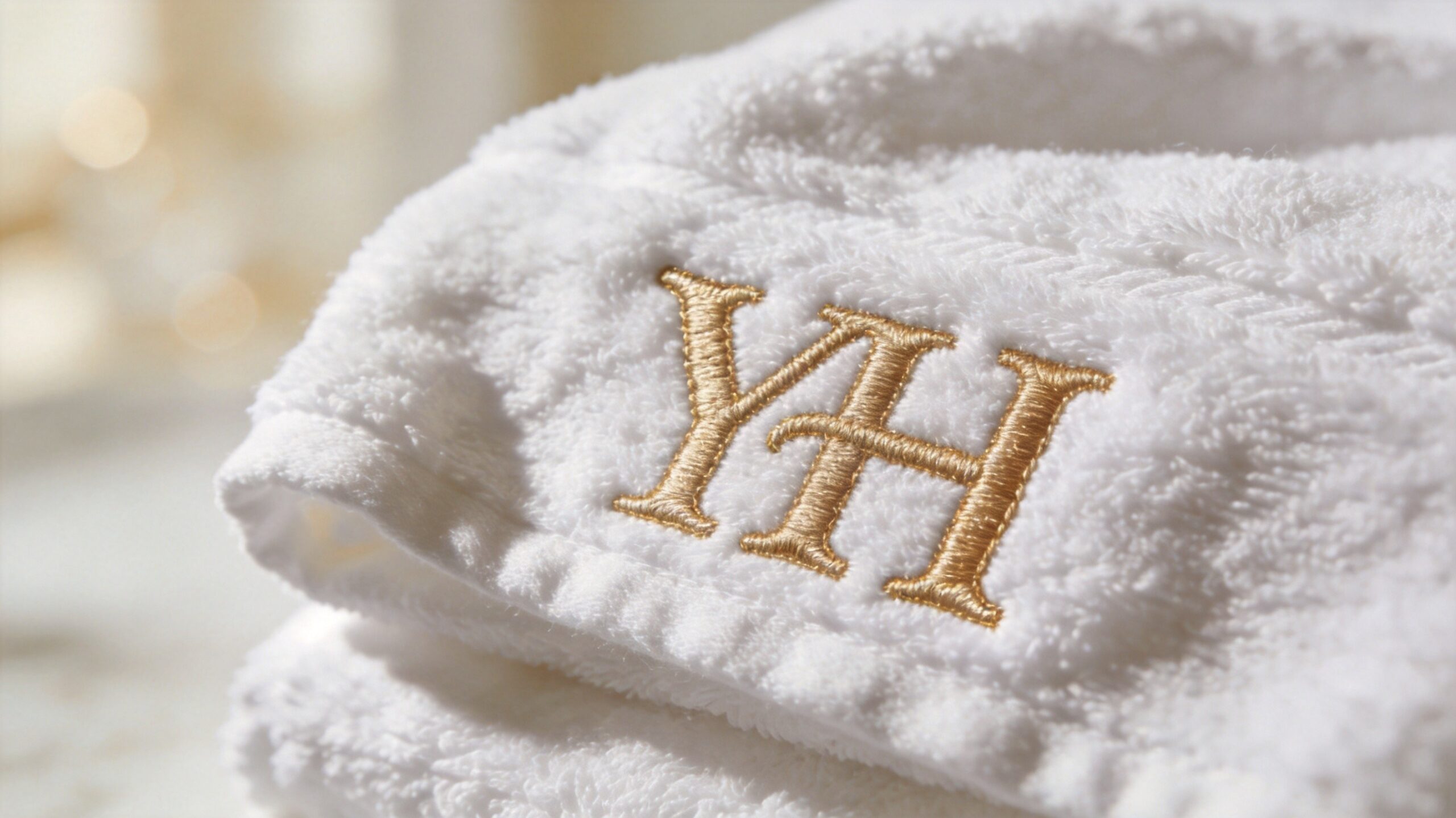
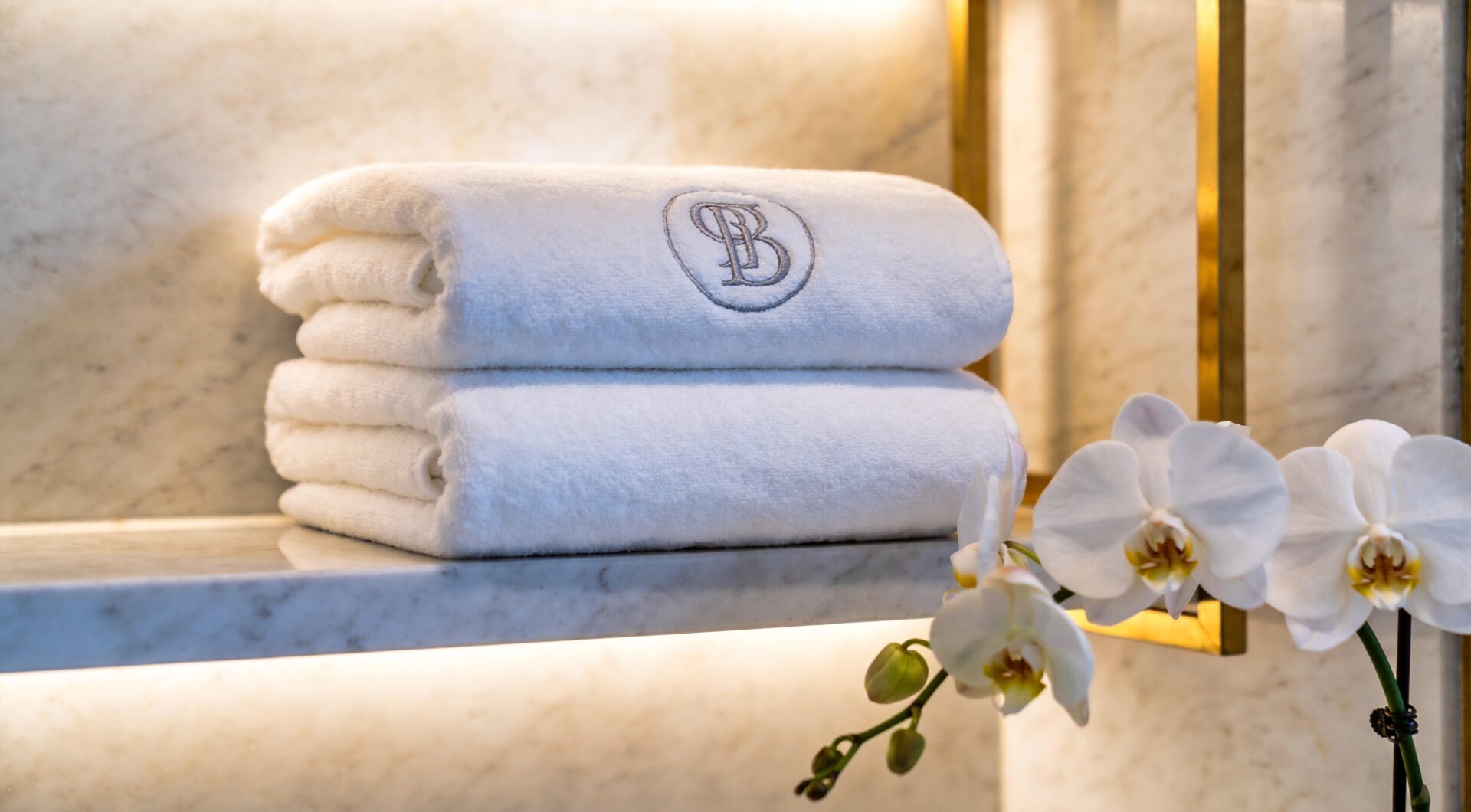
When guests step into a five-star hotel and reach for a plush bath towel, the first thing they notice is not just the softness of the fabric—it is the embroidered logo that catches their eye. That small, meticulously stitched emblem transforms an ordinary piece of terry cloth into a branded statement of quality and hospitality. If you are a hotel operator, procurement manager, or hospitality brand owner looking to elevate your guest experience, custom embroidered hotel towels are one of the highest-ROI investments you can make.
In this comprehensive guide, we will walk you through everything you need to know about how to customize hotel towels with logo—covering embroidery techniques, material selection, pricing, ordering workflows, and insider tips from industry veterans. Whether you need a batch of 200 towels for a boutique inn or 20,000 for a global resort chain, this article will help you make informed decisions that protect your brand image and your budget.
Why Custom Embroidered Hotel Towels Matter for Your Brand
Hotel towels serve a dual purpose: they are functional amenities and powerful brand touchpoints. Every time a guest wraps themselves in a towel bearing your hotel’s name, a psychological association forms between the comfort of the product and the memory of your property. Research in hospitality branding consistently shows that personalized hotel bath towels bulk orders contribute to higher guest satisfaction scores, increased brand recall, and stronger word-of-mouth referrals.
Consider this: a standard white towel costs roughly the same as a branded one when ordered in bulk. The embroidery adds only $0.30 to $1.50 per unit depending on complexity, yet the perceived value increase is substantial. Guests associate embroidered towels with premium properties—even when the base towel quality is identical. This is why leading hotel groups from Marriott to Four Seasons have made hotel towels with logo a non-negotiable part of their brand standards.
The Psychology Behind Branded Textiles
There is a reason luxury brands invest heavily in textile personalization. When a guest sees their hotel’s monogram stitched into the towel they are using, it creates a sense of exclusivity and attention to detail. This micro-moment of brand recognition reinforces the overall guest experience and can influence online reviews, repeat bookings, and social media mentions. For hotel marketers, embroidered towels are essentially free advertising—guests photograph them, post them on Instagram, and tag your property.
Three Methods of Customizing Hotel Towels: A Detailed Comparison
Before you place your order for personalized hotel bath towels bulk, it is critical to understand the three primary customization methods available. Each technique has distinct advantages, limitations, and cost implications. Choosing the right method depends on your design complexity, order volume, durability requirements, and budget.
1. Jacquard Weaving
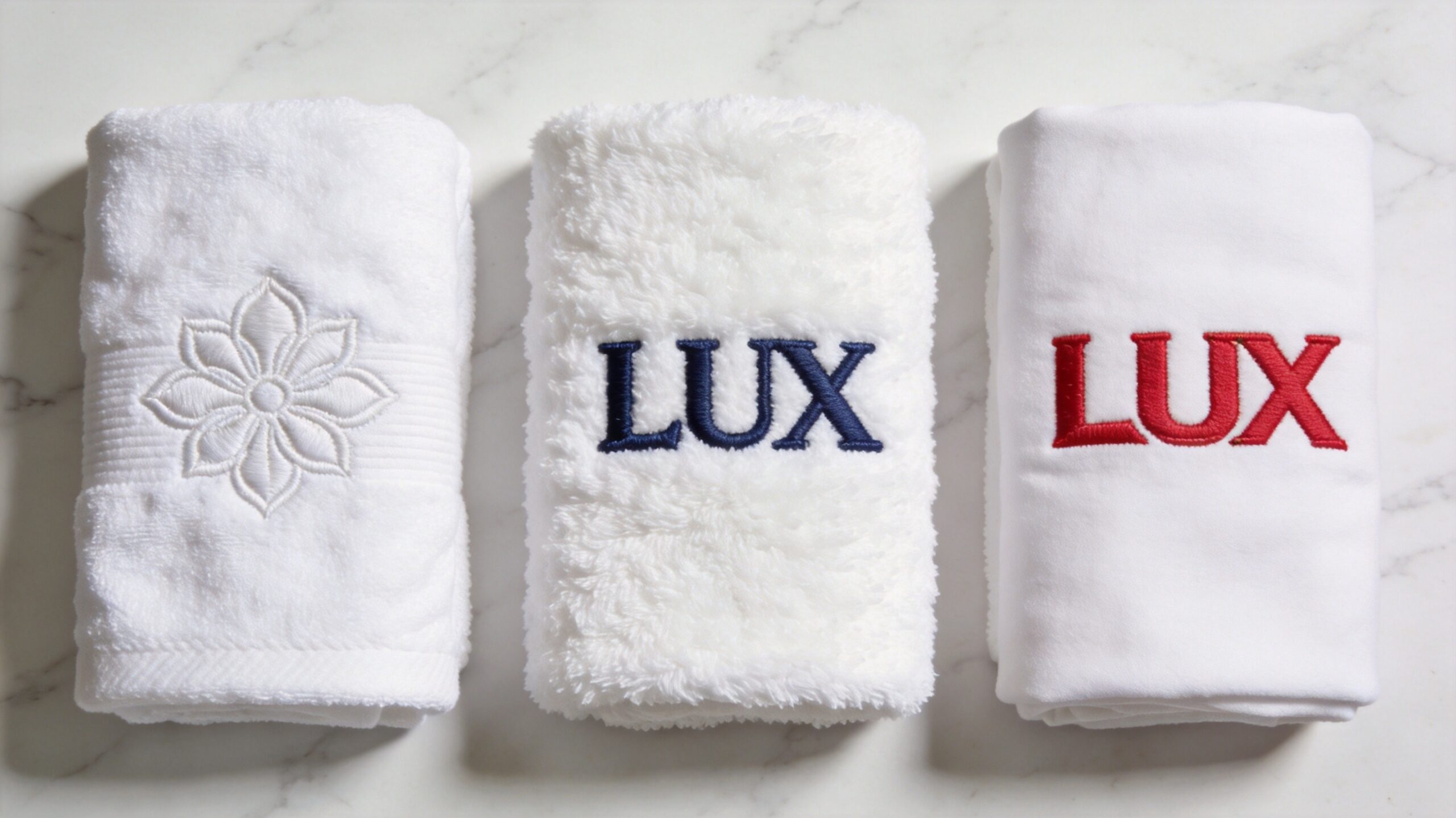
Jacquard weaving integrates the design directly into the fabric structure during the weaving process. The pattern—whether a logo, monogram, or border design—is woven using contrasting colored yarns, creating a design that is literally part of the towel. This method produces a flat, smooth surface with no raised texture, and the design is equally visible on both sides of the towel (appearing as a negative/positive image).
الأفضل لـ: Large-scale orders (5,000+ pieces), simple geometric logos, border patterns, and hotels that prioritize uniformity and a clean, understated look.
Limitations: Design complexity is limited by the weaving process. Fine details and gradients are difficult to achieve. Minimum order quantities tend to be higher because of the setup costs for Jacquard loom programming.
2. Machine Embroidery
Machine embroidery uses computerized embroidery machines to stitch your logo or design directly onto the finished towel using thread. The result is a raised, textured design with a premium, tactile quality that guests can feel when they touch the towel. This is the most popular method for custom embroidered hotel towels in the mid-to-high-end hospitality segment.
الأفضل لـ: Logos with defined edges, monograms, text-based designs, and hotels that want a luxurious, three-dimensional brand presence.
Limitations: Very small text (under 5mm) can be difficult to read. Complex multi-color designs increase cost. Thread breakage on low-GSM towels can cause puckering.
3. Screen Printing / Heat Transfer
Screen printing applies ink directly onto the towel surface through a mesh stencil, while heat transfer uses thermal pressure to bond a printed design onto the fabric. Both methods produce a flat, smooth design without any raised texture.
الأفضل لـ: Full-color photographic designs, gradient logos, small batch orders (under 500 pieces), and budget-conscious properties.
Limitations: The design sits on top of the fibers and can crack, fade, or peel after 30-80 industrial wash cycles. The tactile feel is less premium than embroidery.
Process Comparison Table: Jacquard vs Embroidery vs Print
| مقال مميز | Jacquard Weaving | التطريز بالماكينة | Screen Print / Heat Transfer |
|---|---|---|---|
| Design Integration | Woven into fabric structure | Stitched onto finished towel | Ink applied to surface |
| Texture | Flat, smooth | Raised, tactile, 3D | Flat, smooth |
| المتانة (عدد دورات الغسيل) | 500+ (lasts entire towel life) | 300-500 | 30-80 |
| Color Options | Limited (2-3 yarn colors) | 1-6 thread colors | Unlimited (full color) |
| Minimum Order | 3,000-5,000 pcs | 200-500 pcs | 50-200 pcs |
| Cost per Unit (USD) | $0.15-$0.40 | $0.30-$1.50 | $0.10-$0.50 |
| المهلة الزمنية | 25-40 days | 15-25 days | 7-15 days |
| Ideal Hotel Tier | Economy to Upper-Upscale | Upper-Upscale to Luxury | Budget / Promotional |
| Both-Side Visibility | Yes (mirror image) | One side only | One side only |
| Fade Resistance | ممتاز | Very Good | معتدل |
As the table shows, embroidery strikes the optimal balance between durability, visual impact, and cost-effectiveness for most hospitality applications. This is why how to customize hotel towels with logo through embroidery remains the dominant choice among premium hotel brands worldwide.
Choosing the Right Towel Base for Embroidery
The quality of your hotel towels with logo depends as much on the base towel as it does on the embroidery itself. Here are the key specifications to consider:
Fabric Weight (GSM)
GSM (grams per square meter) determines the towel’s thickness and absorbency. For hotel use:
- 350-400 GSM: Light, fast-drying—suitable for pool/beach towels and budget properties
- 400-500 GSM: Standard hotel weight—good balance of absorbency and laundry efficiency
- 500-600 GSM: Premium feel—recommended for upscale properties and spa towels
- 600-700 GSM: Ultra-luxury—reserved for five-star suites and VIP amenities
Fiber Type
100% combed cotton remains the gold standard for hotel towels. The combing process removes short fibers and impurities, producing a smoother, stronger yarn that is ideal for embroidery. Egyptian cotton and Supima cotton offer longer staple fibers for exceptional softness but come at a 30-50% premium. Cotton-polyester blends (80/20 or 70/30) reduce cost and increase durability but sacrifice some softness and absorbency.
البناء
Zero-twist towels provide a silky, smooth surface that showcases embroidery beautifully. Standard twisted-yarn towels offer more traditional terry texture and better scrubbing performance. For embroidery, we recommend a pile height of 4-6mm to provide adequate backing for the stitches without causing puckering.
Pricing Guide for Custom Embroidered Hotel Towels
Understanding the pricing structure is essential for budgeting your personalized hotel bath towels bulk order. Prices vary based on towel specifications, embroidery complexity, and order volume. Below is a comprehensive pricing guide to help you plan:
| Tier | Towel Spec | Embroidery | Order Qty | Price per Piece (USD) | Total Example (500 pcs) |
|---|---|---|---|---|---|
| Economy | 350 GSM, cotton/poly blend, bath towel 70×140cm | Simple text logo, 1 color, <500 stitches | 1,000+ | $2.80 – $3.50 | $1,400 – $1,750 |
| قياسي | 450 GSM, 100% combed cotton, bath towel 70×140cm | Monogram logo, 1-2 colors, 500-2000 stitches | 500+ | $4.00 – $5.80 | $2,000 – $2,900 |
| بريميوم | 550 GSM, 100% combed cotton, bath towel 70×140cm | Detailed logo, 2-4 colors, 2000-5000 stitches | 200+ | $6.50 – $9.00 | $3,250 – $4,500 |
| Luxury | 650 GSM, Egyptian cotton, bath towel 70×140cm | Complex logo, 3-6 colors, 5000+ stitches | 100+ | $10.00 – $15.00 | $5,000 – $7,500 |
Note: Prices above include towel base and standard embroidery. Additional costs may apply for digitizing setup ($50-$150 one-time), Pantone color matching ($20-$50), and express production (15-30% surcharge). FOB pricing from Chinese manufacturers; freight and import duties not included.
Cost-Saving Tips for Bulk Orders
- Consolidate sizes: Order all towel sizes (bath, hand, face, bath sheet) in the same production run to reduce setup charges.
- Limit stitch count: Simplify your logo design to reduce stitch count. Every 1,000 stitches adds approximately $0.10-$0.20 per unit.
- Choose stock colors: Using the manufacturer’s standard thread colors instead of custom Pantone matches saves $20-$50 per color.
- Plan ahead: Orders placed 60+ days in advance avoid rush charges and allow for better material sourcing.
- Annual contracts: Establishing a supply agreement with fixed quarterly orders can reduce per-unit costs by 8-15%.
Step-by-Step: How to Customize Hotel Towels with Logo
The process of ordering custom embroidered hotel towels involves several stages from initial design to final delivery. Understanding each step will help you plan timelines, manage expectations, and ensure a smooth production experience.
Step 1: Design Preparation and Digitizing
Provide your logo in a high-resolution vector format (AI, EPS, or SVG). The embroidery factory’s digitizing team will convert your vector logo into a stitch file (.DST or .EXP) that embroidery machines can read. This process, called digitizing, determines the stitch path, density, underlay, and pull compensation. A well-digitized design is critical—poor digitizing leads to thread breaks, misalignment, and distorted logos. Allow 3-5 business days for digitizing and request a stitch-out sample for approval before proceeding.
Step 2: Towel Sample Selection
Request physical towel samples from your supplier in your target GSM, fiber content, and size. Test the embroidery on these samples to verify stitch quality, tension, and overall appearance. Pay close attention to how the embroidery sits on the terry pile—some towels may require a dissolvable stabilizer underneath to prevent stitch sinking.
Step 3: Placement Decision
Decide where your logo will appear on the towel. Common placements include:
- Corner placement (standard): Logo positioned 5-8cm from the bottom-right corner. Most common and cost-effective.
- Center placement: Logo positioned in the center of the towel. Higher visual impact but more expensive due to stabilizer requirements.
- Border placement: Logo positioned along the dobby border or cam stripe. Elegant but requires pre-planned towel construction.
- Full-width banner: Hotel name in large text across the towel. Maximum brand visibility but highest stitch count and cost.
Step 4: Color Selection
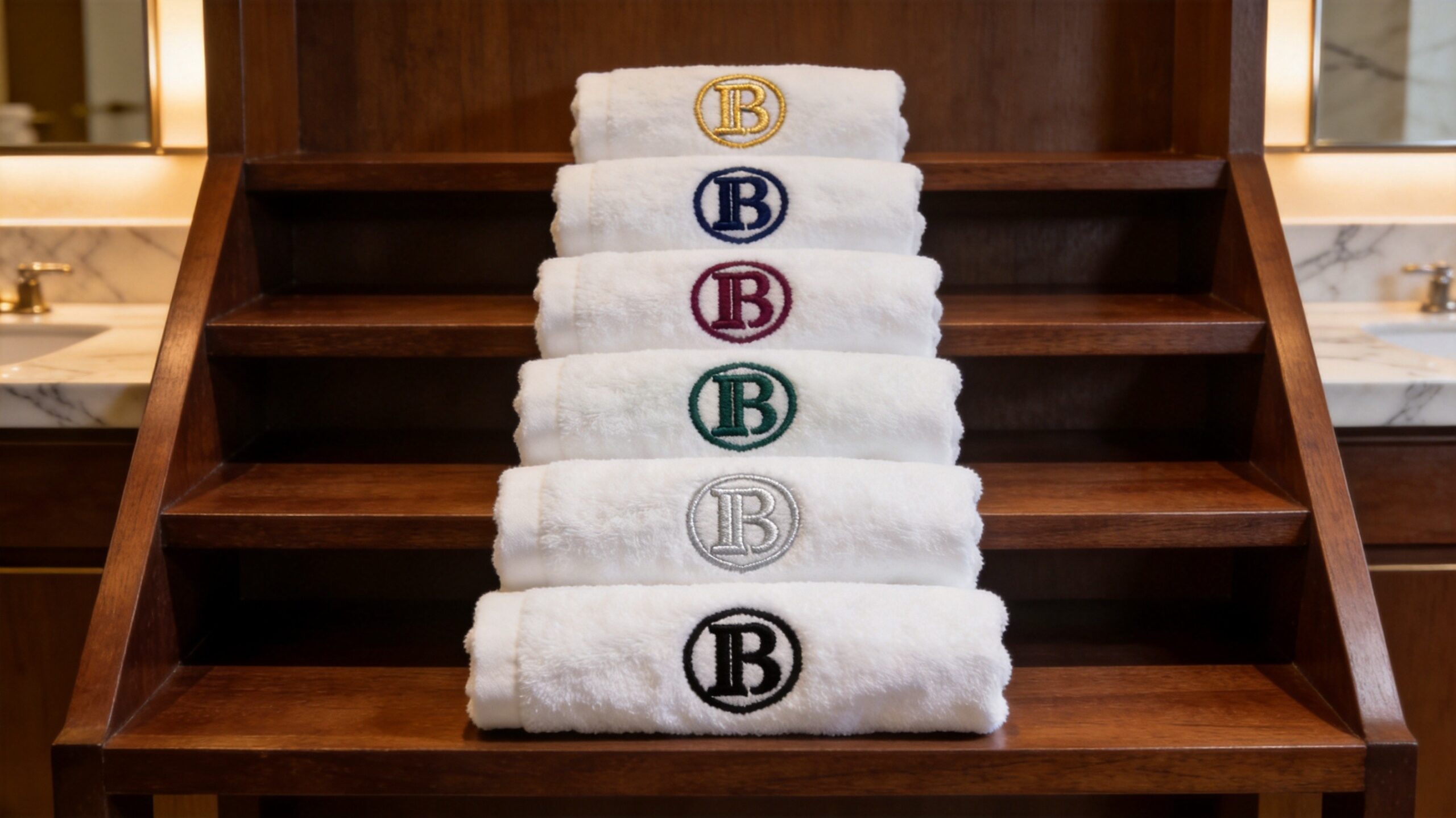
Choose thread colors that complement both your logo and the towel color. Madeira and DMC are the most trusted embroidery thread brands, offering excellent colorfastness and consistency. Gold and silver metallic threads add luxury but require slower machine speeds (increasing production time by 20-30%). We recommend requesting a thread color card and testing against your actual towel sample under both warm and cool lighting conditions.
Step 5: Production Approval and Mass Production
Once all specifications are finalized, request a pre-production sample (PP sample) on the exact towel that will be used for mass production. Approve the PP sample in writing before the factory begins bulk production. Typical mass production timelines are:
- 200-500 pieces: 12-18 days
- 500-2,000 pieces: 18-25 days
- 2,000-5,000 pieces: 25-35 days
- 5,000+ pieces: 35-45 days
Step 6: Quality Inspection and Shipping
Arrange a third-party inspection (AQL 2.5 standard) before shipment. Key inspection points include embroidery alignment accuracy (±2mm tolerance), thread color consistency, absence of loose threads or skipped stitches, towel weight within ±5% of specification, and colorfastness rating of Grade 4+ on the ISO gray scale. Sea freight typically takes 25-35 days to US/EU ports; air freight 5-7 days at 3-5x the cost.
Expert Insight: What Top Hotel Procurement Managers Look For
“When evaluating custom embroidered hotel towels for a new property launch or refresh, the single most important factor is not the price per unit—it is the consistency of the embroidery across every single towel in the shipment. A batch where towel #1 and towel #500 look identical in stitch density, color shade, and placement accuracy is worth paying a 10-15% premium for. Guests may not consciously notice minor variations, but their subconscious perception of quality is affected. We specify ISO 139 for colorfastness testing and require AQL 2.5 for all embroidery quality inspections. The digitizing file must be locked and version-controlled—any change to the stitch file must go through re-approval. This discipline is what separates hotel towels that feel truly luxurious from those that merely look acceptable.”
— James Chen, Senior Procurement Director with 18 years of hospitality textile sourcing experience, currently advising international hotel groups on linen procurement standards
Common Mistakes to Avoid When Ordering Custom Embroidered Towels
1. Skipping the Digitizing Approval Step
Never approve a digitized design based solely on a computer mockup. Always request a physical stitch-out on the actual towel fabric. What looks perfect on screen can pucker, distort, or appear too dense when embroidered on terry cloth.
2. Using Too Small a Logo
The minimum recommended logo size for towel embroidery is 5cm (2 inches) in the smallest dimension. Anything smaller risks illegibility, especially when the towel is folded or in use. For text-based logos, letters should be at minimum 8mm tall.
3. Ignoring Towel Shrinkage
Cotton towels shrink 5-8% after the first wash. If you plan the logo placement precisely, factor in post-wash shrinkage. The safest approach is to embroider on oversized towel blanks that are then cut and hemmed to final size (known as “cut and sew” method), ensuring the design remains perfectly positioned after washing.
4. Overlooking Laundry Compatibility
If your hotel uses chlorine-based bleaching agents, specify chlorine-resistant embroidery thread (polyester-based threads like Madeira Polyneon resist chlorine better than rayon). Thread and towel must have compatible shrinkage rates to prevent puckering after industrial laundering.
5. Underestimating Reorder Complexity
Always request and securely store the approved digitizing file, Pantone thread color codes, and PP sample photos. Reordering 12-18 months later without these reference materials can result in color drift and design inconsistencies.
Sustainability Considerations for Custom Hotel Towels
The hospitality industry is increasingly focused on sustainability, and personalized hotel bath towels bulk orders are no exception. Here are key sustainability factors to consider:
- Organic cotton: GOTS-certified organic cotton towels cost 20-35% more but appeal to eco-conscious travelers and can support green certification programs like LEED.
- Recycled cotton: Made from post-industrial cotton waste, these towels offer good durability with a 40-50% reduction in water consumption compared to virgin cotton.
- Thread selection: Polyester embroidery thread, while less “natural” than rayon, actually outperforms it in durability and colorfastness, extending the usable life of the towel and reducing replacement frequency.
- Local vs. import: For US-based hotels, domestic embroidery on imported towel blanks can reduce shipping carbon footprint by 60% compared to fully imported finished goods.
Frequently Asked Questions About Custom Embroidered Hotel Towels
Q1: What is the minimum order quantity for custom embroidered hotel towels?
The minimum order quantity varies by supplier, but most established manufacturers accept orders starting from 200 pieces per design and size combination. Some suppliers specializing in small hotels and boutique properties offer MOQs as low as 50 pieces, though the per-unit cost will be higher. For the best pricing, we recommend ordering 500+ pieces per SKU.
Q2: How long does custom embroidery on hotel towels typically last?
High-quality machine embroidery on 100% cotton hotel towels typically lasts 300-500 industrial wash cycles when proper thread (polyester or mercerized cotton) is used. This translates to approximately 2-4 years of service life in a busy hotel environment, assuming towels are replaced according to standard hospitality linen lifecycle protocols. Jacquard-woven designs last even longer (500+ cycles) since the pattern is integrated into the fabric structure.
Q3: Can I use my hotel’s existing logo file for embroidery?
Yes, but your vector logo (AI, EPS, or SVG format) must be converted into a stitch file through a process called digitizing. This is not a simple file conversion—it requires a skilled digitizer to optimize stitch paths, density, and underlay specifically for terry fabric. The digitizing process typically takes 3-5 business days and costs $50-$150 as a one-time setup fee. Always request a physical stitch-out sample for approval before mass production begins.
Q4: What is the difference between embroidered towels and printed towels for hotels?
Embroidered towels feature designs stitched directly into the fabric using thread, creating a raised, textured, and premium feel. They are highly durable, lasting 300-500 wash cycles. Printed towels (screen print or heat transfer) have designs applied to the surface using ink, resulting in a flat finish. While printing is cheaper for small orders and supports full-color designs, it typically only lasts 30-80 wash cycles before cracking or fading. For long-term hotel use, embroidery is the superior choice in terms of durability, perceived quality, and guest satisfaction.
Q5: How do I ensure color consistency when reordering embroidered towels?
Maintain a specification package that includes: the locked digitizing file (DST/EXP), exact thread brand and color code (e.g., Madeira Rayon 1024), Pantone reference for the towel base color, and an approved PP sample stored in a sealed bag. When reordering, send this complete package to the factory. Request that the factory match thread from the same production batch, and always order a pre-production sample for color verification before bulk production. Reorder lead times should be planned 45-60 days in advance to allow for proper thread sourcing and color matching.
Conclusion: Making the Right Choice for Your Hotel
Investing in custom embroidered hotel towels is one of the most effective ways to communicate your brand’s commitment to quality and guest experience. The key to success lies in choosing the right customization method for your needs, selecting appropriate towel specifications, working with experienced suppliers, and maintaining rigorous quality standards throughout the production process.
Whether you operate a 20-room boutique hotel or a 500-room resort property, the principles remain the same: start with a high-quality towel base, invest in professional digitizing, approve physical samples before mass production, and establish clear quality benchmarks for every batch. By following the guidelines outlined in this article, you will be well-equipped to order hotel towels with logo that delight your guests, strengthen your brand, and deliver lasting value.
Ready to start your custom embroidery project? Contact our team for a free consultation and sample kit tailored to your hotel’s specific requirements.
هل تريد معرفة المزيد عن منتجاتنا؟
عرض جميع المنتجات الآن English
  Русский
  Español de México
  Português do Brasil
  العربية